Neighbor News
Walden Center's Conference Focuses on Advances for Treating Eating Disorders
Second Annual Conference Features Nationally Known Experts
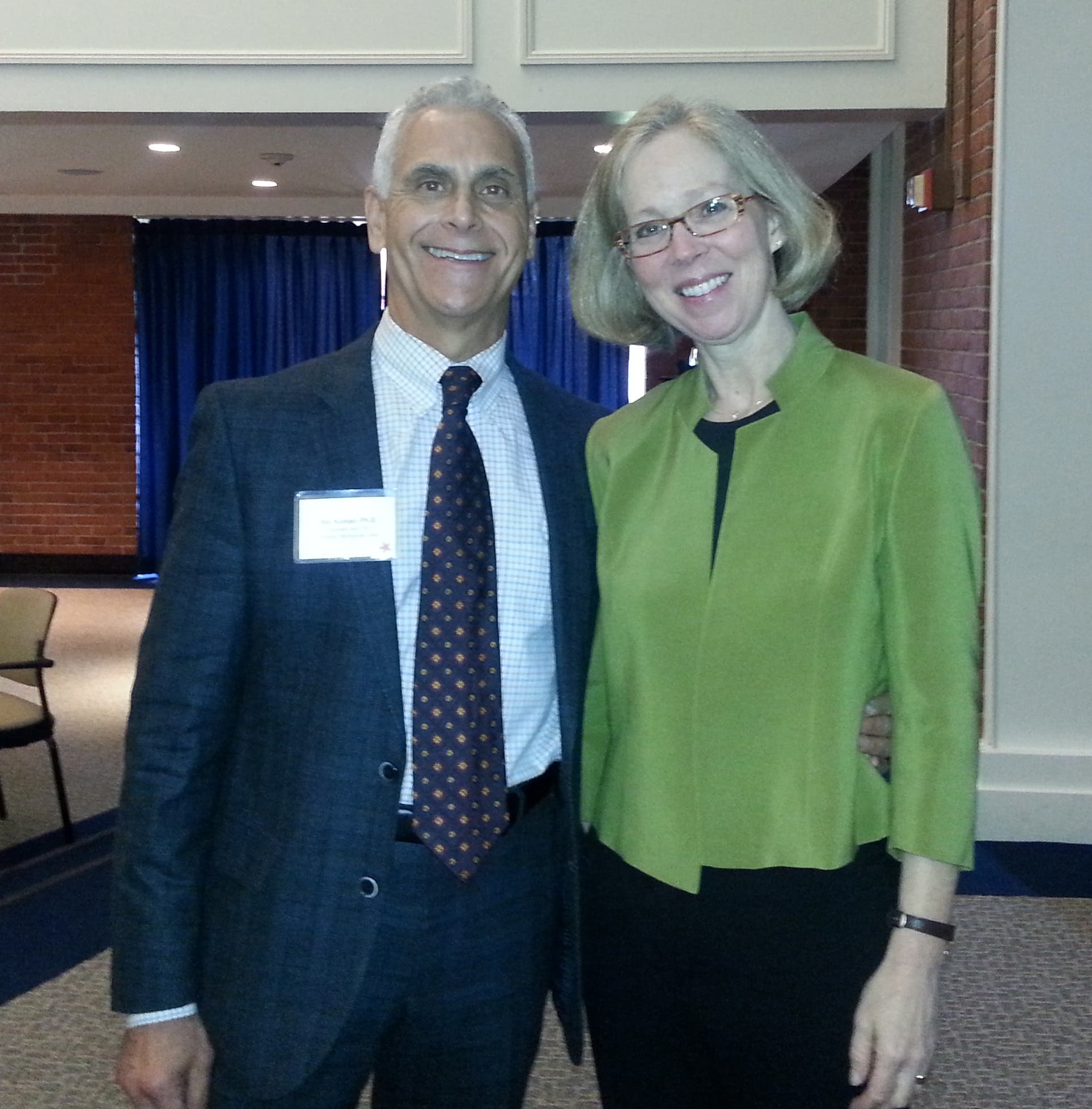
Stuart Koman, Ph.D., CEO of Walden Center, with presenter Cynthia Bulik, Ph.D., FAED at Walden’s conference.
WALTHAM, Mass. – Couples therapy and adding probiotics to your diet are among the advances in the treatment of eating disorders discussed today by national experts at the Walden Center for Education and Research’s second annual conference on the topic, which was held at Bentley University.
“Advances in the Treatment of Eating Disorders: Integrating Research with Clinical Practice,” attracted more than 170 healthcare professionals from throughout the region.
Find out what's happening in Walthamfor free with the latest updates from Patch.
In his presentation, “How Your GI Tract Affects Your Mood,” James Greenblatt, M.D., chief medical officer at Walden Behavioral Care, explained how digestive health contributes to appetite, metabolism and mental health.
While we frequently think of bacteria as being unhealthy, many of the “gut bacteria” help us digest food and stay healthy, according to Dr. Greenblatt. While no two people have the same microbial makeup, the number of microorganisms or microbes living in and on our bodies (bacteria, viruses and fungi) outnumber human cells by 10 to one.
Find out what's happening in Walthamfor free with the latest updates from Patch.
In recent years, changes in the way we live have greatly reduced the number of microbes in our digestive system, which appears to be a factor in the development of eating disorders and obsessive compulsive disorder (OCD), he said.
Some of the factors affecting microbes include use of antibiotics, an increased focus on cleanliness, less breast feeding, vitamin deficiencies, poor nutrition and alcohol consumption. Historically, increased use of antibiotics to produce more meat in animals corresponds to a greater prevalence of obesity in the U.S., Dr. Greenblatt said.
Studies show that use of probiotics can normalize stress responses, reduce anxiety and support the growth of health-promoting microbes, according to Dr. Greenblatt.
Couples Need to Communicate
Cynthia Bulik, Ph.D., FAED, a distinguished professor of eating disorders in the School of Medicine at the University of North Carolina at Chapel Hill, opened the conference with, “Engaging Partners in the Treatment of Eating Disorders: UCAN and UNITE,” in which she explained the benefits of couples working together when one of them has an eating disorder.
Uniting Couples in the Treatment of Anorexia Nervosa (UCAN) requires an understanding of anorexia “in a couples context,” according to Bulik. For treatment to succeed, couples need to develop communication skills and work as a team, sharing thoughts and feelings.
In many cases, she said, the person with the eating disorders tries to hide it from his or her partner. The partner may also feel responsible for having caused the eating disorder, even though that’s not the case.
“The tendency is to blame,” according to Bulik. “If your partner has an eating disorder, you need to be positive. Say something like, ‘I acknowledge that dealing with anorexia has been hard for you.’ Express your feelings and thoughts with tact and timing.”
Couples therapy can also play an important role in treating binge-eating disorder, she said. Often both people in a relationship have binge-eating disorder and “food is the bond in their relationship. It almost becomes their sex. It’s a tough cycle to break.”
Eating Disorders in Children
In her presentation, “Advances in Pediatric Eating Disorders – Working with Families to Support Full Recovery,” Rebecka Peebles, M.D., an assistant professor in the Division of Adolescent Medicine at The Children’s Hospital of Philadelphia and the University of Pennsylvania School of Medicine, noted that more than 30 million Americans have had an eating disorder – and that 90% of them are children or adolescents.
Dr. Peebles said that eating disorders are 12 times more common than cancer, and are becoming increasingly common in younger and younger children. Those with eating disorders are 10 times more likely to die than their healthy peers, she said.
Given that eating disorders are so prevalent in young people, “the family is the best resource for recovery.”
Treating Obesity and Binge-Eating Disorder
Christina Wood Baker, Ph.D., who is in private practice and is a consultant to Walden Behavioral Care, closed the conference with, “Integration of Eating and Weight Disorders: Obesity in the Context of Eating Disorder Treatment.”
While eating disorders and obesity have historically been treated separately, she said they have much in common, including shared treatment goals, such as a healthy, moderate eating pattern, physical health and an improved quality of life.
However, she also noted that only 20% to 30% of adults seeking treatment for obesity have binge-eating disorder. According to Baker, “Most individuals with obesity do not engage in recurrent binge eating.”
When patients have both obesity and binge-eating disorder, there is a debate over which to treat first. There’s an assumption that binge eating must be treated psychologically before any attempt is made at weight loss, she said, and part of the assumption is that, “For anyone who already has an eating disorder, recommending or imposing a ‘diet’ or calorie-reduction meal plan will trigger binge eating.”
However, she’s found that while unhealthy dieting, such as skipping meals, should be avoided, a healthy, moderate approach to weight loss can help treat binge-eating disorder.
The Walden Center for Education and Research is devoted to improving the quality of life for those who suffer from eating disorders, mood disorders,