Health & Fitness
The History of the Wesson Tavern 1825~1953
In 1852, Dr. John Hero and Dr. Butler Wilmarth purchased the property and established the Willow Park Water Cure for the treatment of chronic diseases through hydropaths.

Turnpike 1810
Wesson Tavern
Find out what's happening in Westboroughfor free with the latest updates from Patch.
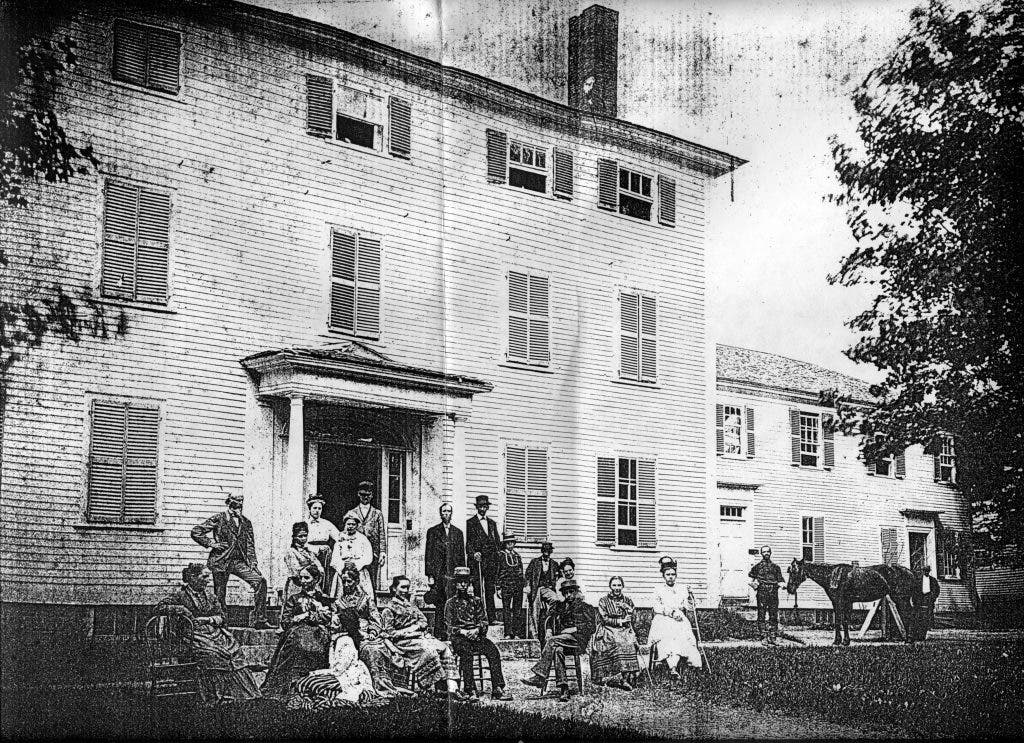
In 1825, Captain Silas Wesson (Postmaster 1820-33), owner of the 100 acre Powder Hill Farm, decided to build a new tavern on a portion of the farm that abutted the Turnpike. He moved his tavern business and the post office from the Forbush Tavern to the new site. The Forbush Tavern later closed and became a private residence while the Wesson Tavern (see photo) experienced a brisk tavern and livery business. The area surrounding the newly developed site became known as Wessonville.
For the next decade, the Wesson Tavern did a flourishing stagecoach and freight hauling business. But in 1834, the greatly anticipated opening of the Boston to Worcester Railroad bisected Westborough center which ushered in the end of the stagecoach and pony express era along the Turnpike.
Find out what's happening in Westboroughfor free with the latest updates from Patch.
The newly appointed Postmaster, Charles Parkman, discontinued the north Westborough Post Office at the Wesson Tavern in 1838 and established a new post office in his downtown store. The stagecoach, pony express, and horse drawn freight that flourished on the Turnpike moved to the Boston Post Road and continued there despite the introduction of the electric street railway and motorized transportation on the Turnpike.
Wessonville Seminary
The Wesson Tavern closed in 1840 for lack of business. The same year, the tavern was transformed into a Seminary for Young Ladies established by the Westborough School Association. It was a day and boarding school for 40 young women interested in higher education beyond high school. The school prospered for 12 years but closed in 1852.
Willow Park Water Cure
In 1852, Dr. John Hero and Dr. Butler Wilmarth purchased the property and established the Willow Park Water Cure for the treatment of chronic diseases through hydropaths. Treatments of electricity, Swedish movements, oxygenized air, light gymnastics, Turkish and hot air baths were also used with marked success.
Then in 1867, Dr. Hero instituted the Willow Park Seminary (see photo) for the physical and mental training of young women; young men were accepted in 1872. In 1876, Hero also developed the Hero Cough Syrup Co. Dr. Hero at this time resided in the gentlemen’s manor (Lothrop House) opposite the seminary. Dr. Hero also partnered with Bella Stone raising Ayshire cattle.
Willow Park Cottage ~ Lyman School
The Seminary closed in 1876 and remained vacant until 1885, when it was leased by the state. Then the building was purchased in December 1887 for $3,000. Dr. Hero also sold the Lothrop House and retired to the Nathan Fisher House where he managed the operations of the prized orchards there. Hero remained here until 1897 and died in 1898.
The once historic landmark became part of the sprawling campus of the Lyman School for Boys. The building was renamed the Willow Park Cottage and demolished in 1953.
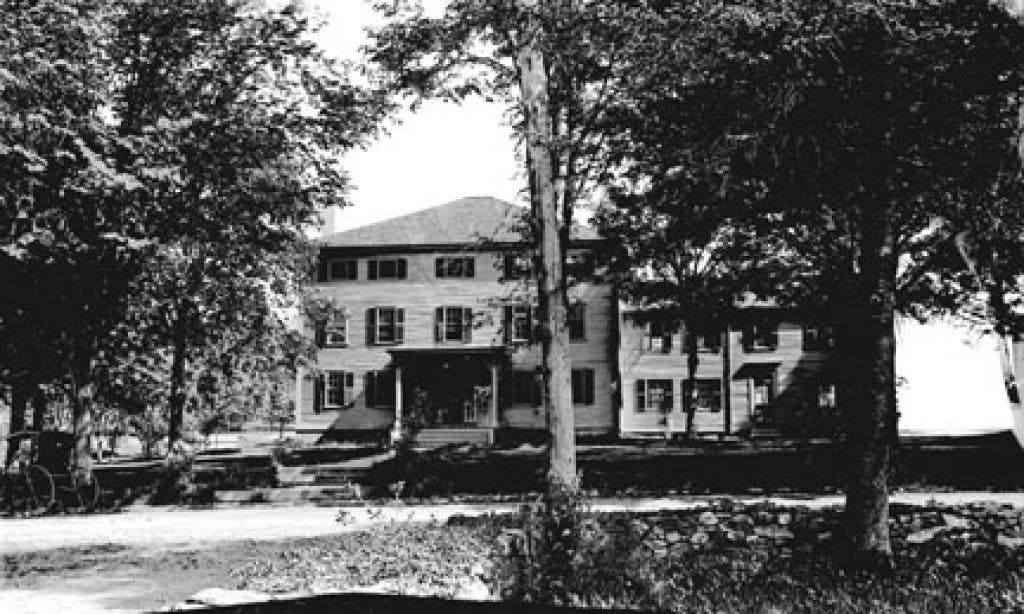
In 1939, the ell attached to the right of the main building was removed and relocated to become the Willow Cottage of the Lyman School (see photo). The building was razed in 1953 and the lot remains vacant to this day.
~Research Notes~
Conflicting research regarding General Lafayette’s visit to Boston June 17, 1825 as documented:
The Hundredth Town, Harriet Merrifield Forbes, 1899:
“It was at Wesson’s tavern where Lafayette stopped for dinner, when he went in 1825, to the laying of the cornerstone of the Bunker Hill Monument. About 40 men and boys from Westborough were gathered around the door to see the great man go in. He is remembered by one of the boys who saw him as a very large man slightly lame and carrying a silver headed cane. He responded simply and politely to the eager welcomes of the people.”
From the Memoirs of General Lafayette by Samuel Lorenzo Knapp, 1825:
General Lafayette was invited to the celebration of the laying of the corner stone of the Bunker Hill Monument. Lafayette’s Memoirs indicate that in 1825 he and his entourage traveled from NYC to Hartford Connecticut and Providence then at Pawtucket R.I. he was escorted by aids of the Massachusetts Governor for the Bunker Hill Monument Dedication. After the dedication he traveled north to visit many coastal communities as far north as Portsmouth N.H. Then in August he returned to Boston. When leaving Boston he took a northerly route stopping in Lexington, Concord, Bolton, Lancaster, and Boylston then to Worcester, Sturbridge and Hartford, Connecticut then to Middletown Connecticut where he boarded a steam ship to New York City. In each community that he visited in Massachusetts he not only stopped for rest and refreshment but also to receive honors and accolades from dignitaries and took time to speak to the hundreds of cheering admirers, military bands, veteran soldiers as well as community residents.
DeForest, History of Westborough, 1891: In 1827, “Captain Wesson built a tavern near the site of the old meeting house”. DeForest never mentions Lafayette ever visiting Westborough.
Silas Wesson was born in Auburn, MA., the son of Abel Wesson and Sarah (Drury) Wesson and settled in Westborough c 1820. After selling the Wesson Tavern in 1840 he and his wife Sally moved to S. Weymouth were he died of paralysis in 1864 at the age of 85 years. His wife Sally died 1868 in S Weymouth at the age of 87.
Silas Wesson enrolled as private, Grafton Company, 2d Regiment, 2d Brigade,7th Division, Massachusetts Militia c 1797Promoted to Sergeant…Promoted to Ensign 23 Mar 1809…Promoted to Lieutenant, 7 May 1811Promoted to Captain 7 Apr 1813(and commander of the Grafton militia company)Honorable discharge 6 Sep 1816Captain Wesson did not serve on active duty in the War of 1812
New England His-Gen