Health & Fitness
FOOD for THOUGHT: Late Leptin & the Ghrelin Gremlin
Constantly hungering for more? It's not just you & it's not all in your head. Indeed that's the problem; the message is not getting to your brain, the hypothalamus to be exact. There's a healthy fix.
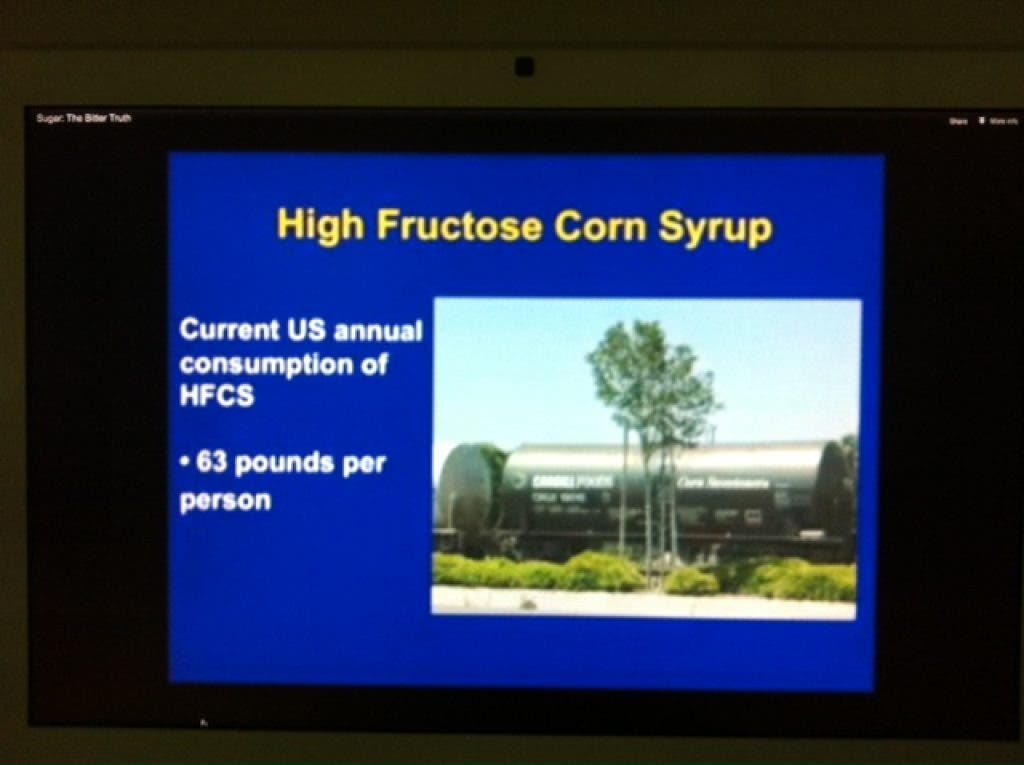
(Dietary changes should be discussed with a health care provider.)
Here’s Part II of the Sugar Series. You can find Part I here: http://westford.patch.com/blog_posts/food-for-thought-everything-in-mode...
Find out what's happening in Westfordfor free with the latest updates from Patch.
This week’s topic is much better explained in a lecture to which I have provided a link. The only problem is that the lecture is over an hour long. It is well worth watching every minute of it – more than once -- however, I will attempt to give you the overly simplified kindergarten version of its three main points.
Find out what's happening in Westfordfor free with the latest updates from Patch.
The first point is that consuming added sucrose and fructose negates any effect gained from decreasing dietary fat in the hopes of avoiding obesity, type II diabetes, gout and heart disease through healthy eating. This is both because these sugars are easily converted to fat and because the method by which they are digested contains several processes and creates several byproducts that hasten the onset of and exacerbate these diseases.
The second point is that fructose that is not consumed as whole foods (mostly fruits) that naturally contain it i.e. fructose gotten instead from processed foods across the food groups, beverages, juices, high fructose corn syrup, crystalline fructose etc. causes us to eat much more food than we need because fructose (and sucrose which is half fructose) is digested differently than glucose (the sugar in complex carbs). Glucose travels to your stomach for digestion, whereas fructose is filtered through the liver. What does this have to do with leptin, ghrelin and the monster inside us that wants to eat everything it can get its hands on?
Leptin & ghrelin are hormones that affect the hunger cycle, but let’s think of ghrelin as being powered by a light switch and leptin as being powered through a three-pronged plug for a moment. When ghrelin is “on” we are hungry and actively seeking food. When it is off, we may no longer seek food, but may finish what is on our plate. We are no longer hungry, but neither are we yet full. That’s where leptin comes in. When leptin gets turned “on” by insulin we feel full. Picture the ghrelin switch as being in your stomach. Glucose travels down through that area and flips it off as it passes; so we stop re-filling our plate. Now insulin plugs itself in the next time it passes an outlet and powers up leptin to send the message that we are full enough to stop eating even what is left on our plate.
Now let’s consume fructose instead. Remember fructose is sent to the liver not the stomach. This causes two problems. The outlets in the liver are the ungrounded kind with only two slits; so the “three-pronged” plug that powers leptin cannot plug in and turn leptin on. Therefore we never feel full. Theoretically we should stop eating before we are full; so, maybe this is only a small problem; maybe we can learn to stop eating when we are no longer actively hungry. But wait, the switch to turn off hunger is over in the stomach, and fructose bypasses that part of the digestive journey when it gets sent to the liver. Not only do we never feel full, we never stop feeling hungry. Both steps to control your appetite fail. So, we reach for more food – most of which has added fructose these days – continuing the cycle. This brings us to the lecturer’s main point.
Dr. Lustig MD puts fourth that fructose, once removed from plants, is a toxin and its use should be regulated. Fructose fits the description of a toxin in terms of its effect on the body, but only acute toxins (ones that kill you in the first 14 days) are regulated by the FDA or USDA.
So, apparently its fine to regularly add a toxin to food as long as it kills you slowly?!
Worse, in my book, we inadvertently subsidize poisoning ourselves because most extracted fructose comes from corn. As Dr. Lustig points out, WE have to be OUR OWN REGULATORS.
There are A LOT of other interesting facts and wonderful tidbits packed into the lecture, but please remember that this guy is an expert on sugar and so focuses on its details. He doesn’t paint the whole picture of healthy eating. He glosses over good vs. bad fats, proteins & carbs, and doesn’t mention vegetables (good), fake sweeteners (bad) and getting enough variety and nutrients, etc for avoiding other health conditions.
CHALLENGE #7 of 50:
This challenge comes in two parts. 7A. Watch the video. 7B. Avoid any foods or drinks that you consume that contain high fructose corn syrup, corn syrup, corn syrup solids or crystalline fructose. (Sucrose is half fructose, but we will reduce that in Part III of the sugar series.)
RANDOM TIDBIT: Leptin comes from the Greek leptos meaning thin, & Ghrelin comes from the Indo-European ghre meaning grow.
QUOTE of the WEEK: (This week’s quote comes from “The Princess Bride”)
Inigo Montoya: Let me explain. No, there is too much. Let me sum up.