Health & Fitness
FOOD for THOUGHT: Love Great Food, but Don’t Fall For…
Buyer beware or buyer be aware? Take control. Helpful labels are watered down by label fables told by those trying to look good & get picked up. The moral of the story: get to know food on the inside.
(Dietary changes should be discussed with a health care provider.)
Early on, we made a point of reading all of the ingredients of everything we bought or ate. One reason we did this is because the rest of the words on the packaging can be so misleading. Here are just a few examples of which to be aware…
Find out what's happening in Westfordfor free with the latest updates from Patch.
…Low Calorie: Healthfulness is not about how many calories we eat; it’s about what is in those calories! Once we learn to eat a healthy mix of healthy foods – natural, flavorful, enjoyable foods – we will not have to think about how much we are eating except at a holiday or wedding dessert buffet.
Find out what's happening in Westfordfor free with the latest updates from Patch.
…Sugar Free: Not even broccoli is sugar free. Sugar free should mean that something is not sweetened, but sadly it is a red flag for nutritionally-devoid-filler-sweetened-with-engineered-chemicals instead of being short for a treat sweetened with naturally sweet tasting food ingredients. Sugar free things are often sweetened to a sweeter overall flavor than their originals causing naturally sweet desserts to taste bland in comparison and, worse, raising your zero baseline by which you “measure” the taste of your meals and snacks.
…Fat Free: Fat free usually equals high in sugar. Using one flavor (sweet) is easier for a big company (and cheaper – for them, but not for us) than combining herbs & spices, but eating more sugar than we need to burn is the same as eating excess fat (literally, as the sugar is stored as fat). Also, don’t forget that we need good fat (especially for our brains and nerves) -- just not much saturated fat and no man made trans fat.
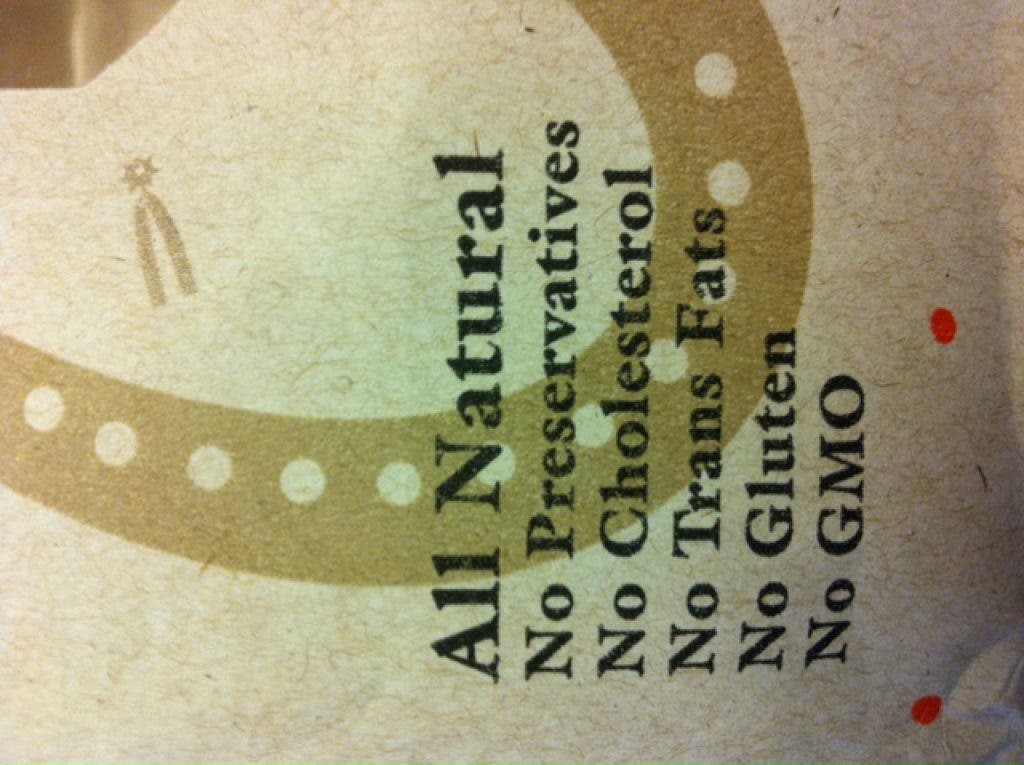
…No Trans Fat: Among other things, trans fat damages your telomeres – the caps on the end of your chromosomes – causing problems with cell regeneration, cell communication and inflammation. A food can contain half a gram of trans-fat per serving and legally put 0 trans fat on the label, but we often eat multiple servings of multiple such foods in a day; so, things can add up. This is a case where we have to read the ingredients to learn the whole story. Avoid anything that contains hydrogenated, partially hydrogenated or shortening ingredients.
…No High Fructose Corn Syrup (HFCS): It is especially alarming if this pops up on a product that used to have HFCS. Some companies have converted to using Crystalline Fructose in order to be able to put “No High Fructose Corn Syrup” prominently on the front of their products. Crystalline Fructose is high in fructose and comes from corn; it’s just no longer in syrup form. It is corn syrup that has been further processed into a solid form. The kicker is, HFCS can be as much as 90% fructose, but is often only 55% fructose whereas crystalline fructose is 98% fructose at a minimum. Both of these sweeteners are usually found in low fiber foods, but a little fructose must be consumed with a lot of fiber – like the ratio found in, say, a whole apple :).
…Now with Added Fiber: I have come across several previously unsweetened products that suddenly got sweeter, but still said no added sugar and listed no fake sweeteners. The one touted change was the “now with added fiber” label, but the only new ingredient was maltodextrin. Dextrins are fibers, but malts are sugars; so, which would you advertise? At the beginning of the digestion process the sugars break off and are easily, fully digested. A little bit of the remaining molecules makes it into the intestines untouched allowing for the fiber technicality, but we’ll get more benefit for our digestive health by eating fruits & vegetables for fiber.
…Now with Flax Seeds for Omega-3: Speaking of fiber, flax seeds can be a very expensive way to get fiber when trying to up the omega-3s (one of the good fats). The seeds have to be ground or powdered to be digestible, and the insides must be digested to get the omega-3s. The seeds are so small that they can survive chewing without being cracked, and their seed coat is so strong that they can survive the entire digestive tract without dissolving. So, if you can see the flax seeds in a product, it’s probably not worth buying.
…Free Range: In the U. S. free range technically means poultry has been allowed access to the outside. A door that gets opened twice a day fits the bill whether or not the animals discover it, use it or even are capable of walking over to it. Also, on the other side of that door nothing says there must be a field let alone edible grass and bugs.
…Vegetarian Fed Poultry: While it’s good to know that chickens have not been fed sheep’s brains or pork scraps, chickens are not vegetarians. They eat bugs. I don’t know much about chicken nutrition, but I bet the bugs contain needed protein, roughage and vitamins – I know bugs have vitamin B-12. If chickens are vegetarian fed and truly free range, they will get their nutrition on their own and then you will get some benefit, but if they are caged and fed just corn, that is not worth paying extra for.
…Light: If something is trying to be light, it is probably something that we should be eating less of less often not something we should pretend is healthy or try to make “healthier”; in doing so we often end up worse off. Here’s one example: by definition mayonnaise must contain egg & oil; it also sometimes has some or all of vinegar, salt, pepper, mustard, garlic, lemon or paprika. The “light” (supposedly better for you) kind has two different kinds of sugar, as well as two different, fake-sweeteners! It also has simple starches and chemical thickeners. (Personally, I’d prefer a little egg and oil on occasion.)
…Made with Real Fruit: One blueberry does not a real fruit product make – but that’s all companies need to give you. If a product needs to announce that it contains real fruit, we need to read the ingredients and see how far down the list fruit falls. BTW: Something can be labeled as having berry pieces or similar terms and contain no fruit at all of any kind. “Berry pieces”, you see, are not the same as pieces of berries – they are just the name given to them by whoever invented these colored, sugar and flour baked nuggets.
…Multi-grain: Similar to the single berry in a smoothie or muffin phenomenon, some multi-grain products contain a lot of whole grain and some contain only a pinch for the right to use the wording on the label. Finally, to come full circle it must be noted that companies fear we won’t like the healthier whole grain version; so, like low fat, a small pinch of multi-grain is often served up with a pinch of sugar.
CHALLENGE #6 of 50:
Be brutally honest with yourself regarding what you buy/eat this week. Look at the facts not the advertising. Try not to look at a food in terms of what it doesn’t (and shouldn’t) have in it, or what conglomerates add to distract us, to entice us, to get their portion of our grocery money and to make us feel better about what we consume (figuratively & literally). Think about what you DO want to eat and what exactly you are eating; try to be aware of the big picture.
QUOTE of the WEEK: (This exchange happens when a girl scout passes a lemon-aide stand in front of “The Addams Family” home.)
Girl Scout: Is this made from real lemons?
Wednesday: Yes.
Girl Scout: I only like all-natural foods and beverages, organically grown, with no preservatives. Are you sure they're real lemons?
Pugsley: Yes
Girl Scout: Well, I'll tell you what. I'll buy a cup if you buy a box of my delicious Girl Scout cookies. Do we have a deal?
Wednesday: Are they made from real Girl Scouts?