Health & Fitness
FOOD for(e)THOUGHT: Halve Your Meat & Eat it Too
FOR YOU is it about health or the health of our economy? Is it about saving every cute animal on the planet or is it about saving the planet? Do we have to agree on a reason to take action?
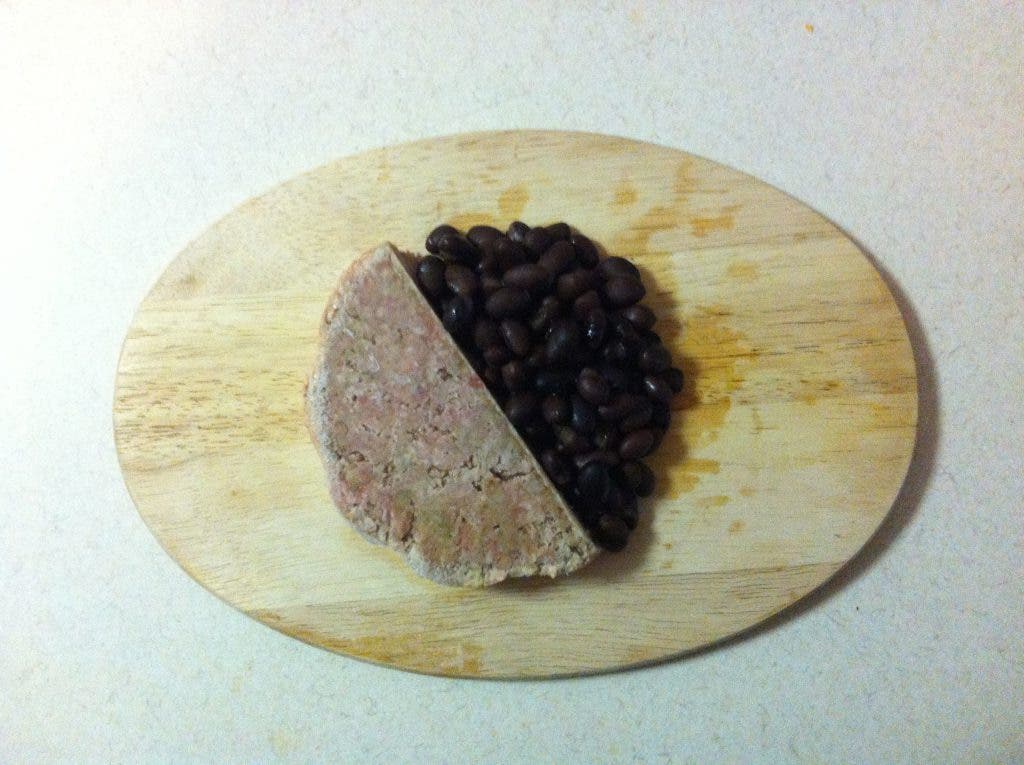
(Dietary changes should be discussed with a health care provider.)
Coincidentally, we have crossed the halfway mark on our healthy eating journey! Let’s get the controversial topic out of the way now so that it’s clear sailing ahead.
Find out what's happening in Westfordfor free with the latest updates from Patch.
Healthy meat can be part of a healthy diet, but it is not a _necessary_ part of a healthy diet; so, how much is reasonable? Let’s be open-minded for a moment and think about this from a, possibly, new perspective. These days many people are trying to be healthy and trying to be “green”, as well as trying to be socially and economically responsible. Each of these compete for our time, energy & money – no one can do it all, all of the time. Every once in a while two goals overlap, but how often can we kill THREE or more birds with one stone? Decreasing meat consumption can have some far reaching effects that may not readily occur to us.
Find out what's happening in Westfordfor free with the latest updates from Patch.
Here are half a dozen reasons to cut your meat consumption in half, (and maybe in half again).
1. WE DON’T NEED AS MUCH PROTEIN AS ONE MIGHT THINK,
& AT LEAST HALF OF IT SHOULD COME FROM PLANT SOURCES.
If we look at various health agencies’ protein recommendations around the globe, guess who suggests the highest consumption – the US. Now if we look at the amount of protein the average American consumes, it is almost double that recommendation. So maybe we can first reduce our meat consumption by almost half to bring protein consumption more in line with healthy guidelines. Then, if you are ready to go the extra step, consider two more pieces of information. The average recommended protein consumption in many other parts of the world is about half what the US recommends; so there’s one reason we might decrease a bit more. Also, remember that more than half of our protein consumption should be plant protein*; for most people the balance is tipped far the other way.
* NOTE: Here’s just a few of the great plants from which to get protein: nuts, seeds (including lentils, sprouts & quinoa), beans (including soy, peanuts & peas), whole grains (including barley, wheat & millet), asparagus, cauliflower, broccoli, Brussels sprouts, artichoke, watercress, spinach, etc., etc., etc.
2. LETS TALK ABOUT FAT – TWICE.
We’ve all heard the term “fatten up” applied to farm animals. Theoretically it refers to growing larger, healthier animals with more available meat, but often fattening up is done by any means available to create a higher profit. One way to fatten up animals is to feed them grain. Do you buy lean beef? Skinless chicken? Do you trim the fat very closely along the muscle or meat? Well guess what. Just as if you were to feed humans only grain with no green vegetables (leaves for us; grass for animals) and give them no exercise, animals, too, become unhealthy under such conditions. As they are literally “fattened” up, fat looks for new places to deposit and store itself. Fat globules get deposited inside muscle cells. So, when the visible fat is removed, the “lean” meat can still be 20% to almost 30% fat. The only way to decrease that fat consumption is to decrease the consumption of meat itself, to do A LOT of homework researching the meat that you buy – or to hunt wild animals instead.
There was a time when animals other than fish contained Omega-3s as well as saturated fat, but the levels these days are not only so small that they are almost not worth mentioning, except as a marketing gimmick, but more to the point, the Omega-3 to Omega-6 ratio is so low that the Omega-3 may not be helpful.
3. TRIPLE SAVINGS -- SAVE THE RAINFORESTS; SAVE THE PLANET
SAVE MONEY.
In my naiveté when I used to picture deforestation I pictured some wood being cut to build homes on the land from which it was cut. In reality much land is clear-cut to make room for meat factories and much more of the rainforest is lost to grain fields to feed those animals as well as to feed other animals much farther away. Lowering the demand for meat will keep us from lowering our available oxygen – one of these things is more important to our health than the other.
These days we may be able to raise many more animals in much less space (if we don’t count the land on which the animals’ food is grown), however, animals still drink as much water and excrete just as much waste. While there are more animals per acre, there is no more water per acre, and there are now fewer acres to spread the manure on. If you pile too much manure in one place, it acts as a poison rather than a fertilizer, as happens in the open cesspits that industrial farming terms “lagoons” – wouldn’t want to vacation anywhere near one of those – BTW: our tax dollars (not industrial agribusinesses) are paying to try to clean those up.
A serving of lentils costs $0.15, a serving of beans a little more; a serving of meat costs $1.50. We can pocket the ten fold savings or use it on occasion to eat different meat that is better for our health, the planet and the other people on it.
4. WE DON’T NEED ANY CONCENTRATED CHEMICALS ETC.
Just like people, animals are affected by chemicals and by pollution in the environment. They eat herbicides and pesticides with their food, drink and breathe polluted water and air and are rubbed/sprayed with insecticides that are absorbed through the skin or breathed in. These chemicals are concentrated inside the animals’ flesh and passed along to us in much higher doses than with plants (which in some cases we can wash almost clean).
5. WE COULD FEED THE HUNGRY POOR.
If we were to plant a variety of vegetables and grains on the same lands on which we raise food animals and farm food animals’ food, we could feed multiple times as many people as we could feeding them meat.
6. YOU DON’T HAVE TO BE EVEN CLOSE TO AN ANIMAL RIGHTS ACTIVIST
TO WANT TO SAVE THE ANIMALS FROM…
I can respect the fact that big fish eat little fish and lions eat gazelles. I won’t tell others that humans should never kill an animal to eat, but there is a big difference between quickly ringing the neck of a chicken or slashing the throat of a cow and…
…tossing live baby boy chicks into a dumpster to be crushed by the weight of their brothers, to die of starvation or to die of suffocation or worse… …grinding them up ALIVE to become feed or fertilizer. Live pigs are rolled into boiling water for easier skinning and sometimes swim toward the edge before they succumb to the heat or are knocked out with a high velocity bolt to the head (which sometimes takes two or three tries). Many types of animals are deliberately mutilated at a young age to make raising them in close confinement more convenient and more profitable or are brutally mutilated as an accidental result of the conditions – a regular occurrence that is considered an acceptable loss.
NOTE:
WOULD YOU RATHER REDUCE MEAT CONSUMPTION or GIVE UP YOUR CAR?
I recently learned that raising animals for food production causes more greenhouse gasses to be released than planes, trains & automobiles -- and boats combined! If we give up meat and dairy just one day per week, it is like giving up our cars for 1 season. I don’t know that it scales linearly, but committing to giving up meat and dairy every other day could just about offset our cars for a year.
PS We didn’t even go into the positive contributions such a change can have on reducing disease and the effect reducing disease can have on alleviating the economy… That’s another half of the story.
CHALLENGE #29 of 50:
Give up animal product every other day.
Or, if all you can contribute right now is one meat free day per week, that’s still a way to begin contributing to your health and the wider world. If you do not eat meat every day now, try one of these easy-to-achieve-without-thinking plans described in the next “sideboard”:
The Fairs, Festivals AND Feast-days Plan
The Seder, Sabbath OR Sunday Plan
OR
The Home VS Away Game Plan
We can use our savings to buy anti-biotic free/hormone-free/outdoor raised/herbicide & pesticide free/”naturally” fed (in this case meaning close to what they would eat in the wild) or organic or sustainable/naturally* fed/small farm meat.
* “Natural” has no legal definition when it comes to meat. Something can be labeled natural and be fed herbicide laden GMO corn, can be injected with antibiotics and hormones, can be sprayed with insecticides, fed pesticides and confined in an overcrowded, unclean space.
QUOTE of the WEEK:
It's annoying to be disapproved of by people who know only half the story - especially when you're not sure which half they know.
Dave Barry