Neighbor News
The Whole Dancer
Exploring L'Ecole de Ballet's holistic approach to dance education, and their mission surrounding the mental & emotional health of dancers.
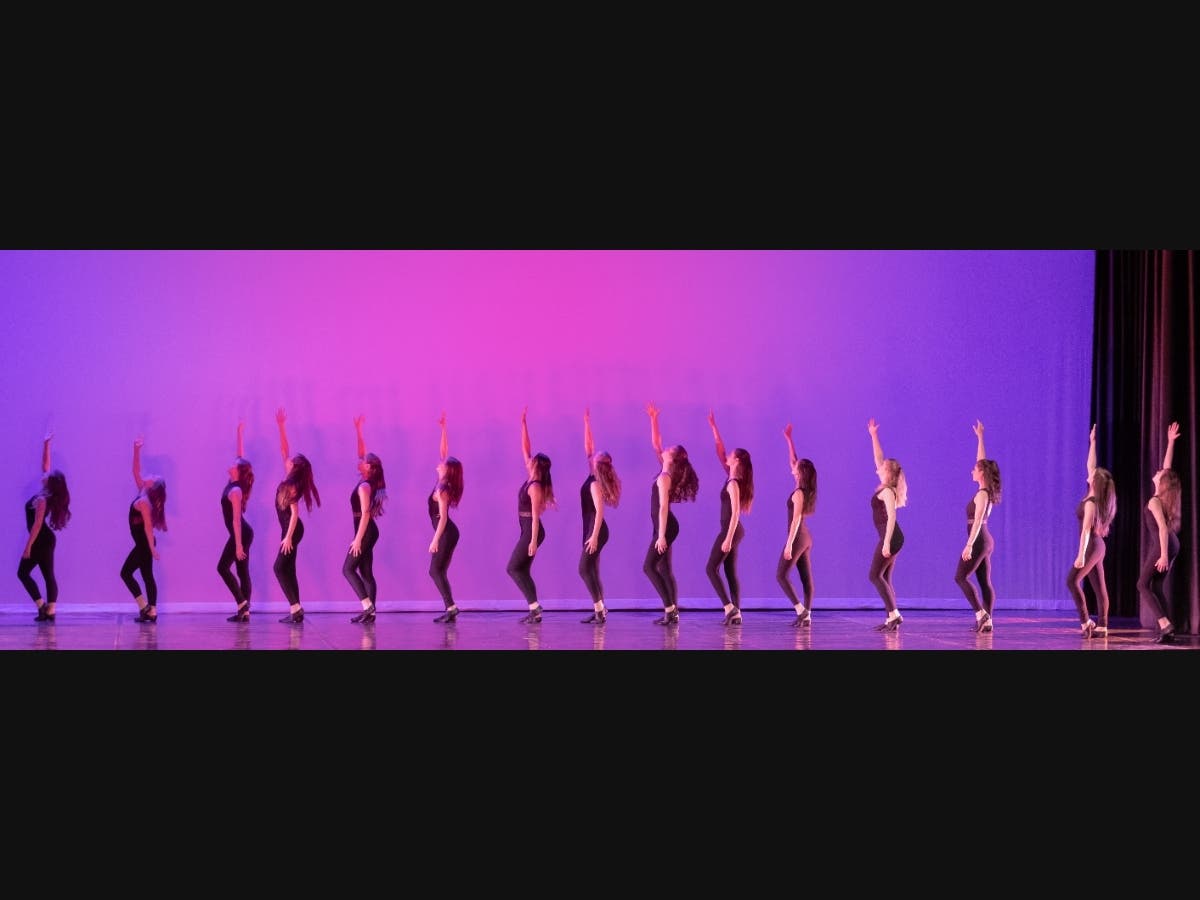
On the corner of Willow Road in Littleton Massachusetts sits a red house, with a small blue building set back behind it. Unassuming from the busy road, the space has been home to L’Ecole de Ballet for more than 35 years, shaping the young lives of the dancers who study there.
Clarissa Eaton took ownership of the school in 1989, and served as studio director and ballet instructor for more than three decades. In June of 2022, at the studio’s spring recital, she retired as director and passed the reins over to her former students, Sarah Drinkwater and Amy Hawthorne, and her daughter, Tiana Nygren. Although the audience filled with current and former students, faculty, and families already knew of her departure, it did not stop every person in the room from rising to their feet in support of her long and dedicated career.
It was at the same recital that my own family closed the 21-year chapter of our lives that existed within those studio walls, as my youngest sister graduated high school and danced her final performances under Eaton's instruction. After so many years, it’s difficult to describe the enormity of the role that L’Ecole de Ballet has played in our lives.
Find out what's happening in Westfordfor free with the latest updates from Patch.
Presently, Sarah Drinkwater serves as Studio Director, with Tiana Nygren as Assistant Director, and Amy Hawthorne as Studio Finance Manager. All three teach classes in a myriad of dance styles, and work with students from younger than age three, to high school seniors.
In the months that followed Eaton’s retirement, I watched as the three new owners breathed a new life into the studio. Most notably, the mission of the school now reads, “A safe space to dance.”
Find out what's happening in Westfordfor free with the latest updates from Patch.
It was a phrase that caught my attention.
Although the dance industry has long touted itself as an inclusive space, its history is one of privilege and wealth. When I began studying ballet in the early 2000’s, competition in the dance world was ever-growing, from the explosion of dance online and in television, to a wave of elite, intensive programs where students could spend thousands of dollars for a few weeks of study under the nation’s foremost instructors.
And with that competition was the omnipresent feeling of rivalry — dancers vying against one another for roles, for trophies, for jobs, and at younger and younger ages.
It’s a phenomenon that even a small studio like L’Ecole was not immune to, but one that Eaton took a measured approach against. Her school was never one that took part in dance competitions, and from a young age she taught her students that ballet was an art form, and that good technique was not a prize to be won. She encouraged her students to move outside of their comfort zones, and was an ardent supporter of their progression.
But even in our small hometowns, the impossible standards of appearance and performance that were glorified online and in film and television found their way onto our screens and into our lives.
As a child, I watched young friends struggle under the pressure of attempted perfection. I observed in myself what began as a love of the arts and a desire for self expression transform into a need for approval that I believed would only materialize under conditions of absolute excellence. It was as though that safe space on the corner of Willow Road sat precariously on a ledge that I then didn’t have the words to define.
But this new mission, ‘a safe space to dance,’ pulls the studio firmly away from that ledge, and the school’s leadership seems determined to evolve their practice to more fully withstand the pressures of the industry. “We’re focusing on what we call ‘the whole dancer,’” says Amy Hawthorne, which she describes as the combination of the physical, emotional, and mental health of a student.
The three members of the new management team bring together not just a love of dance, but professional backgrounds in psychology, special education, counseling and mental health — a combination they believe to be a determining factor in their ability to carry out their mission.
“You never know what someone is walking in with,” says Nygren, who takes a trauma-informed approach to her teaching. Trauma-informed care is the practice in psychology of recognizing and understanding a person’s life experiences in order to better support them. Nygren believes it has applications in a dance setting as well.
"There’s been a lot of research about the ways in which [adverse] experiences mold our brains and the ways that we respond to things,” she says. It’s about not taking a student’s reactions and responses at face value, “but really knowing that everyone is carrying their experiences with them.” It’s no small feat, teaching a traditional art form through a modern lens, but Nygren says that it’s something she’s wanted for a long time.
“There used to be this idea that you need to leave your problems at the door when you come to dance class. But we’re saying no, don’t leave your problems at the door - bring it in with you, and allow us to carry some of that weight.”
It’s this bridge between dance and mental and emotional health where Amy Hawthorne finds connections as well. Outside the studio she works as a mental health counselor for children and adolescents, and she describes going beyond just an awareness of mental health in the classroom, to how she and her colleagues structure their programs around it. “We’re focusing on making sure that dance is a supportive environment, not a place where people feel like they need to compete with one another, or even compete against themselves.”
She explains the value of labeling what she calls “moments for growth” in class, acknowledging with her students when exercises or combinations are difficult, and helping them to move past their own inhibitions or mistakes. “We can mess up and we can be okay with that,” she says. “Class is a space to have those points of learning.”
They’ve even introduced exercises specifically for the purpose of giving students space to make mistakes, to reinforce the idea that working hard doesn’t have to be synonymous with perfection. Exercises like doing as many pirouettes as possible, not with the intention of rewarding the student who does the most, but with the intention of learning when and why you might naturally hit a stopping point. “You can see [the students’] shoulders drop and hear the sigh of relief when they realize they can mess up. And they have a blast with it,” says Nygren.
The three owners also acknowledge that historically, ballet has not always been accessible to students who learn or communicate in non-standard ways, or who have difficulty functioning in a classroom setting.
“I try to bring in the concept of modification of material,” says Nygren, who also works as a special education teacher. “Just like how schoolwork can be modified, or we can provide accommodations, we can also do that within the dance setting. We’re breaking away from the rigidity of classical ballet in that sense.”
It’s a practice that starts from a student's first introduction to the studio. If parents are comfortable disclosing, they’re asked if their child has any diagnoses, or notes in their Individualized Education Plan (IEP) that would help instructors make their programs more accessible.
In terms of diluting contention between dancers, the school is also staying true to its history of not taking part in dance competitions. Instead, unique to L’Ecole, the studio puts on an original, full-length ballet at the end of every academic year, with students playing each character and working together to tell the story. Past ballets have included hits like The Wizard of Oz, Pippi Longstocking, Robin Hood, and Mary Poppins, among others.
“Going to competitions and trying to win a trophy, or beat the person next to you, or beat another studio puts unnecessary pressure on the kids,” says Drinkwater. “It’s the philosophy that Clarissa always upheld, that dance should be seen as a performing art. Everyone has something to contribute to it.”
Encouraging contribution to an art form is an admirable goal, but it’s another that, historically in ballet, can be more difficult to achieve for some students. Ballet’s method of traditional storytelling means that it adheres to strict gender roles, from the physical presentation and costuming of dancers, to the characters and choreography they’re allowed to represent and perform. But it’s another barrier that L’Ecole’s management team are determined to break down.
A few years ago, the studio began taking a more flexible approach to the dress code required by students in class. Instructors do not require girls to wear leotards, or boys to wear t-shirts and tights. In fact, there is no mention of gender in the dress code at all. Students are simply required to wear clothing that allows their instructors to monitor their alignment and technique.
“A big part of what we’re doing is just creating gender inclusivity,” says Nygren. “In both allowing flexible options for what you wear to class, and being able to freely express your gender identity, whatever that may be, we’ve made a really conscious effort to make it known that this is a safe space for everyone.”
In addition, there is no gender-based limitation on students when it comes to the roles they play or the choreography they perform. “In ballet specifically, traditionally the boys are supposed to lift, and the girls are supposed to be lifted, or there’s a male variation and a female variation,” says Drinkwater. "We’ve done partnering classes where we ignore gender, and everyone does everything, or workshops where everyone learns both variation A and variation B.”
Beyond just the mental and emotional health of dancers, the studio is making strides towards teaching students about physical health in ways that many smaller schools have a difficult time accessing. In the summer of 2022, certified athletic trainer Amanda Donahue joined the L’Ecole de Ballet staff. Her goal, she says, is to help dancers strengthen their bodies and support their technique in a safe, multidimensional way.
“It’s about getting [students] to recognize that dancers are also athletes, and getting them in that mindset of how to train like an athlete as well as a dancer,” says Donahue. She runs workshops on injury prevention, pointe-readiness, cross training, and nutrition, all of which students are welcomed to take part in or opt out of depending on their preferences and needs.
When asked about the future of the studio, the new owners are optimistic. With goals ranging from classes for differently-abled folks, to mental health workshops, to expanding their already popular 'donated dancewear' program, there is a confidence in expanding access to dance for people of all backgrounds and abilities.
As I’ve found many dancers do, I myself took a break from dancing after I graduated college, not knowing how my skills would transfer in the larger community, and wary of judgement in a new space. Although I miss the freedom of movement and dance, even the prospect of returning to a room full of mirrors takes its toll on the psyche.
But I have to ask — if this is the future of dance, then what are we waiting for? Perhaps it’s time to dig out the ballet slippers again.
Rachel Swansburg was a student of Clarissa Eaton’s, and practiced with L’Ecole de Ballet from 2001-2016. She also served as an instructor there from 2012-2016.