Politics & Government
More Questions, Concerns Raised About Wilmington Detox Facility Backer, Proposal
The parent of a patient and the owner of a Wakefield sober house sent letters to the Wilmington Selectmen raising concerns about David Ray.


WILMINGTON, MA -- A day after David Ray appeared before the Board of Selectmen to discuss his proposal to build a drug and alcohol addiction treatment facility in Wilmington, questions were raised about his certification and the track record at facilities he previously operated in Wakefield and Wenham. The mother of one of Ray's former patients at Number 16 in Wakefield and the owner of a certified sober living house in Wakefield both questioned Ray's ability and warned about potential problems with Ray's history in the business.
"As far as I'm concerned, David Ray is a snake oil salesman who had a good run," said Richard Winant, who runs the Kelly House, a sober living facility in Wakefield. "He had a very niche market -- he targeted affluent people who were desperate because their kids were struggling with addiction."
Ray did not return phone calls seeking comment Tuesday and Wednesday. Winant said he was so alarmed after reading news reports about Monday's board of selectmen's meeting, where Ray outlined plan for a drug addiction treatment facility in Wilmington, that he sent a letter to the board on Tuesday to raise his concerns.
Find out what's happening in Wilmingtonfor free with the latest updates from Patch.
Subscribe to Wilmington Patch for more local news and real-time alerts.
According to the Massachusetts Secretary of State, Number 16 was formed in 2007 by Ray and other partners. An IRS form 990, a financial disclosure form which nonprofits are required to file annually and make available to the public, shows that Ray earned more than $144,000 as CEO of the Wenham house in 2015. It was not clear if that salary was just for his work at the Wenham facility or for his work at Number 16 as well. Disclosure reports for the Wakefield facilities were not available.
Find out what's happening in Wilmingtonfor free with the latest updates from Patch.
At Monday night's selectmen's meeting, more than 100 people attended to debate whether or not the town should welcome Ray and his plan to open a 48-bed detox center on a vacant lot at 362 Middlesex Avenue in Wilmington. The board was split in support of the project, but many residents -- as well as the town's police chief -- said the facility was needed to address the growing problem of opiate addiction in Wilmington.
Ray made comments implying that he had operated two sober houses in Wakefield continuously for a decade and that the town had had no complaints, saying "we have had zero incidents." The problem with that statement, Winant said, is that the two Wakefield facilities opened and the Wenham facility opened in 2013 and were all abruptly closed nearly two years ago.
Little Government Oversight For Sober Houses
Winant said he went to Number 16 shortly after it opened in the spring of 2013 to introduce himself to Ray and his former partner, Ari Nikolaou. The two men told him "we're going to talk and you're going to listen....I naively thought we were in the same field and in the same town and that we could work together," Winant said.
Despite a shortage of sober house beds in the region, the two men saw Winant's Kelly House as competition, Winant said in an interview Tuesday. Winant said Ray and Nikolaou told him they had chosen Wakefield "because it was an island" with a dearth of addiction treatment services. Winant said the men threatened to use connections in the tight-knit recovery industry to make sure he did not get referrals from detox centers.
Nikolau, of Ipswich, is not listed as a partner on Ray's Wilmington detox facility proposal. He could not be reached for comment Tuesday.
"I'm not sure exactly what he's proposing in Wilmington, but to the best of my knowledge, David Ray has no certification or training whatsoever to do this type of work, so I'm not sure how he's going to get a license to run a true detox center," Winant said.
In 2016 Massachusetts enacted laws that allow for sober houses to be certified as state approved. Winant's Kelly House is in the state database but none of the places Ray has run in the state have been certified -- in part because they were shut down before certification rules were implemented.
A detox facility like the one Ray wants to open in Wilmington is a medical facility and needs to be licensed by the state. Patients typically stay for a few days to a week to help transition through the withdrawal stages which, in severe cases, can be life threatening and often require medication, as well as supervision by medical doctors.
But oversight of sober houses is still lax and the certification is voluntary. By the time most families are looking at treatment options they have reached crisis mode and may not think -- or even know -- to ask about a facility's certification and the staff's training. In many cases the arrangement is no different than a house owner renting a room to a tenant.
"The catch with sober houses is that unethical owners can hide behind the federal housing discrimination act [and avoid oversight] by saying people have a right to live in any community they choose if they have a disability," Winant said. "You and I can go out and buy a house today and be running it as a sober house -- with clients -- by Friday."
Winant said one of Number 16's Wakefield properties is now being used by a different, state certified treatment facility. The other has been torn down to make way for a condominium development. He said Ray was rarely on sight in the center's final months and, according to many of his clients, day-to-day operations were being handled by a 24-year-old former resident at Number 16.
"I’m not sure why he closed down because at the time he had 30 beds at $2,000 a month each between the two places," Winant said. "What I do know is I was inundated with calls from parents scrambling to find a place for their kid to stay when he shut Number 16 down."
Signs Of Trouble
One of those parents was Jaqueline Petinge, a Wilmington mother whose son has been in and out of drug addiction treatment programs since he was 17. Petinge's son had been sober for 11 months and was living at Number 16 in Wakefield when Ray abruptly shut it down in December 2015.
In hindsight, there had been warning signs: Ray canceled the house's cable service and heating and cooling were more closely monitored throughout the fall of 2015. At one point, the electricity was shut off, Pentige said. He was increasingly unavailable and during family meetings he would grow defensive when pressed by parents of patients about the facility's finances. Despite charging between $1,500 and $2,000 per month and hiring staff that did not have formal training, Ray confided to the parents of some patients that money was tight.
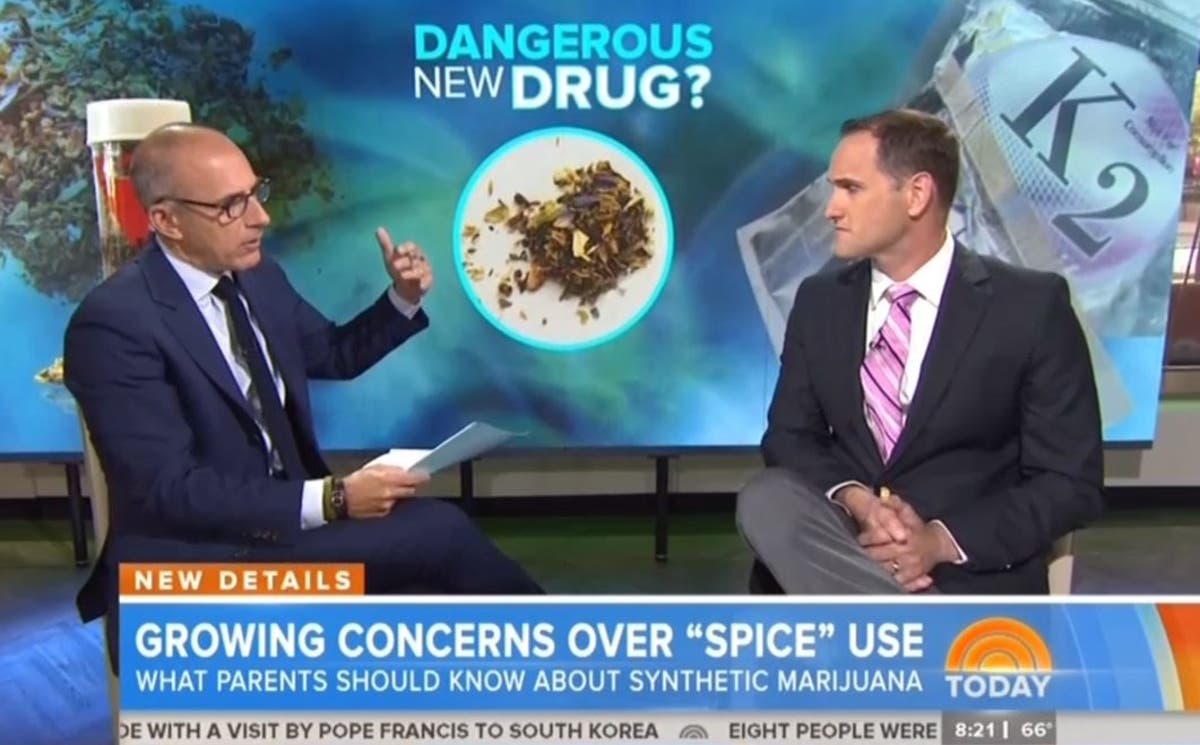
But even as troubles seemingly mounted at Ray's Wakefield facilities, he continued to portray himself as an industry expert. Ray appeared on the "Today Show" in 2014 with Matt Lauer to talk about the rising problem of synthetic marijuana and the dangers facing the younger generation. Also in 2014, NBC Nightly News filmed a segment at Number 16's Wakefield sober house.
On Christmas Eve, Pentige's son called her and said he was being told he needed to leave the house. He had tried to call other area sober houses but none of them had available beds. Pentige told her son to come home. By March of 2016 he had relapsed.
"I'm not going to speculate on why my son relapsed," Pentinge said. "But he was almost a year sober and then he was out on the street."
Pentinge's son is now living at a different facility and is sober. Like Winant, Pentige didn't know about Ray's Wilmington proposal until reading news reports about Monday night's selectmen's meeting. She too sent a letter to the board raising her concerns.
A Town Divided
Selectmen in Wilmington do not have formal approval authority over the detox facility, but Ray went before the board Monday night to give an overview of his plan and seek the board's endorsement for the project. Selectmen Michael L. Champoux, Gregory Bendel and Kevin Caira made comments that suggested they favored the project, while Selectmen Edward Loud and Michael McCoy said they opposed the project.
Wilmington Police Chief Michael Begonis said he contacted Wakefield Police and confirmed Ray's account that there had been no reported incidents at the facility.
"From the perspective of the police department, we need assistance. We need the help. It’s heartbreaking. I sympathize with the folks that live in the neighborhood. I get it - I live in the neighborhood," Begonis said. "I’m not here to tell you if this is the right location or the wrong location. My concern...is there are not a lot of people knocking on our door to help Wilmington specifically. I need beds because I’ve called at 5 o’clock on Friday night to try to get people help and they’re your friends and neighbors."
The project is also supported by Michael Caira, who stepped down as town manager in 2012 and has been working with Ray as an unpaid consultant.
"There's no intention to change anyone's mind here, because people have made up their mind already," Caira said. "But it is not what has been described on social media. It is what has just been described by Mr. Ray...I think the town of Wilmington should take an advantage of a treatment program when they have that opportunity, and I believe this is that opportunity."
Screenshot from David Ray's 2014 appearance on NBC's Today Show.
Dave Copeland can be reached at dave.copeland@patch.com or by calling 617-433-7851.
Get more local news delivered straight to your inbox. Sign up for free Patch newsletters and alerts.