Politics & Government
Wilmington Selectmen, Residents Divided On Controversial Proposal For Drug Treatment Facility
The Wilmington Police Chief and Board of Selectmen Chair came out in support of the proposed drug treatment facility, saying "We need this."



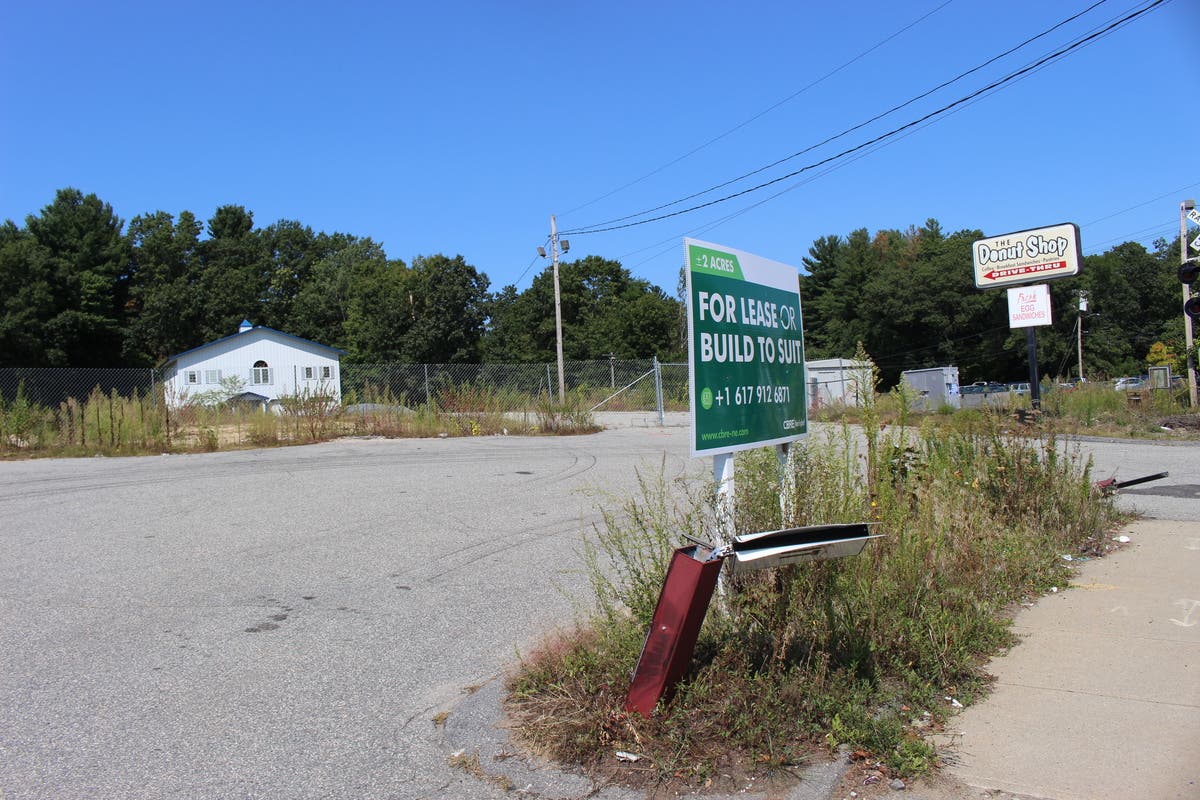
WILMINGTON, MA -- A detox facility being proposed for a two-acre, vacant lot at 362 Middlesex Avenue near the MBTA commuter rail station would be “another tool in the toolbox” for fighting a drug and alcohol addiction epidemic that one of the backers described as “the Vietnam of this generation.” But selectmen and residents who got their first public look at the proposal Monday night were cool -- and in many cases, outright opposed -- to the plan.
Selectmen Chairman Michael L. Champoux acknowledged he would probably “fracture friendships I hold dear” by publicly supporting the project. The crowd yelled over him as he explained his reasoning and suggested other proposed uses for the property, including a Dollar General store that had been proposed for the lot, would have a bigger negative impact on property values for neighboring homes the drug treatment facility.
"I’m very disappointed in the people who pulled the NIMBY (not in my back yard) attitude on this," he said. "We need to invest in each other and we don’t have another location. I’m just of the opinion if we turn our back on this we may not have another swing of the bat and that’s a shame."
Find out what's happening in Wilmingtonfor free with the latest updates from Patch.
Selectmen Gregory Bendel and Kevin Caira also spoke in favor of the proposal. Caira said his interpretation of the zoning laws allow for the facility and voting against it would send a bad message to other businesses looking to locate in Wilmington. The selectmen do not formally vote on the proposal -- that falls to the building department, and the planning and zoning boards -- but backers of the proposal said they wanted to appear for the selectmen to answer the flood of concerns that have been raised about their plan.
David Ray of Number 16, an addiction treatment company, presented an overview of his plan to the board of selectmen Monday night. It was the first public meeting between Number 16 and town officials but follows weeks of online speculation and social media fretting about the proposal.
Find out what's happening in Wilmingtonfor free with the latest updates from Patch.
Ray, an alcoholic who grew up in North Reading and gave up a law career to pursue a career in addiction treatment, is proposing a co-ed, 48-bed detox center. Clients would, on average, stay in the facility for 10-14 days. There would be no visitors and the number of clients checking in and out each day would be minimal.
Subscribe to Wilmington Patch for more local news and real-time alerts.
Ray said the building would "look like a two-story medical building because that's exactly what it is." Patients would be dropped off at the front door and have no interaction with the outside community. Ray said on a "maximum intake/outake" day there would be no more than three clients arriving and three clients leaving.
"What our facility is not -- and I think this is important -- is not a methadone clinic," Ray said. "people are not coming in and out on a daily basis and we will not provide any outpatient services whatsoever. It's not a halfway house...it's not a sober house....and it's not a come-and-go facility."
Number 16 runs a sober-living house in Wakefield where patients typically live for six to eight months. A 14-bed sober house the company ran in Wenham closed last year. The Wenham location was open for just two years and opened only after a long legal battle with the neighbors and the town. On Monday, Ray said that facility was about to be reopened.
"We opened up a 30-day program in Wenham with the town's approval. There was someone who didn't want it there and the tow changed its mind," Ray said. "We prevailed on the merits of the case...We shuddered it for 10 months but it's reopening in two weeks."
Ray had also proposed a facility for Topsfield in 2013, where residents raised similar concerns to those now being heard in Wilmington, but that facility has not opened. Ray said in a decade of running his facility in Wakefield, where patients stay longer and can come and go from the facility, "we have had zero incidents. And this will be far ore controlled." Ray added that Wilmington residents would be given priority for treatment and jobs at the facility, and that the center would look to form partnerships with the school system and the community to fight addiction.
"From the perspective of the police department, we need assistance. We need the help. It’s heartbreaking. I sympathize with the folks that live in the neighborhood. I get it - I live in the neighborhood," Begonis said. "I’m not here to tell you if this is the right location or the wrong location. My concern...is there are not a lot of people knocking on our door to help Wilmington specifically. I need beds because I’ve called at 5 o’clock on Friday night to try to get people help and they’re your friends and neighbors."
But residents remain concerned. The property is centrally located and within a mile of two schools, said Selectman Edward Loud. "We all know in this room every town needs a treatment center," Loud said. "You may not be asking for an endorsement from us, but everyone in this room is asking us for an endorsement. I’ve gotten 15 or 16 emails and a lot of phone calls. You guys may not be asking for an endorsement, but they are."
Selectman Michael McCoy, a former planning board member, said he sees the need for facilities like the one being proposed by Number 16, but also doesn't think the 362 Middlesex Avenue locations is the right place for it. He worries about the property values of nearby homes. He raised questions about whether or not the facility would be allowed under the town's zoning bylaws, which do not have specific provisions for detox facilities.
Michael Caira, who stepped down as town manager in 2012 and has worked as a consultant, has been working with Ray. Caira said he was not being paid for his work for Ray and that he would likely step down from his voluntary role when Number 16 heads to the permitting and regulatory process.
"The most important reason I’m here is because I’m tired of going to wakes and funerals. I’m tired of talking to friends who have lost family members -- particularly sons and daughters" to addiction, Caira said. "We recognize there is a problem in Wilmington...and this is a town-wide issue that is taking away four, five and six young people every year."
Caira echoed comments made by Town Manager Jeffrey Hull that there had been widespread social media speculation that a backroom deal had already been struck and that the facility was a done deal. Caira said the group decided to appear before the selectmen even though the approvals would be handled by the planning and zoning boards because they wanted to be transparent about their plans.
The Wilmington detox center would likely treat patients in the initial stages of withdrawal for shorter periods than the typical stay at Number 16's other facilities. Ray said stays are typically three to seven days long and it is a "medical event" to stabilize patients before they move on to therapeutic treatment.
Number 16's Website portrays its method as an alternative to traditional addiction and alcoholism treatment centers that "apply old and questionable methods with lackluster outcomes...At Number 16, we have used the same method since we started and will be using it until we close. We don’t change because what we do works. We expect complete recovery and so should you. Number 16 is not addiction and alcoholism treatment and proudly so. We are recovered alcoholics and drug addicts who teach guests how to get well just like we did."
Ray appeared on the "Today Show" in 2014 with Matt Lauer to talk about the rising problem of synthetic marijuana and the dangers facing the younger generation. Also in 2014, NBC Nightly News filmed a segment at Number 16's Wakefield sober house.
Detox centers are typically the first step in treating people with severe substance addictions. The centers help patients through the withdrawal phase, which can be life-threatening in certain cases. About 22.5 million Americans needed some sort of substance abuse treatment in 2014 and opioid-related deaths increased fourfold in Massachusetts between 2000 and 2015.
"There's no intention to change anyone's mind here, because people have made up their mind already," Caira said. "But it is not what has been described on social media. It is what has just been described by Mr. Ray...I think the town of Wilmington should take an advantage of a treatment program when they have that opportunity, and I believe this is that opportunity."
Photo of Number 16's Wakefield drug treatment facility by Number 16.
Photo of 362 Middelsex Avenue by Dave Copeland.
Dave Copeland can be reached at dave.copeland@patch.com or by calling 617-433-7851.
Get more local news delivered straight to your inbox. Sign up for free Patch newsletters and alerts.