Schools
St. Charles School Goes Green—in Two Ways
The TerraCycle recycling program for juice pouches earns school a cash reward.
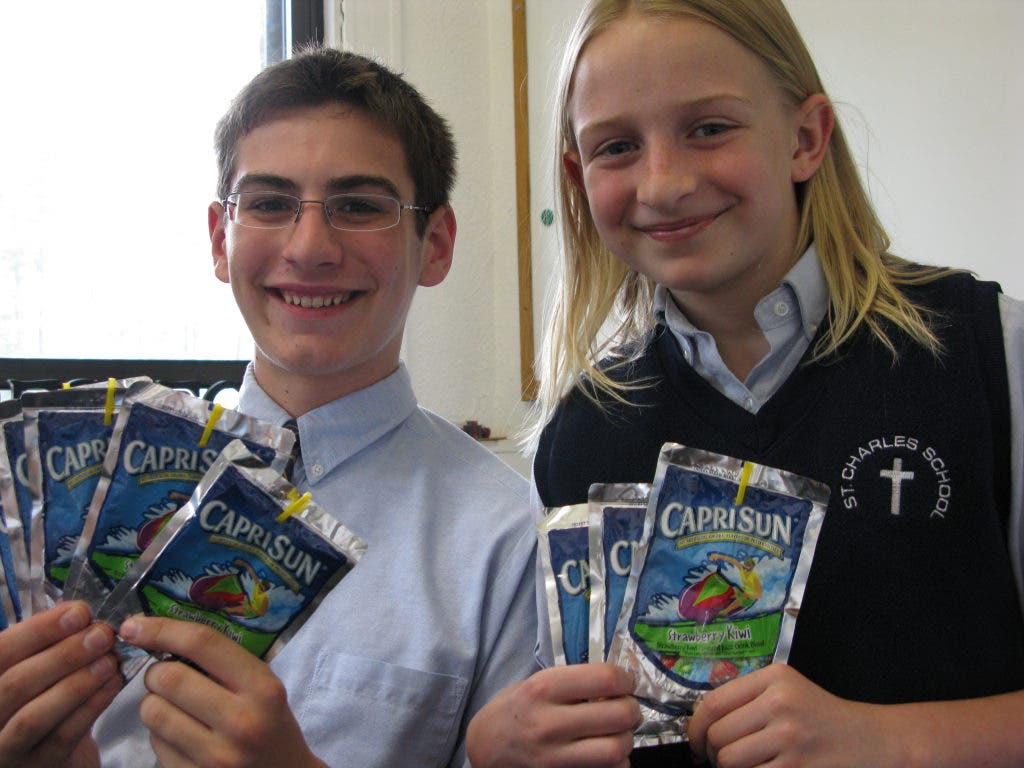
When students at see a certain juice pouch, they don’t just think “juice.”
They also think about reducing school trash and bringing in 2 cents per juice pouch for their school.
Special education teacher and Student Council advisor Jill Flemming also sees teachable math moments.
Find out what's happening in Woburnfor free with the latest updates from Patch.
Since this past September, the school has been sending Capri Sun juice pouches to TerraCycle.
This school year, St. Charles students, who ended their school year Tuesday, recycled more than 11,000 juice bags, Flemming said Wednesday morning—11,072 to be exact. The recycling idea came, she said, when students were doing an annual walk in September against diabetes. The boxes of juice bags that the Student Council dispensed during the walk said, Flemming pointed out, “Recycle with TerraCycle.”
Find out what's happening in Woburnfor free with the latest updates from Patch.
The school’s Student Council and fourth-graders took up the challenge, according to Flemming. Fourth-grade teachers Cara Anderson and Donna Brennan help with the counting and computing, Flemming said.
Sometimes the effort is a challenge. Students collect, clean and process juice pouches, according to Flemming and fourth-grader Jake Moore. That means taking straws out of the juice pouches, Moore said, and squashing the juice containers.
Students then package the juice pouches into zip lock bags, 50 per bag. Counting the juice containers can be “sticky, gross and disgusting,” said Flemming.
When they have collected at least 300 juice pouches—quick: how many recycling bags would that make, at 50 juice pouches per bag?—Flemming prints out an address label and sends the zip locked bags to TerraCycle. The school doesn’t even pay postage, she said.
“I wouldn’t want to be the person who opens (those) bags,” Flemming commented.
The recycling company keeps track of how many juice pouches the school sends, and mails them a check twice a school year.
TerraCycle grinds up some juice pouches for items like pencil boxes and fence posts, Flemming said, and turns others into backpacks.
“Other schools can do this, too,” Flemming said.
“Brigades” also recycle chip bags and yogurt containers, according to Flemming.
TerraCycle “collects difficult-to-recycle food packaging such as Frito-Lay chip bags, Kraft Singles cheese packaging, Scott paper towel and napkin wrapping and Solo plastic cups,” according to the company. Every piece of packaging earns the participant two points; the points can be donated to a charity or school that the participant chooses.
Beyond the TerraCycle effort, Flemming said she keeps a container outside her classroom at St. Charles School to recycle used water bottles.
Moore said he recycles at home. His mother is enthusiastic—“obsessive”—about recycling.
What started out as a small idea and the chance to receive 2 cents per juice pouch has blossomed, Flemming said, into lessons in math, organizing—and even cleaning.
“It has (also) inspired kids to recycle,” she said, both at school and at home. Some fourth-graders who will move into fifth grade in the fall are sad, Flemming said, because as fifth-graders they will not work directly on the recycling program. Flemming said she tells them, “Join the Student Council” and continue to work on this recycle and reuse effort.