Community Corner
In 2021, MA Cities Set Records For Warmth, Wetness: NWS
A new study shows New England warming faster than any other place on Earth, and these 2021 stats show how that played out last year.


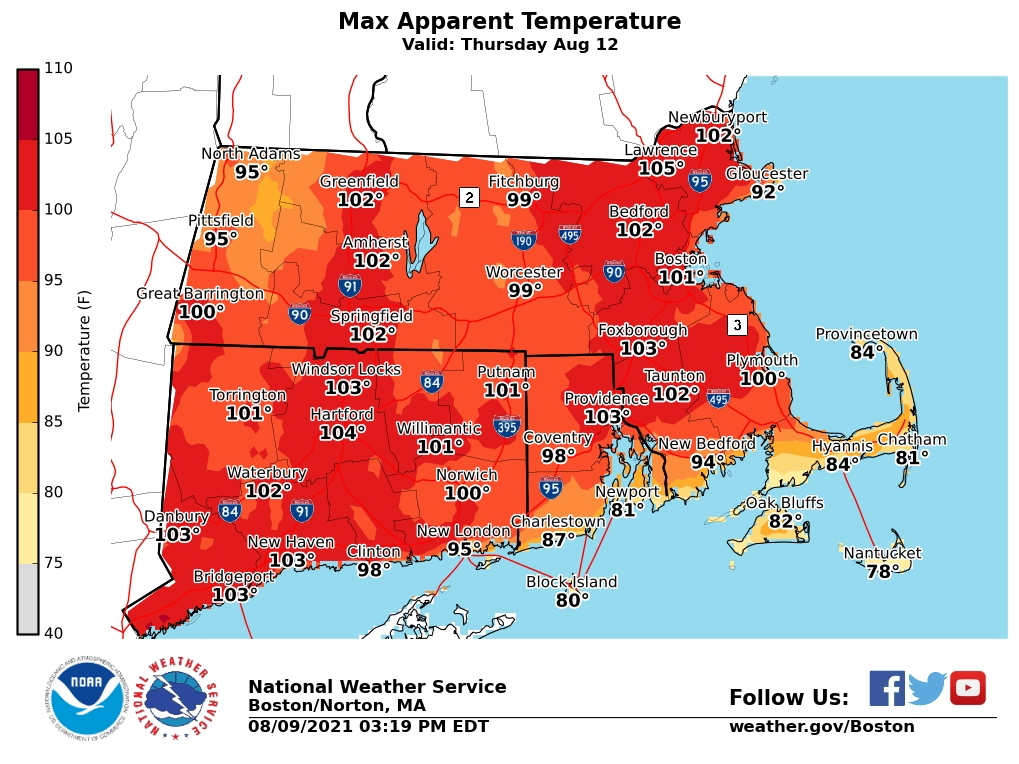
WORCESTER, MA — Several cities in Southern New England set climate records in 2021, according to the National Weather Service, underscoring a new study from Salem State University showing that the region is warming faster than most other places on Earth.
In 2021, Boston and Providence each notched their warmest year in recorded history with a mean temperature of just over 54 degrees. The "normal" mean temperature for each city was about 52 degrees spanning 1990 to 2020.
Worcester had its fifth-warmest year in history with a mean temperature of 50.6 degrees against a normal mean over the past 20 years of 48.2 degrees, according to the weather service. Last year was also Worcester's 10th wettest on record with over 57 inches of precipitation. The wettest year ever was in 1972 with almost 72 inches of precipitation.
Find out what's happening in Worcesterfor free with the latest updates from Patch.
Temperatures in major cities in Southern New England hovered around 40 degrees in December alone, according to the weather service. Normally, average temperatures in the region are around 29 degrees.
The 2021 climate stats are in! Boston & Providence set a new record for the warmest year in their respective station history. Worcester & Hartford came in at the 5th warmest. #mawx #ctwx #riwx pic.twitter.com/pMRDjIlx44
— NWS Boston (@NWSBoston) January 1, 2022
The Salem State University study published in early December said that New England's average temperature increased by about 3.29 degrees between 1990 and 2020. Planet-wide, average temperature increases were closer to 2 degrees.
Find out what's happening in Worcesterfor free with the latest updates from Patch.
That warming, pinned to human-caused greenhouse gas emissions, threatens everything from the maple syrup industry to tourism, authors Stephen S. Young and Joshua S. Young say.
"Changes in New England’s climate are threatening the seasonality, the natural resources, and the economic underpinnings of the region," the authors said. "The warming of the region, the shifting of the seasons, and the changes in precipitation all threaten New England’s distinctive natural landscape."
Get more local news delivered straight to your inbox. Sign up for free Patch newsletters and alerts.