Traffic & Transit
Housing Density Near Worcester MBTA Stop Very Low: Study
A new study shows local transit stops could handle 250,000 new housing units. The area around Union Station is especially under-developed.


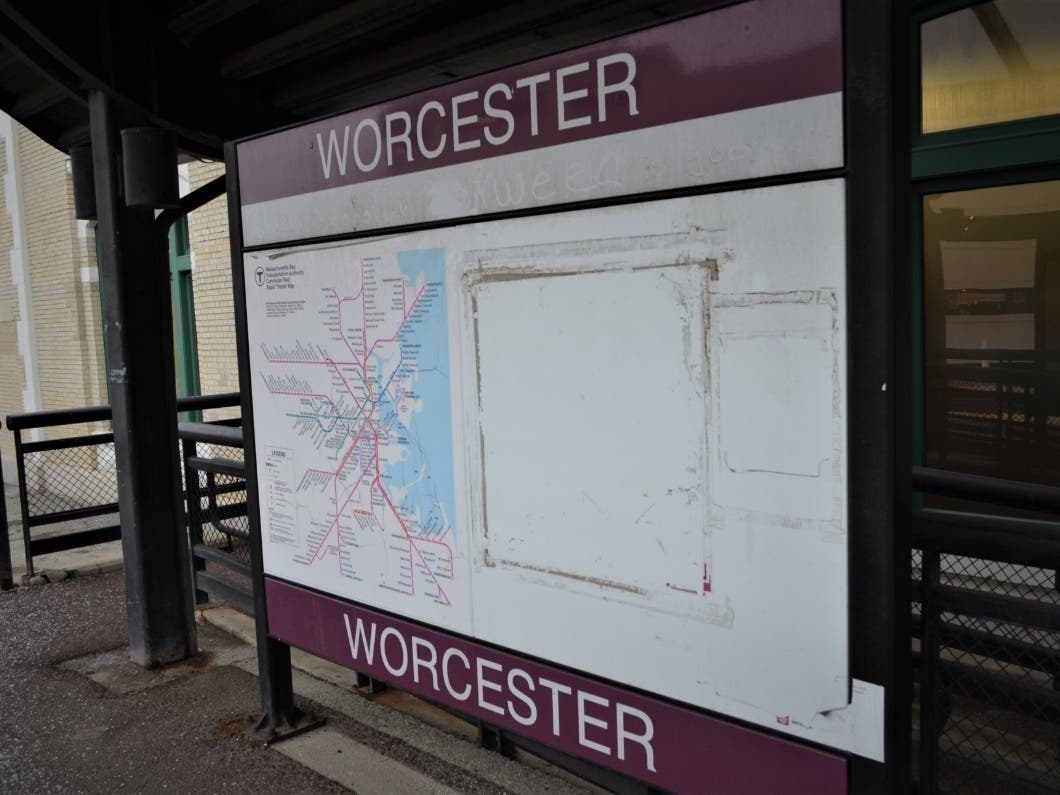
WORCESTER, MA — A new study of housing around local transit stations says there's an opportunity to build up to 253,000 new units, which would ease a growing housing shortage and ease traffic. The opportunity is especially high in Worcester because the area around Union Station is less dense than some smaller cities in the region like Natick and Needham.
The Massachusetts Housing Partnership study looked at 261 stations in the area — including Boston subway stops and all MBTA stations — and found that the average housing density is about 6.5 units per-acre. The area around Union Station, however, has about 3.1 units per-acre.
An ideal housing density could be as high as 12 to 26 units per acre — a number only seen in dense areas like Roxbury and the South End.
Density is much higher at other MBTA stops along the Worcester line. The West Natick station is slightly above average with 6.6 units per acre. Framingham had a density of 6.2 units per acre, and downtown Natick was at 5.3. Stations in Ashland and Westborough were typically below 2 units per-acre. Grafton came in last among the 261 stations with 0.02 units per-acre.
The study highlights that low-density areas are "squandered opportunities" because housing is in short supply. The numbers are just estimates, and the authors acknowledge barriers to housing in some neighborhoods, like commercial zoning.
The neighborhoods around Union Station have been undergoing significant redevelopment, and some are dominated by high commercial, nonprofit, and office use. The under-construction Polar Park development, for example, will add over 200 units within one mile of Union Station, according to plans.
"While this math is incredibly simple and ignores some important neighborhood factors, it does show the potential that re-imagining these high-access neighborhoods could have in terms of better supporting transit while simultaneously making a huge dent in our chronic housing supply problem," the study says. "Of course, every station area is different, and there are places where even greater levels of density make sense, and surely some places where market demand may not support large numbers of additional new units."
See a map of stations and read about the methodology on the Massachusetts Housing Partnership website.