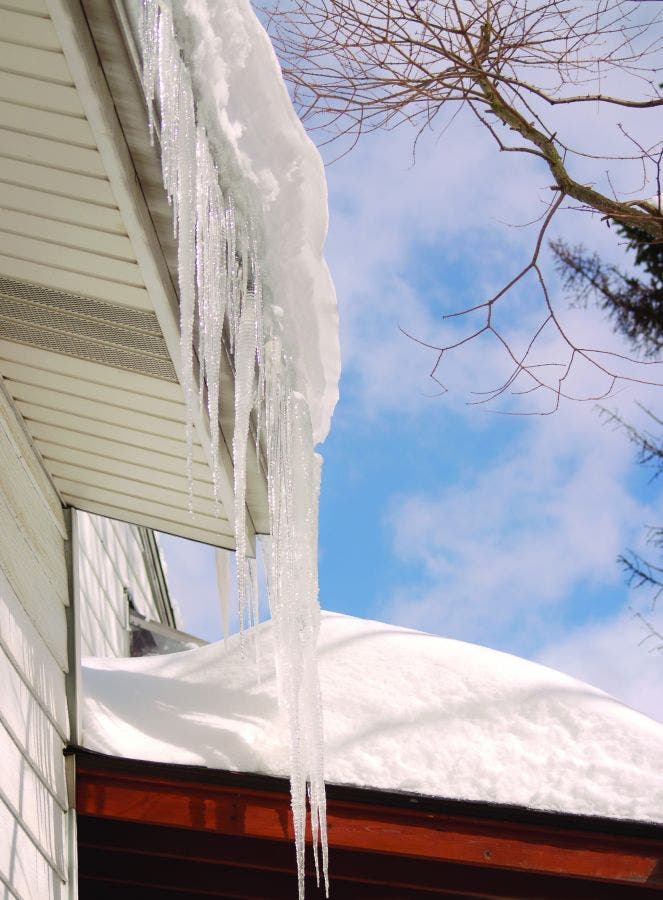
It’s February and Mother Nature has just picked up her fury, delivering two major snowstorms to the Northeast in one week. There is more snow in the forecast and we still have almost two months of winter weather ahead. Mother Nature’s wind, snow and ice hammer a roof and can raise the shingles, causing leaks. Thus, it is important to know how to keep a roof protected from the beating of snow and ice. And, with the recent uptick in severe weather, every slope and corner of a roof must be constructed to withstand any degree of snow to prevent damage and costly repairs.
To protect your roof from relentless winter weather, use self-adhered roofing underlayments. The complete roof system consists of multiple layers – not just the shingles. Shingles are the exterior layer, and shingles alone will not keep the snow, ice and water out. What makes the difference and protects your roof from damage is the roofing underlayment, which is installed underneath the shingles. Roofing underlayments perform many functions in a roofing assembly, but first and foremost, they serve as the last line of defense between homeowners and the damaging effects of snow and water infiltration.
There is a wide variation in product quality and performance. GCP Applied Technologies’ Grace Ice & Water Shield® pioneered the self-adhered roofing underlayment category more than 35 years ago. Grace Ice & Water Shield® provides premium performance as it seals to itself at overlaps, seals to the roof deck and, most importantly, seals around the fasteners used to attach the shingles, which helps prevent snow and water from leaking into your home.
Find out what's happening in Worcesterfor free with the latest updates from Patch.
Selecting an educated contractor and the proper construction materials now will make a big difference in the future of your roof and home, bringing you peace of mind.