Politics & Government
Worcester Council Voted To Fund K9, Now Money Will Go To Police Drone
The council voted in November to accept $100,000 from the state for a K9 program. Now some of the money will go toward a drone.


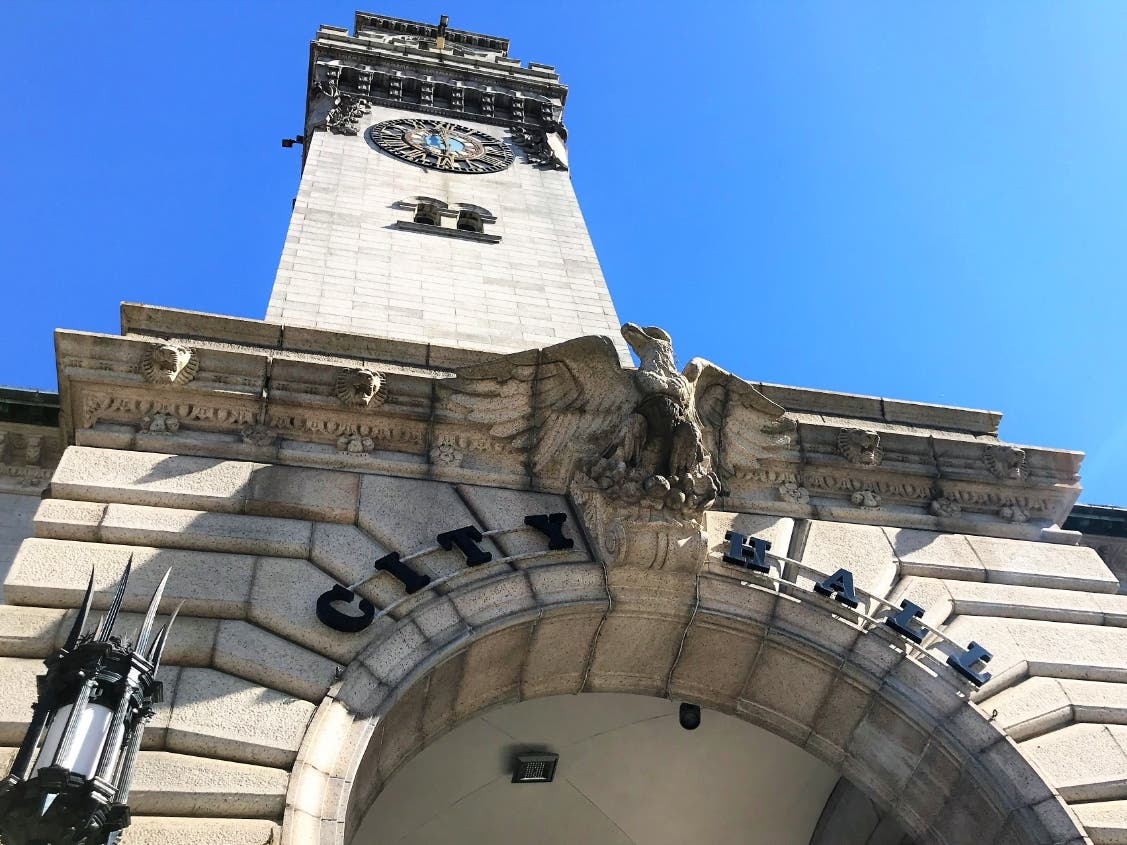
WORCESTER, MA — A routine vote by the Worcester City Council in November to accept an earmark from the state likely removed the council's fiscal control over a new Worcester police plan to buy a drone.
On Nov. 16, the council unanimously voted to accept $100,000 from the state Executive Office of Public Safety and Security, local blogger Nicole Apostola reported last week. City Manager Ed Augustus Jr. and Worcester Police Chief Steven Sargent told councilors they were approving funds to "enhance the Worcester police K9 program," the council agenda shows.
In April, Augustus alerted councilors that police would actually use $25,000 from that earmark to buy the department's first drone, with the remaining $75,000 going toward a new K9. At the same time, City Attorney Michael Traynor told councilors they will have "no formal approval or veto power" over the drone funding because Augustus is in charge of spending the money.
Find out what's happening in Worcesterfor free with the latest updates from Patch.
Through a spokesperson, Traynor acknowledged that the spending plan for the earmark had changed between November and April — but also that Augustus has the legal authority to change his mind about how to spend the money.
"The acquisition of an Unmanned Aircraft System is an authorized expenditure of the grant funds. While one purpose was identified in the transmittal, it does not preclude use of the grant funds for a different authorized expenditure under the terms of the grant," Traynor's statement said.
Find out what's happening in Worcesterfor free with the latest updates from Patch.
The drone proposal has drawn outrage from civil rights activists and homeless services agencies because Worcester police have said they might use the aircraft to search for homeless encampments. As of this week, councilors are still trying to shape a policy for the drone, but have to rely on Augustus to make those changes.
Although the drone proposal came to city council in April, testimony by state Sen. Michael Moore at a recent hearing revealed that officials have been considering a drone for a lot longer — even before the November vote to accept the $100,000 earmark.
Path Of $100,000 Earmark
At a council Public Safety Subcommittee hearing on April 20, Moore said he approached city officials in December 2020 and January 2021 to talk about projects that could be funded through earmarks in the state fiscal year 2022 budget.
Moore said Sargent asked for money for a K9, but also either a drone or new Taser weapons. Because Sargent hadn't decided between those latter two items, Moore included language in the state budget that would allow Worcester police to buy "deescalation equipment." Police have said drones are a deescalation tool because they can theoretically be used in place of armed officers.
"Rather than tying their hands, we referenced the K9, the [explosive ordinance disposal] dog, and we referenced the deescalation equipment," Moore said at the April 20 hearing.
The state budget approved in July 2021 included this wording: "[N]ot less than $100,000 shall be expended to the police department in the city of Worcester for public safety improvements, including the purchase of an explosive ordnance disposal canine, or EOD K-9, a canine vehicle and de-escalation equipment."
Four months after the state budget passed, Augustus brought the earmark to city council to accept. Under state law, the city council has to vote to accept any grant, be it from the state, federal government or a private donor.
In a memo to councilors before the Nov. 16 meeting, Augustus said the $100,000 would be used entirely for a K9.
"The Worcester Police Department intends to use this funding to enhance the Worcester Police K9 program," Augustus' memo said. "Specifically, the funds will be used to purchase a canine and provide the handler with a vehicle and necessary equipment and will cover the costs associated with training."
The resolution mentioned neither a drone nor deescalation equipment, but it did outline that Augustus would oversee how to spend the money.
"That the city manager be and is hereby authorized to take other such actions as are necessary to carry out the terms, purposes and conditions of the grant administered by the Executive Office of Public Safety and Security," one part of the resolution said.
Drones Subject To Surveillance Policy
Although councilors no longer have control over funding for a drone, a new city policy on surveillance technology does give them oversight over items like drones.
In December, Augustus created a new policy outlining how city departments can acquire surveillance technology. One key step is a public hearing in front of city council.
"The city manager will not decide on the request to obtain the surveillance technology until after the city council hearing," the policy says.
According to Augustus' office, the council already held that public hearing on April 20 in the council Public Safety Subcommittee chaired by At-Large Councilor Kate Toomey. She did not respond to several requests for comment about the drone funding. At the meeting, many local residents, the ACLU of Massachusetts and homeless outreach workers spoke against the drone plan.
The city council may not be finished with the drone issue yet. At-Large Councilor Thu Nguyen has asked Augustus not to allow police to buy a drone until the department submits a "comprehensive and civil liberties focused policy regulating the use" of drones. That item is on the council's agenda for discussion Tuesday.
In the meantime, Sargent has shared a draft drone policy with councilors:
Worcester police draft drone policy by neal mcnamara on Scribd
Get more local news delivered straight to your inbox. Sign up for free Patch newsletters and alerts.