Politics & Government
Bipartisan Legislative Push To Boost Affordable Michigan Housing Stock Would Focus On Zoning Reform
A focus on bipartisanship to fix the problem was a major theme for the lawmakers who supported the package.

February 17, 2026
Lawmakers from both sides of the political aisle are teaming up to address housing issues by updating the state’s zoning laws in conjunction with local government counterparts and Michigan homebuilders.
Find out what's happening in Across Michiganfor free with the latest updates from Patch.
The legislative package comes at a time when the housing shortage and the affordability crisis still loom large for Michigan residents trying to make ends meet in a lagging economy, and at a time when the two respective major political parties are already beating each other over the head with affordability issues heading into the upcoming election.
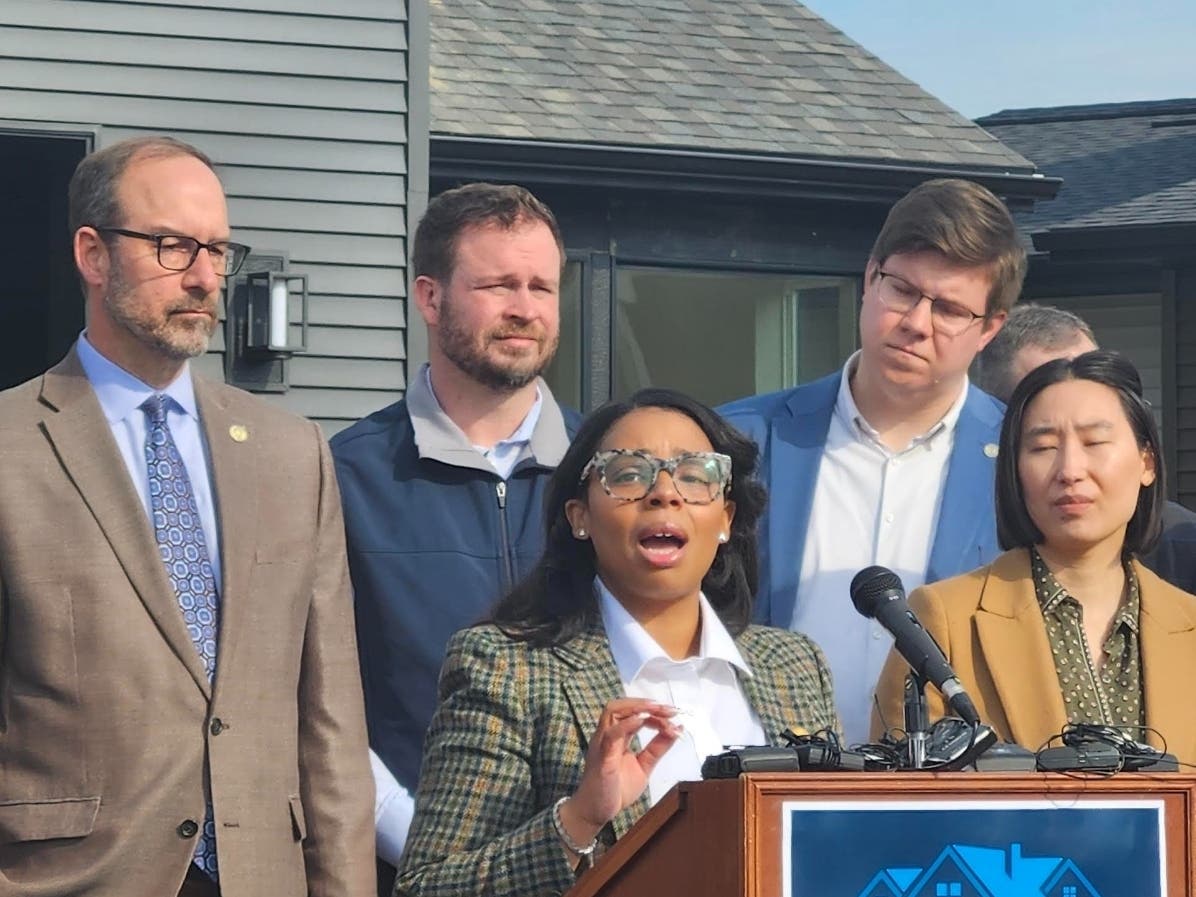
A focus on bipartisanship to fix the problem was a major theme for the lawmakers who supported the package when it was unveiled Tuesday at a news conference outside an under-construction home in northern Lansing.
Find out what's happening in Across Michiganfor free with the latest updates from Patch.
The eight-point legislative package would aim to create more efficient, predictable and transparent home development processes, all while balancing local control with the need for communities to build a range of housing choices.
The bills will start seeing movement with committee hearings planned later this week. The main sponsors of the package are state Reps. Joseph Aragona (R-Clinton Township) and Kristian Grant (D-Grand Rapids), were adamant that the measures would create meaningful strides toward building out new housing that reflects the changing economy and population needs in local communities.
“Throughout my time in the Legislature, I have worked to advance housing reforms that address the real pressures Michigan families are facing in this housing crisis,” Grant said at a news conference Tuesday outside an under-construction home in northern Lansing. “We cannot ignore the impact that limited supply and outdated systems have had on affordability and stability.”
Grant added that the bipartisan Housing Readiness Package would work to modernize the state’s development processes to reduce unnecessary costs and delays, and to make housing more affordable and available across the state.
“This is about ensuring Michigan is prepared for growth and that more residents have access to safe, stable homes,” she said.
Grant and Aragona said that most families today are told that they need to spend 30% of their gross income on housing or rent if they are to live in a comfortable home, but that is on the low end of what many families may spend on their housing budgets.
Decades ago, a Michigan resident could buy a house in the range of up to three-times their annual income, but that same home’s mortgage today might cost six-times their annual income.
Aragona said there were approximately 54,000 new units on the market in 2005, but only about 15,000 in 2024 — a drastic drop in the amount of available new housing.
“We need to make homes affordable again,” Aragona said. “One of the big reasons houses are so expensive now is because there’s an average of $95,000 in extra regulatory costs added on to the price before even buying materials or paying someone to swing a hammer.”
The bills are still in the drafting process and have not been introduced. Aragona said the bills were a priority for him and Grant, and wanted them to see movement in their respective committees once they were introduced.
He added that it was his hope to see the major pieces of the package cross the finish line this year, while also being cognizant that it would move in pieces.
Grant and Aragona were asked if they have the support of Speaker Matt Hall (R-Richland Township). Aragona said it was his understanding that Hall supports the measures in concept. When pressed further about whether there were items in the package that the speaker has taken issue with, Aragona said no.

Lauren Strickland, executive director of Abundant Housing Michigan, speaks at a news conference on a legislative package advocating zoning reforms that would aim to spur the building of more affordable housing. Feb. 17, 2026 | Photo by Ben Solis/Michigan Advance
Various lawmakers joined Aragona and Grant at the press conference, but also Lauren Strickland of Abundant Housing Michigan, Dawn Crandall with the Home Builders Association of Michigan and Tim Golding with Americans For Prosperity of Michigan — a sampling of the bipartisan support the package has going into to the new legislative year.
Golding characterized the plan as putting people over politics.
Last year, the Michigan Municipal League issued a similar call for legislation to spur affordable housing projects, but the measures specifically called for lawmakers to carve out $800 million over the next five years.
That was a hard sell for the Legislature amid a bruising budget battle in 2025. With state revenues facing a large gap this year, a subsidy-driven housing action plan could be even less likely.
Grant said that’s what separates the package she crafted with Aragona.
“We cannot subsidize our way out of this. The state of Michigan can’t afford that,” Grant said. “What we need from locals is to allow people to build housing and allow people to buy housing, and so we look forward to working together in that way.”
The Michigan Advance, a hard-hitting, nonprofit news site, covers politics and policy across the state of Michigan through in-depth stories, blog posts, and social media updates, as well as top-notch progressive commentary. The Advance is part of States Newsroom, a national 501(c)(3) nonprofit supported by grants and a coalition of donors and readers.