Politics & Government
Geiss Bills Would Regulate Human Milk Banks, Expand Access To Donor Milk
Legislation aims to improve access to pasteurized donor breast milk for families and hospitals.

June 11, 2026
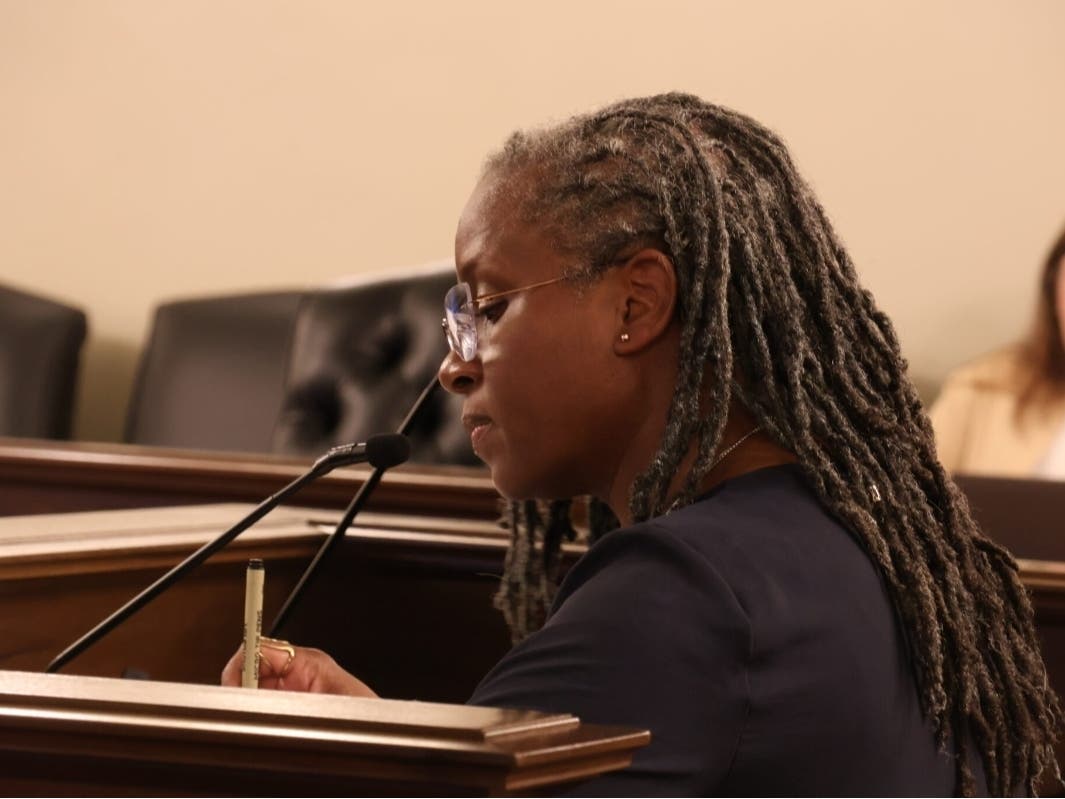
Carrying forward more than a decade of work beginning with her time in the Michigan House of Representatives, state Sen. Erika Geiss presented and took questions from colleagues on a series of policies setting standards for human milk banks.
Find out what's happening in Across Michiganfor free with the latest updates from Patch.
Milk banks store pasteurized breast milk donated by nursing mothers to assist moms and babies in need.
“The infants who rely on donor human milk are some of our most vulnerable residents,” Geiss, a Democrat from Taylor, told members of the Senate Housing and Human Services Committee on Wednesday. “Some of these residents are infants in NICU – neonatal intensive care unit – who may have premature birth-related issues, such as immature digestive systems, an immature gut barrier, immune vulnerability, necrotizing enterocolitis, the inability to breastfeed directly, or moms whose milk was yet to come in, just to name a few.”
Find out what's happening in Across Michiganfor free with the latest updates from Patch.
Additionally, there are a variety of reasons why mothers may not be able to supply their own breast milk, Geiss noted.
Geiss’ Senate Bills 724, 725 and 726 would establish operational guidelines for hospital and human milk banks, allow Medicaid reimbursement for families prescribed breast milk for infants up to two years of age and set legal penalties for hospitals and milk banks that knowingly provide adulterated or raw human milk.
Isha Johnson, program director for the Black Mothers Breast Feeding Association, offered support for Geiss’s legislation, noting that access to donor milk is a critical resource in their organization’s mission to reduce racial disparities around breastfeeding resources for women in the Detroit area.
“Families shouldn’t have to navigate these challenges alone,” Johnson said. “Safe, accessible donor milk can provide a really wonderful bridge to just, difficult circumstances, and just helps parents meet the need of their feeding goals and ensuring that our babies receive the nutrition that they need.”
Erin McGreal-Miller, the manager of the milk bank at Henry Ford Jackson Hospital, explained that for low birth-weight infants, breast milk is not just the best option for their nutrition, it can be lifesaving.

Sam Champagne and Erin McGreal-Miller of Henry Ford Health testify in support of legislation creating standards for human milk banks in Michigan. Jun 10, 2026 | Photo by Kyle Davidson/Michigan Advance
“Human milk is a critical preventive strategy for necrotizing enterocolitis, also known as NEC, an intestinal disease of primarily preterm infants that, when not deadly, significantly increases risk of neurodevelopmental disability, recurrent infections and recurrent hospitalizations,” McGreal-Miller said, noting that pasteurized donor milk is the next best option to protect against NEC when their mother’s milk is not available.
When asked how the hospital is compensated for donor milk provided in inpatient and outpatient settings, McGreal-Miller said most of the milk they supply to hospitals is paid out-of-pocket and charged as part of a room fee. For outpatients receiving milk, they either pay themselves, or the hospital donates the milk, she explained.
While the hospital’s ability to provide outpatients with donor milk is limited on their supply, McGreal-Miller said Geiss’ legislation would allow the milk bank to expand its operations by providing another avenue for assistance in paying for milk.
The committee adjourned without voting on the bills.
The Michigan Advance, a hard-hitting, nonprofit news site, covers politics and policy across the state of Michigan through in-depth stories, blog posts, and social media updates, as well as top-notch progressive commentary. The Advance is part of States Newsroom, a national 501(c)(3) nonprofit supported by grants and a coalition of donors and readers.