Politics & Government
Here's When To Expect Results In Michigan's Primary Election
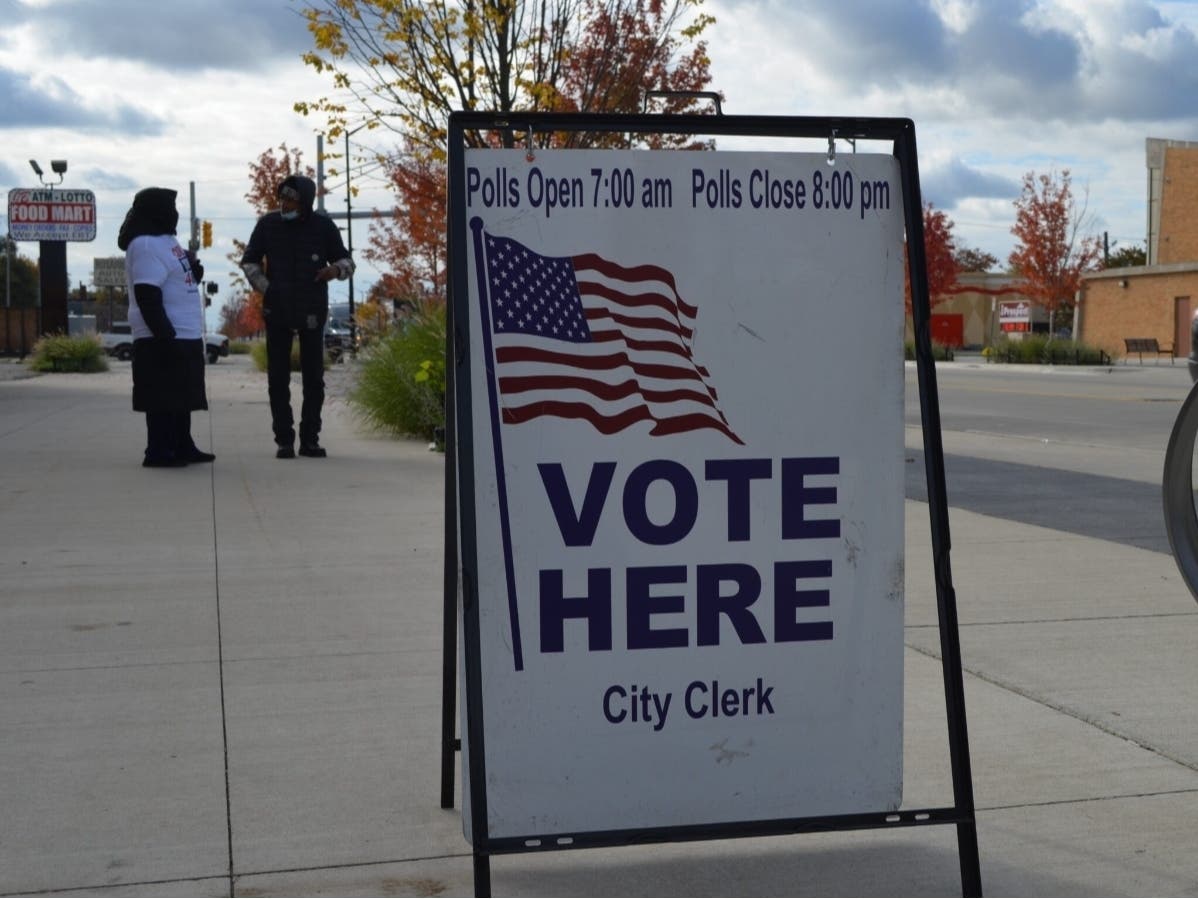
Polls close at 8 p.m. local time, and Michigan tends to count ballots quickly after that.

August 4, 2026
With primary races for the U.S. Senate, governor, and more going down to the wire, everyone is going to be watching Michigan on Tuesday.
Find out what's happening in Across Michiganfor free with the latest updates from Patch.
But it might take a while to know the actual winners, particularly in close races.
Michigan counts its ballots as fast or faster than a lot of other swing states. And the state has done a lot in recent years to count even faster — for instance, by allowing people to vote early in person and letting election officials process absentee ballots before Election Day.
Find out what's happening in Across Michiganfor free with the latest updates from Patch.
Slowdowns in reporting election results can give rise to unfounded speculation about improprieties in the count. Taking time to release results, though, isn’t a sign that anything is wrong — it’s a byproduct of the fact that running elections is complicated and involves many steps, which often take time to get right.
Here’s what to know about when to expect results from Michigan’s primary election.
When do polls close?
Polls open at 7 a.m. and close at 8 p.m. local time. The vast majority of Michigan voters are in the Eastern Time Zone, but four counties in the Upper Peninsula use Central Time instead.
Those counties — Dickinson, Gogebic, Iron, and Menominee — will not finish voting until 9 p.m. Eastern Time. Those counties have only a few thousand voters, but no statewide winners will be declared until they’ve had a chance to weigh in.
Ballots are actually already being processed, although no numbers will be run until polls close.
Michigan law allows election officials to pre-process absentee ballots — basically, do everything needed to verify them and prepare them for counting — before election night. Officials can verify that the signature on the ballot envelope matches what’s on file, open the envelope, verify they have the correct ballot, and even put the ballot into a tabulator where it will eventually be counted. The key is that they can’t actually hit the button to tabulate until after polls close.
Small towns can pre-process absentee ballots starting the Monday before the election, while larger communities — anywhere with more than 5,000 people — can start eight days before the election.
Pre-processing allows clerks to get a handle on their ballots before the stressors of Election Day while also allowing more absentee ballots to be included in initial vote reports. That can help prevent large quantities of absentee ballots getting reported late in the evening, which can significantly change candidates’ vote totals. In the past, these types of “ballot dumps” have led to inaccurate claims of ballot box stuffing.
Lots of people still turn in their absentee ballots on Election Day, so not all of them can be processed ahead of time. And not every clerk chooses to pre-process ballots, as some communities don’t have the manpower to do that on top of administering early voting. But where it happens, it does give clerks a head start. For example, during the 2024 primary, Detroit was able to report results from more than 80% of its absentee ballots by 10:30 p.m. on Election Day.
The secretary of state’s office will post election results on its website on Tuesday night as it receives them. However, this will probably be one of the slowest ways to get results.
When do they start counting ballots?
Michigan’s elections are highly decentralized, meaning each township and city clerk (all 1,600 of them across the state) is running their own election. Each of those municipal clerks reports their community’s results to a county clerk, who aggregates the information and passes it on to the state.
But the state doesn’t get any information from a county until all that county’s precincts are in and fully reported, meaning the state’s results page is the last to get updated.
Some local clerks will post their results on their websites, and many of the bigger counties will as well. Speed can vary widely on those updates, though. Some clerks prefer to upload all their results at once, while others might start uploading on a regular schedule and slow down as the evening goes on.
Lots of media outlets will also aggregate election results from around the state. Those results, based on what local and county officials have shared, are usually the fastest, but they are far from the final word.
Where do I find Michigan election results?
Official results in local races come when the election is certified by county groups known as boards of canvassers. Each county board is made up of two Democrats and two Republicans.
They review pollbooks and other materials from the election, tabulate write-in votes, and verify the final numbers are accurate. The deadline for local canvassers to finish that work is two weeks after the election, which for the primary is Aug. 18.
For statewide and federal races, the Board of State Canvassers does much of the same work. Their deadline for the primary is Aug. 24.
All canvassers, regardless of what level they work at, are obligated by law to confirm the results of the election. If they don’t, they open themselves to potential criminal penalties and even civil lawsuits.
Media outlets may call winners in many races on election night. Reputable outlets, such as the Associated Press, make calls based on what they know about where results haven’t come in yet, the voting histories from counties outstanding, and more.
When will election results be final?
However, media calls don’t have the force of law; winners aren’t truly winners until election results are made official by the canvassers. Media outlets will also sometimes decline to call races if they are extremely tight. As a general rule of thumb, the closer an election is, the longer it will take to call.
The Michigan Advance, a hard-hitting, nonprofit news site, covers politics and policy across the state of Michigan through in-depth stories, blog posts, and social media updates, as well as top-notch progressive commentary. The Advance is part of States Newsroom, a national 501(c)(3) nonprofit supported by grants and a coalition of donors and readers.