Schools
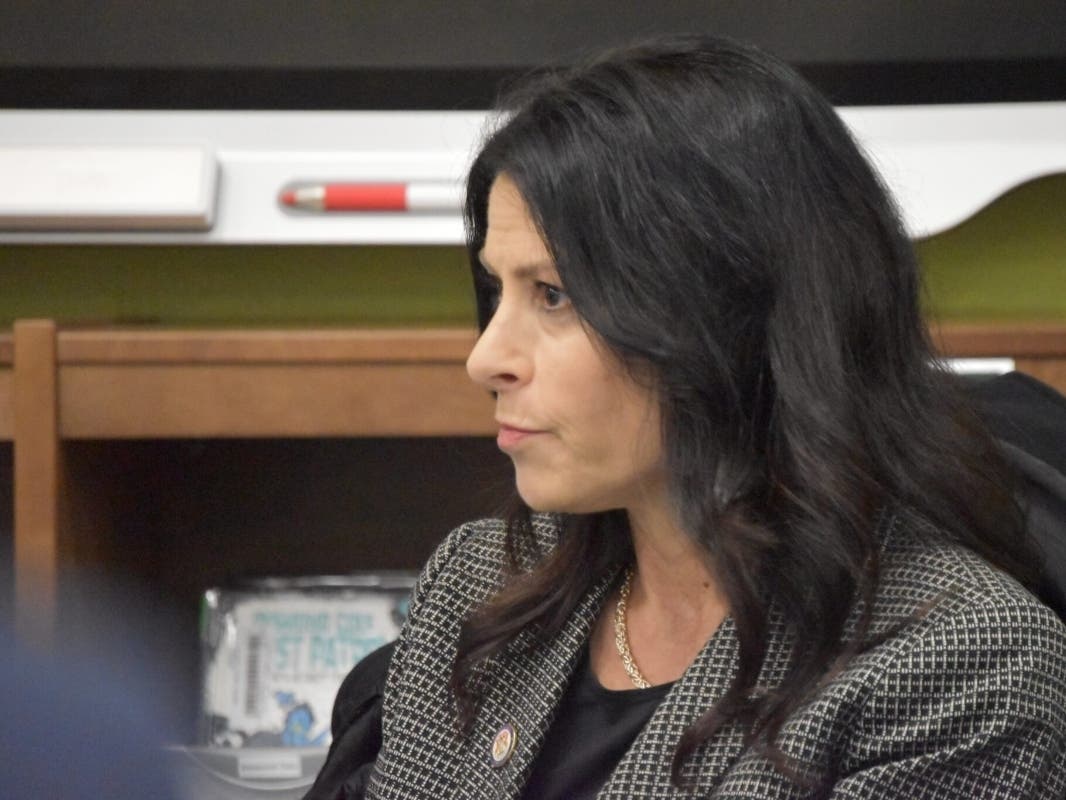
Nessel, Superintendents Call Trump Policies Destabilizing For Public Education At Roundtable
"My concern moving forward is that federal funding could be in jeopardy," Michigan Supt. Glenn Maleyko said after the roundtable.

January 15, 2026
Cuts to programs like SNAP, funding uncertainty for schools and the threat of immigration enforcement actions were among the most pressing issues that superintendents from around the state presented to Michigan Attorney General Dana Nessel at a roundtable hosted at an East Lansing elementary school Wednesday night.
Find out what's happening in Across Michiganfor free with the latest updates from Patch.
“It’s not sustainable,” said Judy Walton, superintendent of Harrison Community Schools.
And while the individual issues all had their own impacts on schools — teachers being asked to prepare for ICE entering the school or support staff like nurses being fired, for example — Nessel pointed to the broader trend of Trump administration policies working against public education.
Find out what's happening in Across Michiganfor free with the latest updates from Patch.
“I think that the goal is to destabilize the public schools,” she said.
Katy Xenakis-Makarski, superintendent of Johannesburg-Lewiston Area Schools, has noticed shrinking Title funds — a term referring to the different Every Student Succeeds Act (ESSA) funding programs for low-income students and other groups — as well as changes to SNAP that impacted free breakfast and lunch program.
“It’s going to be this trickle down effect that I think is going to take years for us to see how this all ends up playing out,” she said.
“When our kids aren’t sure what they’re going to have for dinner at night, it impacts us in school,” Walton added. “So while people don’t think of that as directly impacting schools, it certainly does.”
Announcements of Title funding had actually gone to a number of superintendents earlier in the day of the roundtable. Tom Livezey, superintendent of Oakridge Schools and the president of the Michigan Association of Superintendents & Administrators, said he had not yet opened the email with his district’s allocations.
“We’re all crossing our fingers to see what that number is going to be,” he said.
State Superintendent of Public Instruction Glenn Maleyko explained that, while he was not aware of any major cuts to Title funding at the moment — though there had been significant attempted cuts in July — he worried about what might happen in the future to this funding.
“My concern moving forward is that federal funding could be in jeopardy,” Maleyko said after the roundtable.
Coby Fletcher, superintendent of Escanaba Area Public Schools in the Upper Peninsula described the impact of the delays and uncertainty for that federal funding, specifically in regard to a professional development program that he hoped to implement.
“I’ve delayed that by a year, and I’m hopeful that I’m going to be able to continue that, and that the funds will even just keep coming,” Fletcher said. “To me, with the Department of Education, when you dismantle the mechanism, then you’re able to obfuscate the process. And so who knows what money is going to come when?”
In East Lansing, the only jurisdiction in Michigan officially deemed a “sanctuary city” by the U.S. Department of Justice, the fear of immigration agents has trickled down to a fear of even attending school for some people, Dori Leyko, superintendent of East Lansing Public Schools, said.
“Based on the makeup of our community and being by the university and being within a sanctuary city, I think there’s just increased fear within our families of what may happen, and we see that sometimes with fear of coming to school, because that’s where their kids can be found,” Leyko said. “That’s one thing really uniquely we deal with here, and trying to figure out how to lessen that fear, because kids can’t learn if they’re scared.”
Anthony Berthiaume, superintendent of St. Johns Public Schools, agreed, noting that kids do not feel safe while in their schools.
“When these kinds of things happen within the community, it makes it much more difficult for educators,” Maleyko said.
“I would love to see members of Congress of all parties stand up and say it’s not proper to do ICE enforcement at the schools,” Nessel added following the roundtable. “You used to always have the sensitive places doctrine. We didn’t see ICE officers terrorizing children at their schools, but we are now, and it needs to stop.”
Maleyko also noted that he was encouraging state legislators to meet a July 1 deadline for a statewide education budget, emphasizing that with so much uncertainty around federal funding, knowing the state-level funding for each district is crucial.
“What we’re looking for is teamwork and stability. We want teamwork from all levels. federal, state, county, township, district, school board, all those different levels, actually working together,” Livezey said. “We need to be able to predict what’s going to happen. Any successful organization is going to need to put a plan together to reach the mission of the district.”
“We’re constantly hopping from fire to fire, because we live in a world where we develop systems and processes and procedures to ensure that everyone is taken care of and safe, but people have upended how we can do that,” Xenakis-Makarski said.
The Michigan Advance, a hard-hitting, nonprofit news site, covers politics and policy across the state of Michigan through in-depth stories, blog posts, and social media updates, as well as top-notch progressive commentary. The Advance is part of States Newsroom, a national 501(c)(3) nonprofit supported by grants and a coalition of donors and readers.