Politics & Government
New MI Minimum Wage Law Will Take Effect After Supreme Court Ruling
The new law will go into effect February 2025, though it's unclear how much minimum wage will increase.


MICHIGAN — Minimum wage is expected to go up next year in Michigan after a major state supreme court ruling Wednesday.
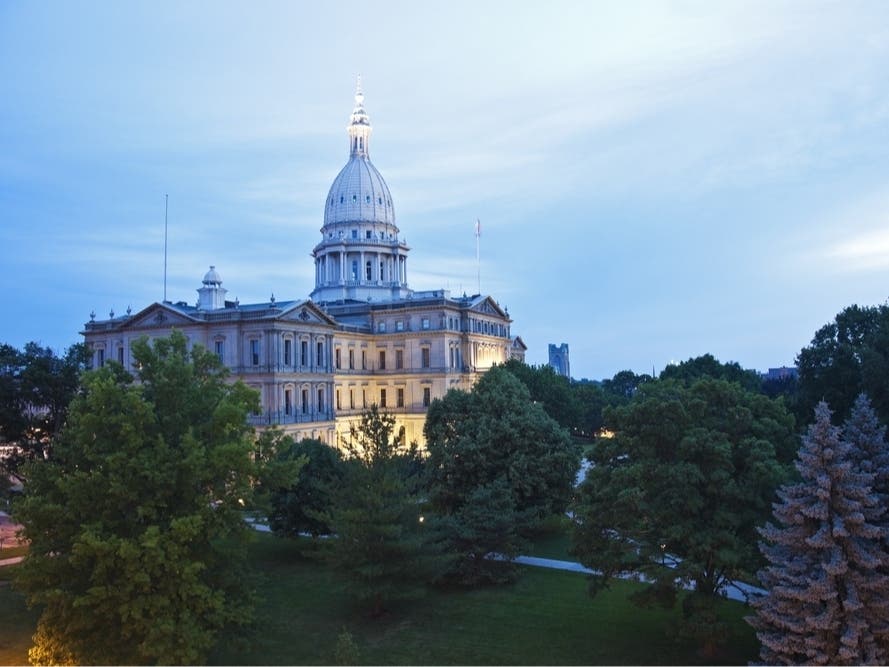
In a 4-3 ruling, the Michigan Supreme Court decided the 2018 Republican-led legislature violated the state's constitution by changing parts of a ballot proposal that would have raised the state's minimum wage and boosted earned sick time for hourly workers.
The original proposal, the Wage Act and the Earned Sick Leave Act, collected more than 280,000 signatures, which was enough to send the measure to the ballot for voters to decide in 2018.
Find out what's happening in Across Michiganfor free with the latest updates from Patch.
That proposal would have gradually raised Michigan's minimum wage over the years, eventually reaching $12 an hour in 2022. After that, the state's treasurer would take over and increase the wage based on inflation.
It would have also raised tipped workers' wages until it reached 100 percent in 2024. Workers would also earn one hour of paid sick time for every 30 hours of work each week and 1.5 hours of paid time off for every hour of overtime.
Find out what's happening in Across Michiganfor free with the latest updates from Patch.
Instead of waiting to let voters decide the measure, lawmakers could simply adopt the measure and enact it into law.
The Republican-led legislature at the time decided to do that, but changed some of the provisions in the proposal.
Among those changes were keeping tipped employees at the pay rate they were earning and replacing the gradual minimum wage increase based on inflation with "future wage" increases.
Those amendments, which were signed by then Gov. Rick Snyder just before Gov. Gretchen Whitmer took office in 2019, led to years of court challenges.
An appeals court voted 3-0 that lawmakers acted within the law, using what's known as the adopt and amend rule.
That decision was appealed and the case reached the Michigan Supreme Court, who overruled the lower court and finally settled the matter Wednesday.
"We reiterate that the Legislature acted unconstitutionally when it enacted the Amended Wage Act and the Amended Earned Sick Time Act. It did not, however, act unconstitutionally when it adopted the original initiative petitions without change," the justices wrote.
While the law will gradually eliminate a lower minimum wage for tipped workers in restaurants and force employers to pay more sick time, it's unclear how much the minimum wage will increase in February 2025 when the new law goes into effect. The new law is expected to impact 6.1 percent of Michigan's workforce.
Michigan's current minimum wage is $10.33 an hour and the tipped minimum wage moved up to $3.93 an hour, from $3.84, in 2023.
Get more local news delivered straight to your inbox. Sign up for free Patch newsletters and alerts.