Politics & Government
Republicans Make Case To Exempt Produce Washwater In Michigan From Water Discharge Permitting
Democrats and environmental advocates were skeptical, with some raising concerns that the bill language is too broad.

March 20, 2026
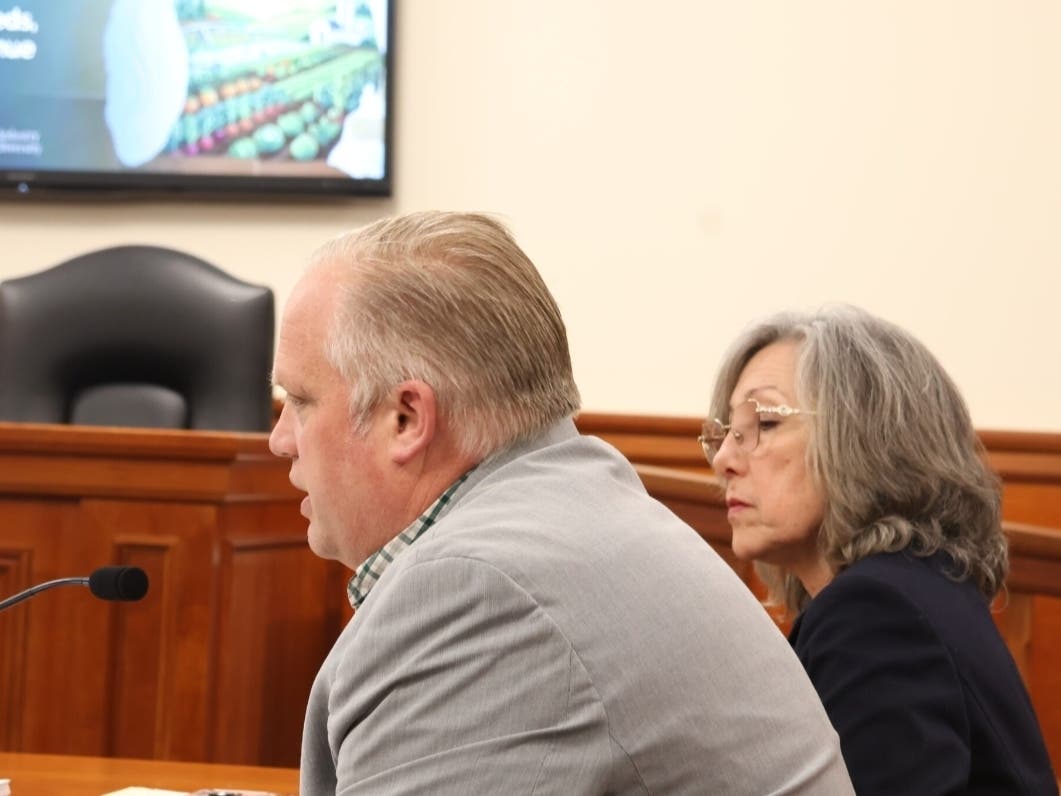
A pair of representatives on Thursday sat before the Michigan House Agriculture Committee to make the case on a set of bills to exempt produce farmers from permit requirements to discharge wastewater used to chill, wash or process fruit, vegetables and other farm products.
Find out what's happening in Across Michiganfor free with the latest updates from Patch.
Rep. Luke Meerman (R-Coopersville) and Rep. Gina Johnsen (R-Portland) testified on their House Bills 5698 and 5699, which would create an exemption allowing farmers to discharge up to 100,000 gallons of water per year of cooling water, wash water and other wastewater used to create certain farm products without a permit.
Johnsen and Meerman argued the bill would bring relief to small farmers and produce producers, who they say are pushed into the same regulatory framework as industrial operations.
Find out what's happening in Across Michiganfor free with the latest updates from Patch.
The exemption would carry some restrictions: discharged water must not contain any hazardous waste or sewage, and it must not be discharged into nearby surface water, like lakes or streams. Discharging this water cannot impair groundwater quality and must be applied to vegetated land. It must not cause runoff, create ponds or flood adjacent property, be repeatedly applied to the same spot repeatedly, and cannot be applied to the land on more than 180 days within a calendar year, among other conditions.
“This bill brings clarity and predictability,” Johnsen said. “If you meet the conditions, you have a defined, lawful path forward. If you do not, the exemption does not apply.”
Josh Scramlin, associate legislative counsel with the Michigan Farm Bureau, told the committee that many small to medium-sized farms do not have access to a municipal sewer system to dispose of their wastewater, meaning they must seek a groundwater discharge permit through EGLE, which can be a costly process.
“To illustrate the cost, consider a small winery producing approximately 50,000 gallons of wastewater annually, which is going to come primarily from cleaning their equipment,” Scramlin said. “Under the current rules, one particular permit that could need to be obtained would cost $1,800 a year. It’s a five-year permit with a yearly permit fee, so that’s $9,000 over five years. But then there’s also monthly water testing that would add approximately $250 per month. So for a small winery that creates a pretty meaningful financial burden.”
Scramlin argued that the bills would help lessen the burden while reducing the barrier for new and expanding farms and processors.
However, Democrats and environmental advocates were skeptical, with some raising concerns that the bill language is too broad.
Rep. Emily Dievendorf (D-Lansing) asked the sponsors whether they could name the contaminants of concern found in washwater.
While Meerman could not name the contaminants, he said the bills are clear that farmers cannot discharge substances that are harmful to the environment.
Opponents disagreed, questioning how contaminants or dangerous pathogens would be regulated if a farmer or processor is exempt from permitting.
Megan Tinsley, water policy director for the Michigan Environmental Council, said the bills would shift the state’s approach from trying to prevent pollution to reacting to it.
“The waters allowed for the discharge without a permit are not free of harmful components, just because the bill specifies the discharge cannot contain hazardous waste, as defined in the Michigan Administrative Code,” Tinsley said. “Problematic components of this type of wastewater include nitrogen and phosphorus, nutrients that currently plague our waters and cause algal blooms, some of which are toxic.”
Waste and washwater often have high levels of biological oxygen demand, Tinsley said, which can degrade aquatic ecosystems and mobilize metals found within soil, creating a groundwater contamination risk.
She recommended fine-tuning the permitting process, rather than providing exemptions that create loopholes where pollution can occur.
Members did not take a vote on the two bills.
The Michigan Advance, a hard-hitting, nonprofit news site, covers politics and policy across the state of Michigan through in-depth stories, blog posts, and social media updates, as well as top-notch progressive commentary. The Advance is part of States Newsroom, a national 501(c)(3) nonprofit supported by grants and a coalition of donors and readers.