Neighbor News
Composting: A Love Song to Earth
Want to help the Earth and save money on fertilizer? Try composting.
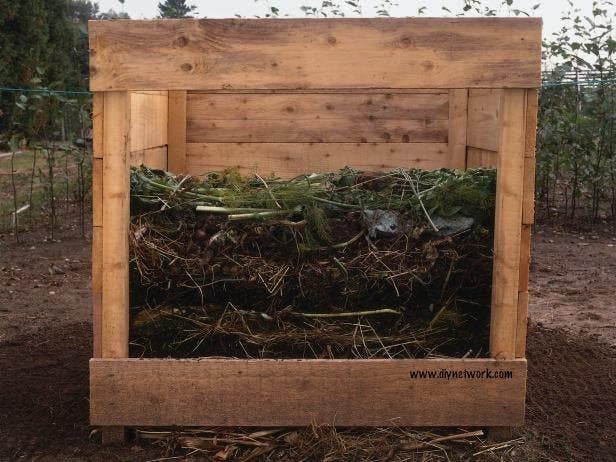
Five percent. According to the article entitled “Advancing Sustainable Materials Management: 2013 Fact Sheet” released in June 2015 by the Environmental Protection Agency (EPA), five percent of all food waste in 2013 was composted. Did you know that fruits, veggies, eggshells, nutshells, and coffee grounds can all be composted? That isn’t even mentioning all of the other organic materials that can be composted as well, such as paper, yard trimmings, leaves, and even hair! So why is it, when so many types of food can be composted, that in the United States, only five percent of all food waste in 2013 was composted?
Many people simply throw away all of their food and kitchen scraps on the assumption that this organic material will break down in a landfill. And do you know what? They would be right. The issue, however, is that when these food scraps break down in landfills, they produce the greenhouse gas methane, which in turn harms the environment. These same scraps, when composted, produce nutrient-rich soil that allows other plants to grow; the environment is benefited instead harmed. Composting can be a rather large time commitment, which the average hard-working American may not be able to manage. Don’t worry, composting facilities will put in the time for you. Websites such as www.findacomposter.com act as portals through which you can discover the facilities closest to you.
How big is your footprint? And no, I am not talking about your shoe size, rather your carbon footprint. This is the impact that you leave on the environment from everything that you do; the lower your carbon footprint, the better. Experts at the EPA have discovered that composting and recycling can reduce your carbon footprint significantly. Climate change isn’t a rumor. By composting, we, as citizens of the United States, can help to slow down the climate change that is threatening the health of the Earth and all of its occupants. The final product is another major plus of composting; the nutrient rich compost will act as a great fertilizer for your garden or farm!
Find out what's happening in Brightonfor free with the latest updates from Patch.
So, are you interested in making the commitment to a healthier tomorrow, but not know where to start? On the website www.epa.gov/recycle/composting-home, the EPA highlights steps that you need to take to have a successful backyard compost. Whether you take on the project of creating a compost at your residence, or inquire about how to utilize your local composting centers, you will be making a huge impact on the environment. This extra effort may not seem like much, but the more families, restaurants, and grocery stores that put in that extra effort to be green and compost, the more of a positive impact that will be made on the environment. So the next time that you peel a carrot, or have some fruit expire, consider composting this organic material rather than walking towards a trash can.
Soil Enriching Compost Fertilizer~
Find out what's happening in Brightonfor free with the latest updates from Patch.
Ingredients:
nitrogen
carbon
water
Procedure:
Mix one part nitrogen (greens such as grass clippings, and kitchen scraps) with one part carbon (browns such as dry leaves, small twigs, straw, ect.) in a composting bin or pile in your backyard. Fix frequently and add water to keep moist.
Composting and Landfill Facts, Statistics, and Other Information provided by www.epa.gov.