Community Corner
Scientists Warned this Spring of Toxic Algae Bloom on Lake Erie
"This is a teachable moment," says official with U.S.-Canadian agency monitoring water quality in the Great Lakes and other shared waters.


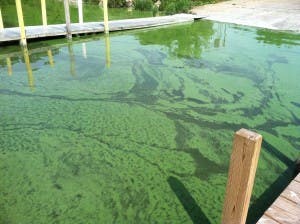
Some of the worst fears of a U.S-Canadian agency monitoring water quality in the Great Lakes and other boundary waters have come to pass with a toxic algae bloom that has left more than 11,500 southeast Michigan residents and about 500,000 northwest Ohio residents without safe drinking water.
Affected Michigan communities are all in Monroe County – Bedford, La Salle, Erie and Luna Pier. The emergency does not affect customers of Detroit Water and Sewerage Department, the Detroit Free Press reports.
This spring, the International Joint Commission warned in a 100-page report this spring that Lake Erie had been in decline for a decade, largely due to farm runoff, and government action was needed to correct problems in the “severely threatened” lake.
Find out what's happening in Clawsonfor free with the latest updates from Patch.
The report included 16 recommendations to reduce nutrient loading into Lake Erie and its tributaries.
» Read the full Lake Erie Ecosystem Priority report and remedial recommendations.
Find out what's happening in Clawsonfor free with the latest updates from Patch.
“What we need to do is, for instance, prohibit application of fertilizer in the spring or in the fall,” Lana Pollack, the U.S. chair of the IJC, told WWJ. “You are just going to have melting snow that will take it off and have it run right into the lakes and feed the lakes, or you’ll have a substantial rain storm – that will wash it off.”
In a statement on the IJC web site, the agency reiterates its call for more stringent water quality protection plans.
“Our thoughts are with those in Northwest Ohio struggling to restore safe drinking water to homes and businesses,” Pollack said in the statement. “This is a teachable moment, however, for policymakers across the region. It is more clear than ever that we must take aggressive action to curtail the algae growth that caused, or at least contributed to, this crisis.”
Gordon Walker, the acting chair of the Canadian Section of the IJC, said the situation can be remedied if strong action is taken, as it was decades ago.
“We’ve been here before, in the 1970s, when strong protections for Lake Erie helped restore it to health,” said Walker, whose family has strong ties to the shores of Lake Erie. “The IJC is confident that with timely action, this growing algae problem can be solved before more incidents like this one occur.”
This spring’s report recommended new cited nutrient overloading as one of the main reasons for the decline in water quality.
“Lake Erie is once again severely threatened...,” the report reads. “The recent accelerating decline of this lake, manifested as impaired water quality, massive, summer-long algal blooms, hypoxia and fish kills, has focused bi-national attention on the need for urgent actions to reduce external inputs of phosphorus.
“While Lake Erie’s health suffers from multiple stressors, the rising proportion of dissolved phosphorus is seen as the primary cause of this decline.”
A popular recreation spot in warm-weather months, Lake Erie has been plagued by massive green algae blooms caused by nutrients, such as phosphorous, which are often found in farm chemicals.
It’s not known how long the water emergency in southeast Michigan and Toledo will last, the Detroit Free Press reports. Testing showed a decreased level of the toxin microcystin, which can cause kidney failure and a host of other health problems, but the water from the Collin Park Water Treatment Plant was still considered unsafe to drink.
Ohio Gov. John Kasich declared a state of emergency Saturday allowed the state to bring water into the the city.
Michigan Gov. Rick Snyder has not yet received a request for state aid, spokeswoman Sara Wurful told the Free Press, but the National Guard is ready to assist.
––––––
PHOTO: A toxic algae bloom on Lake Erie has made water unsafe for drinking for about 500,000 southeast Michigan and northwest Ohio residents. (National Oceanic and Atmospheric Administration file photo)
Get more local news delivered straight to your inbox. Sign up for free Patch newsletters and alerts.