Politics & Government
Coast Guard Looks At Voiceprint Technology To End Hoax Distress Calls
The Coast Guard looks at voice recognition technology to stop hoax distress calls, which have tripled in the last year in Great Lakes area.


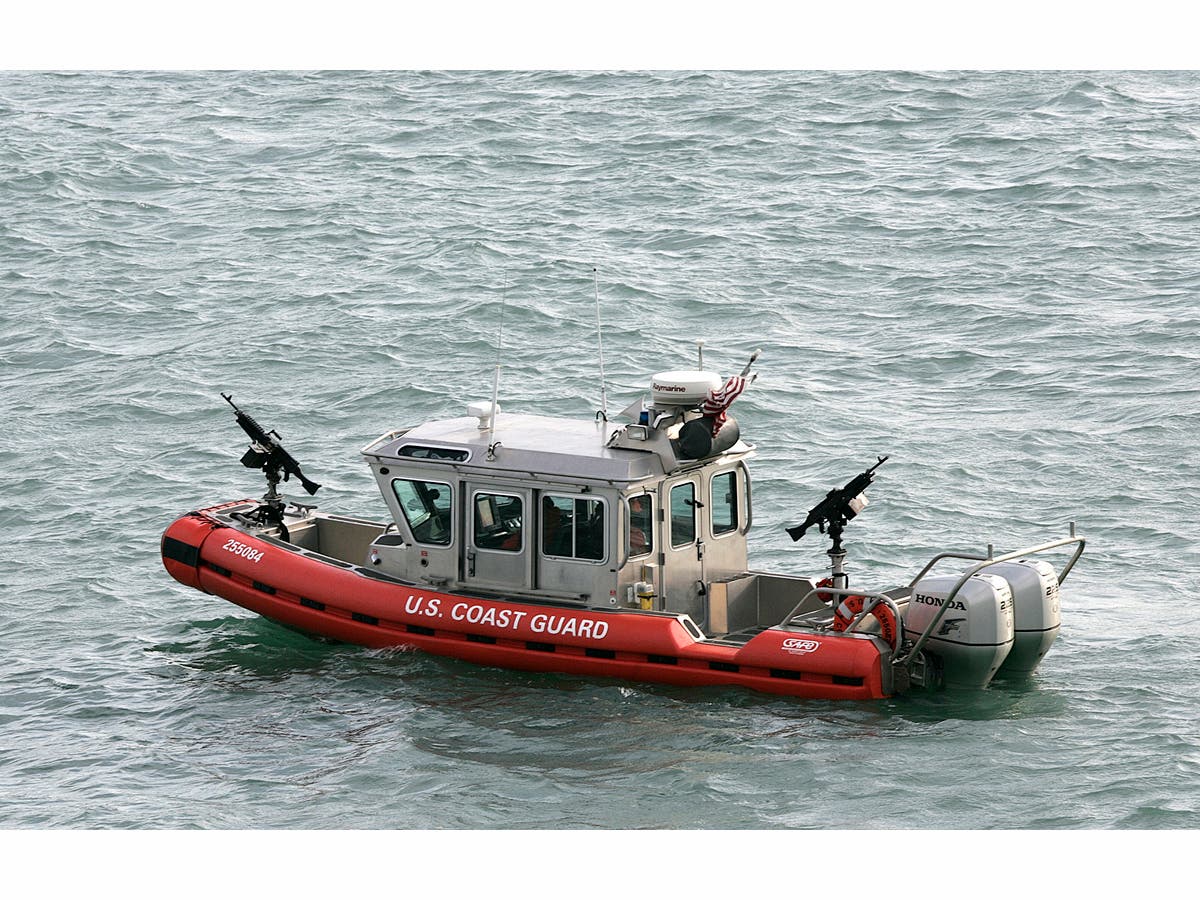
The U.S. Coast Guard has been flooded with prank distress calls in recent months, sometimes receiving multiple calls in a single day in what authorities say is a bad joke. In the Great Lakes region alone, more than 160 phony calls for help have been received so far this year, nearly triple the 55 such calls received in the same period in 2016.
The Coast Guard is obligated to respond to all calls. Hoax calls may delay response to legitimate water emergencies, and depending on whether aircraft is deployed, it could cost up to $16,000 an hour and affect departures and arrivals at nearby airports, the Coast Guard says.
“False distress and hoax calls expose not only Coast Guard rescuers, but our partner agencies and other mariners to unnecessary risks, and potentially take away personnel and resources from real emergencies," Capt. Joseph McGilley, chief of incident management for the Ninth Coast Guard District, said in a news release. (For more local news, click here to sign up for real-time news alerts and newsletters from Detroit Patch, click here to find your local Michigan Patch. Also, like us on Facebook, and if you have an iPhone, click here to get the free Patch iPhone app.)
Find out what's happening in Detroitfor free with the latest updates from Patch.
Launching a Coast Guard rescue boat costs about $4,500 an hour, and if helicopters respond to the search, the cost could be upward of $16,000 an hour, the Coast Guard said.
Sometimes, people see something in the water they think may be a person and make distress calls in good faith, said Coast Guard Petty Officer 3rd Class Brian McCrum, who is stationed with the Coast Guard station in Cleveland, which oversees the Great Lakes.
Find out what's happening in Detroitfor free with the latest updates from Patch.
“Someone is intentionally trying to play a prank on the Coast Guard and waste the taxpayers’ money,” McCrum told Michigan Radio.
Tracing the bogus mayday calls is a complicated affair, dependent on the signal strength of VHF radio stations dotting the coastlines, some of them more than 50 miles apart. The Coast Guard is also looking for clues in social media, but voice recognition technology may offer the best chance to track them down, according to Coast Guard Lt. Gianfranco Palomba, a U.S. Homeland Security liaison in charge of stemming the problem.
“We’re just getting more hoaxes every day,” he told The Verge. “We’re seeing a direct impact, not just on man-hours but on assets.”
Authorities think there are only a handful of people making multiple prank calls each. Voice recognition technology may not be enough for agents to gain a search warrant, but it does give them a clear voice sample that would help them match callers.
Voiceprint technology isn’t new. Large call centers use it in anti-fraud efforts, Citizen and Immigration Services is considering adding the technology to its call centers, and last week, Google announced a Google Home product that can identify the voices of up to six people using a single account, based on locally stored voiceprints.
Those systems can build a voiceprint in 40 seconds of conversation, but the Coast Guard hoax calls often are only a few seconds long. There’s another problem, too.
Carnegie Mellon University research professor Rita Singh, who has been analyzing Coast Guard hoax calls since 2014 under a separate partnership, told The Verge it’s generally simple to distinguish male and female voices, but callers may attempt to mask their voices, effectively overriding automated voice readers.
“Although probably not aware of the biometric potential of their voice, they instinctively attempt to hide their identity by disguising it,” Singh and her research colleagues wrote in Profiling Hoax Callers. “They try to sound like a real (albeit fictitious) person other than themselves.”
As the Coast Guard looks for a new technology solution, it is going old school in the meantime, aiming for a high-profile arrest, Palomba said. Conviction carries a $250,000 fine, a $5,000 civil penalty and time in prison.
“People still see that wiggle room, just because they haven’t been reminded of a really big prosecution lately,” Palomba told The Verge. “We’re looking for that deterrent effect.”
AP Photo/Paul Sancy
Get more local news delivered straight to your inbox. Sign up for free Patch newsletters and alerts.