Community Corner
Total Solar Eclipse On Aug. 21, 2017: How Much Will Michigan See? Time, Duration, More
The much ballyhooed Aug. 21 total solar eclipse doesn't snub Michigan, which will see about 80 percent coverage in the Detroit area.


Just keep telling yourself that the stunning northern lights dance by Michigan with some regularity while much of the rest of the country is cheated out of the colorful auroras. It will take some of the sting out of the fact that Michigan gets shortchanged in the much ballyhooed total eclipse of the sun on Monday, Aug. 21, 2017. Each of the Lower 48 states will be plunged in at least partial darkness for a few moments between late morning and early afternoon in what NASA calls the “Great American Eclipse.”
For an event that will last only about an hour and a half from start to finish, Americans are going to a lot of fuss. For eclipse chasers, it’s the party of a lifetime. A phenomenon like this, in which the eclipse barrels across the continental U.S., hasn’t happened in 99 years. It was June 8, 1918, and America had just gotten out of World War I.
In cities along a band from Salem, Oregon, to Charleston, South Carolina, only the shimmering corona of the sun will be visible as the moon completely covers the sun. In Michigan, though, the shadow of the partial eclipse moves in about 1 p.m., providing about 80 percent coverage in the Detroit area and 71 percent coverage on the Upper Peninsula.
Find out what's happening in Detroitfor free with the latest updates from Patch.
Please take a quick second to like Detroit Patch below on Facebook.
What Michiganders will see is a dramatic dropoff in light as the moon appears to take a bite out of the sun, chewing away ever larger pieces until the eclipse reaches maximum totality, which will last about 2 minutes, 27 seconds. The show will be over in Michigan about 4 o’clock. Temperatures may cool as they would when the sun sets, Michael Narlock, head of astronomy for the Cranbrook Institute of Science in Bloomfield Hills, told the Detroit Free Press.
Find out what's happening in Detroitfor free with the latest updates from Patch.

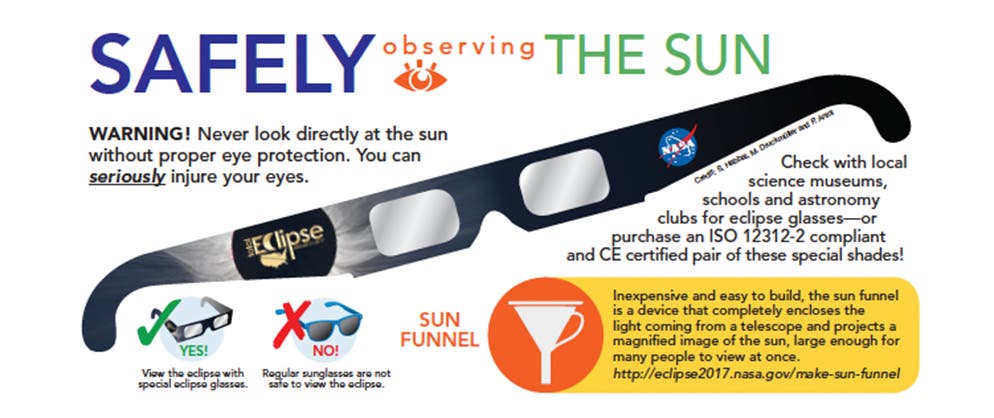
Cranbrook will offer programming about the science of the eclipse and make telescopes available to visitors. They’re equipped with special filters to block out nearly all the light and provide important eye protection.
Regardless of how much sunlight is blocked out, the eclipse is one of those “see it, but don’t see it” events. In other words, don’t look directly at the sun, except during totality — which elapses so quickly that it’s not a good idea, even then. Looking directly solar eclipse, whether total or partial, can seriously and permanently injure your eyes.
“You’re looking at something that is incredibly, incredibly, incredibly bright. Even when ... 80 percent of the sun is covered up, there’s still 20 percent that isn’t. What you have happening is a burning of your retina and that can do permanent damage,” Narlock told the Free Press. “Think about it like this: If you’ve ever gone and looked at a 60-watt light bulb, and then you look away and can still see the remnants of that. Now, multiply that by thousands of times because you’re dealing with the sun.”
Parents who are viewing the eclipse with their children need to be diligent to ensure their children’s eyes are protected, he said.
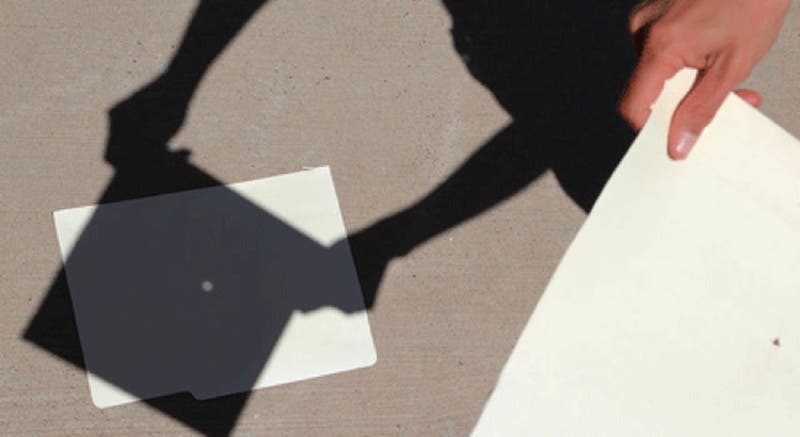
Your sunglasses won’t protect you. You can buy special glasses commercially — we found these eclipse glasses on amazon.com for $12.69 — but you may want to check with local science museums, schools and astronomy clubs for certified glasses. Or, you can make your own sun funnel or make a pinhole camera.
Solar Eclipse Superstitions
Ancient legends in many culture attributed the temporary disappearance of the sun to celestial dragons and other mythical creatures, wolves and giant frogs who either ate the sun or stole it, or as a foreboding sign the gods were angry or that the siblings the sun and moon were quarreling, according to timeanddate.com. In many cultures, “eclipse” means to eat.
Among the Pomo, an indigenous group of people who lived in the Northwest, the literal translation of “eclipse” is “got bit by a bear.” The legend is that a bear mixed it up with the sun and took a bite out of it, and then decided to chomp on the moon as well, causing a lunar eclipse.
Scientists and astronomers long ago solved the riddle of the solar eclipse — it’s simply what happens when the masks the sun as it passes in front of it. Still, some superstitions remain, including that solar eclipses are a danger to pregnant women and their unborn children, or that food cooked during an eclipse would be poisonous.
In Italy, though, the superstitions aren’t as gloomy as the sky when the moon blots out the sun. Instead, the eclipse is flower planting time; it’s believed they will bloom brighter and more colorful than flowers planted at other times of the year.
Other claims about negative effects on human behavior have been debunked by scientists. So go out and enjoy the eclipse with unfettered joy. Make sure you protect your eyes, though.
Feature photo by Ulet Ifansasti/Getty Images News/Getty Images
Get more local news delivered straight to your inbox. Sign up for free Patch newsletters and alerts.