Politics & Government
Trump Budget Guts Great Lakes Cleanup Funding
The Great Lakes Restoration Initiative has bipartisan support. EPA head Scott Pruitt says he's committed to the region.


As environmentalists feared, the federal budget released Tuesday by the Trump administration wipes out federal funding for Great Lakes cleanup, leaving management of cleanup and restoration of the world’s largest freshwater supply to state and local groups. In a memo released with President Trump’s spending plan, the Budget Office said those groups are “engaged and capable” of taking on those efforts.
The Great Lakes Restoration Initiative has provided $2.2 billion since 2012 to restore wildlife habitat, combat invasive species and clean up polluted watersheds. Trump’s proposed $1.1 trillion spending plan also denies funding for similar ecosystem protection activities within Chesapeake Bay, Puget Sound and others. (For more local news, click here to sign up for real-time news alerts and newsletters from Detroit Patch, click here to find your local Michigan Patch. Also, follow us on Facebook, and if you have an iPhone, click here to get the free Patch iPhone app.)
The Great Lakes Restoration Initiative, which has received about $300 million a year, is one of those rare programs that both Democrats and Republicans in Great Lakes states have supported. After a huge outcry about plans to gut the Great Lakes initiative, Congress approved a temporary spending measure to keep the program alive through September.
Find out what's happening in Detroitfor free with the latest updates from Patch.
U.S. Sen. Debbie Stabenow, a Lansing Democrat who co-chairs the Senate Great Lakes Task Force, called on her Michigan colleagues to stand together in their opposition to the cuts. “This is a moment for Michigan when we all need to stand together to protect our Great Lakes,” Stabenow said in a statement.
Stabenow, who authored the Great Lakes Restoration Initiative in 2010 and led the bipartisan effort to pass full funding for it through the remainder of fiscal year 2017, said it is critical to supporting jobs, fighting invasive species and protecting a way of life in Michigan.
Find out what's happening in Detroitfor free with the latest updates from Patch.
U.S. Rep. Fred Upton, a St. Joseph Republican, a vocal opponent of earlier budget requests to slash Great Lakes Restoration Initiative Funding, said in a statement that some of the cuts in the proposed budget “are, frankly, non-starters.”
“This process is only the beginning,” he said. “I will continue to advocate for commonsense budgeting that reels in spending, makes government more accountable, but also properly funds essential programs the most vulnerable among us depend on.”
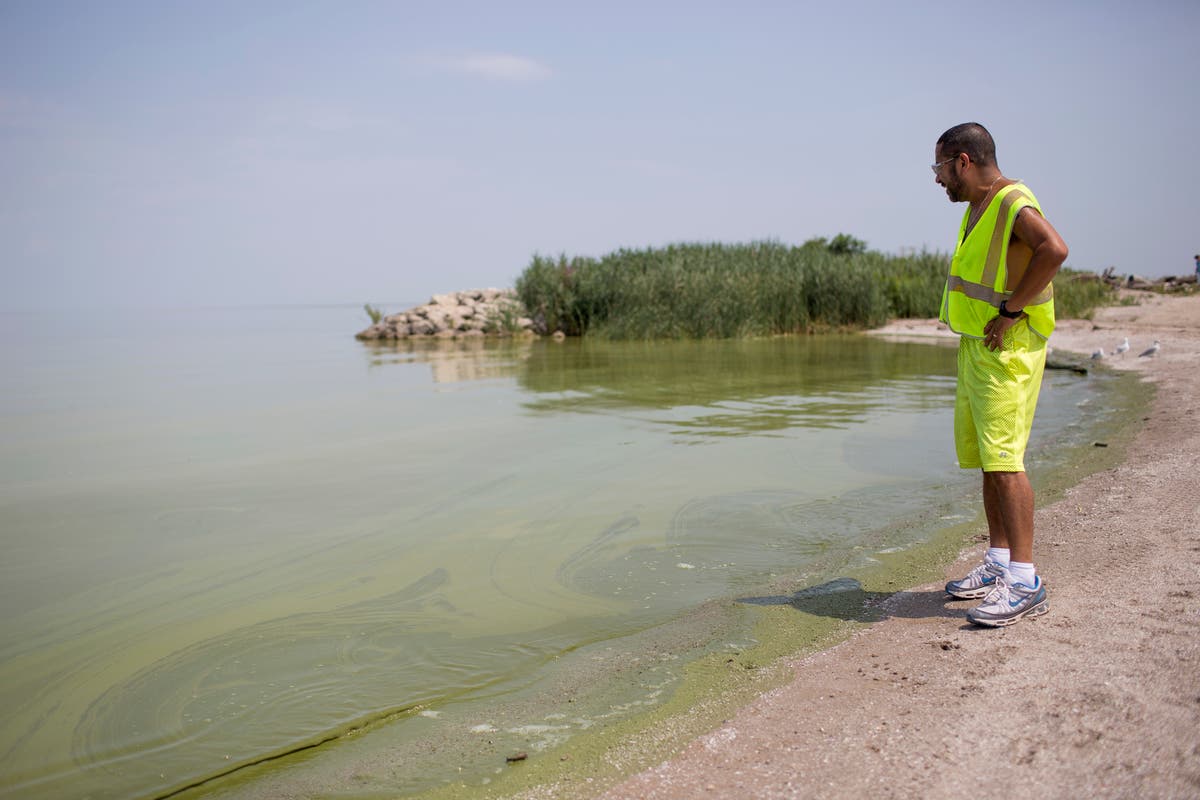
Democratic Congresswomen Debbie Dingell, of Dearborn, Michigan, and Marcy Kaptur, of Toledo, Ohio, said in a joint statement that elimination of funding for the program jeopardizes drinking water for residents of Michigan, Ohio and other Great Lakes states. Of particular concern is Lake Erie, where huge toxic algae blooms cut off the water supply for about half a million residents of Toledo and southeast Michigan in 2014.
“Clean drinking water is a fundamental right for every American,” Dingell said. “Failure to recognize these waters as impaired puts public health, the Great Lakes and our $4.5 billion recreational and commercial fishing industry at risk. The administration must take a clear and proactive stance so we can confront this challenge and devise a plan to address this threat to public health and the environment.”
Kaptur said the Trump administration’s proposal “leaves our Great Lakes in peril and risks the health of millions of Americans.”
“Eleven million people depend on Lake Erie for their drinking water and this contradictory action fails to address the real danger they face from the presence of toxic algal blooms,” Kaptur said.
Environmentalists also blasted the cuts, the Detroit Free Press reported.
“It would bring Great Lakes restoration to a halt,” National Wildlife Federation spokesman Jordan Lubetkin said, noting that in addition to cutting programs to prevent the Lake Erie algal blooms that cut off water supplies three years ago, the budget proposal “would undermine efforts to clean up toxic pollution [and] to halt invasive species like Asian Carp.”
“It’s a loser for the environment, a loser for the economy, a loser for the waters that 30 million people rely upon for their water supply,” Lubetkin said.
Even EPA Administrator Scott Pruitt disagrees with his boss on the cuts. Before his confirmation in January, he said he would continue the agency’s support for the Great Lakes Restoration Initiative.
On Tuesday, Pruitt released a statement reiterating his support for the Great Lakes.
“I recognize that the Great Lakes are an important part of the United States fresh water supply, and I am committed to improving environmental conditions and human health for Americans that live and work in the Great Lakes Region,” he said. “As I lead this agency, I will continue to engage in meaningful discussions about how shared environmental goals related to this region can best be achieved.”
In 2014, a toxic algae bloom on Lake Erie cut off water for about 500,000 residents of Toledo, Ohio, and southeast Michigan. (Photo by Aaron P. Bernstein/Getty Images News/Getty Images)
Get more local news delivered straight to your inbox. Sign up for free Patch newsletters and alerts.