Neighbor News
Baker College addresses critical need for health care workers
A "perfect storm" is creating a crucial need for nurses in Michigan and is affecting demand of other health care workers.
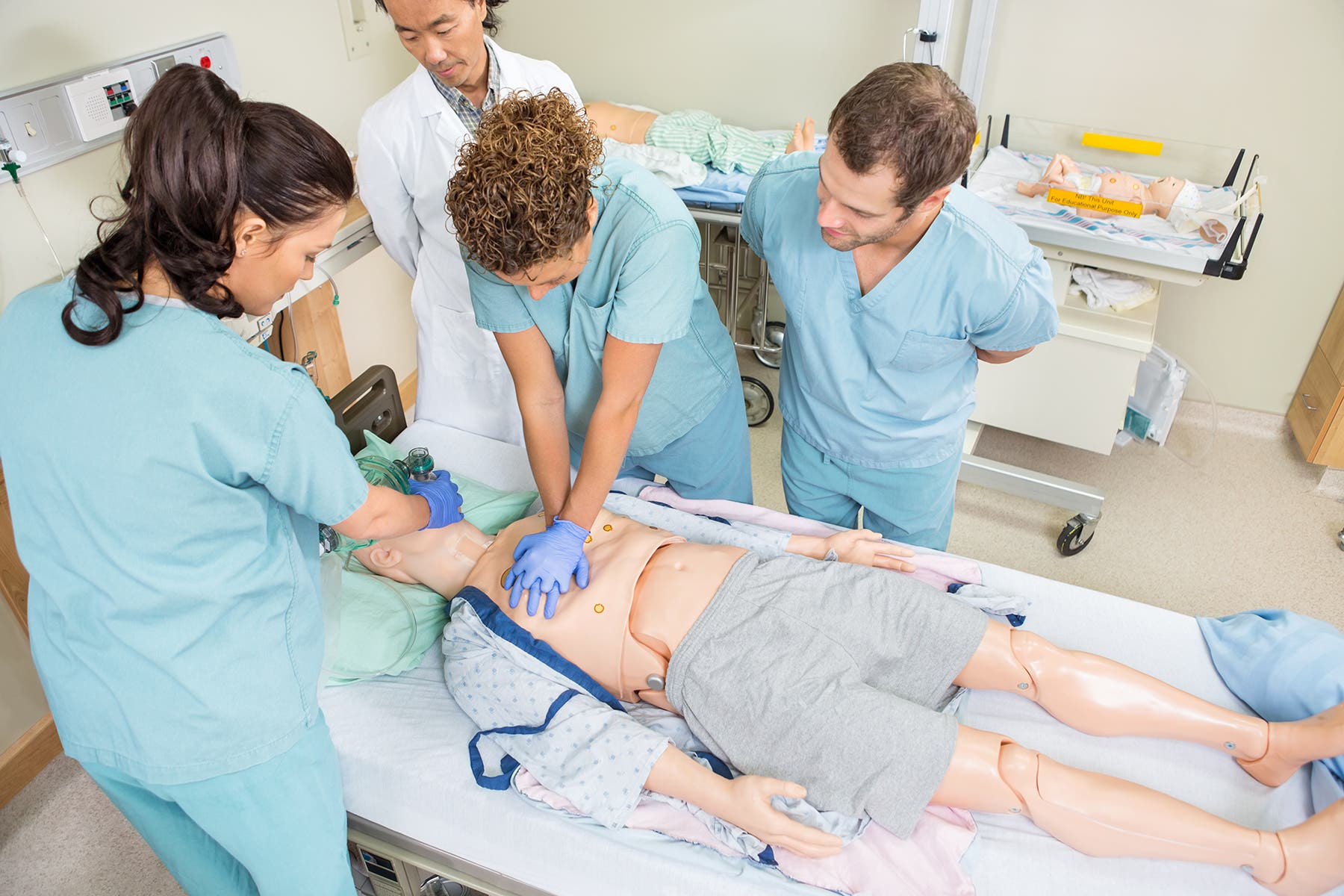
Undergraduate, graduate programs offered on-ground, online
Never has there been a better time to enter the health care field. For years, the need for health care workers has been growing, and this trend is predicted to continue. As a career-oriented college, Baker College keeps its pulse on current employment trends in order to offer the most relevant programs.
When it comes to employment in health care, the need for qualified nurses is often at the forefront. Nurses are in high-demand, and the demand is growing. Some have said a “perfect storm” of events is creating this critical need for skilled nurses. These factors include:
Find out what's happening in Hartlandfor free with the latest updates from Patch.
· Many nurses are fast approaching retirement age. Approximately 40 percent of the nearly 120,000 nurses employed in Michigan intend to stop practicing within 10 years.*
· The population is aging. The large baby-boom generation is creating demand for increased health care services as they age.
Find out what's happening in Hartlandfor free with the latest updates from Patch.
· Chronic conditions are more prevalent. The number of people with chronic conditions, such as obesity and diabetes, is increasing dramatically, at the same time that our population is living longer.
· More people have access to health insurance. The Affordable Care Act (ACA) has decreased the number of people who are uninsured. The uninsured rate dropped from 12.9 percent in January 2015 to 11.9 percent at the end of the first quarter 2015, according to Gallup. That translates to about 16.4 million Americans having health care coverage who wouldn’t have had coverage without the ACA.
But, those interested in pursuing a career in nursing should be prepared for changing academic requirements. The Baker College School of Nursing has been replacing the Associate Degree in Nursing (ADN) with a four-year Bachelor’s of Science in Nursing (BSN).
Baker College of Flint Director of Nursing Georgia Wilson, MSN-ED, RN, CNN, said this change was driven by the trend that employers are giving hiring preference to graduates with BSNs and requiring candidates and employed nurses with ADNs to obtain BSNs within a specified time.
Wilson noted a 2010 study on the future of nursing by the Institute of Medicine. It recommends that by 2020, 80 percent of hospital nurses should have BSNs, up from the previous recommendation of 50 percent.
“The push for more nurses with BSNs is partly the result of hospitals pursuing credentialing through the Magnet Recognition Program offered by the American Nurses Credentialing Center,” said Wen Hemingway, MBA, CTP, Baker College of Flint president. “The program measures nursing care based on set criteria, one of which is the percentage of registered nurses with BSNs who are providing direct patient care.”
Hemingway continued, “The trend of employers preferring entry-level nurses who have earned a bachelor’s degree is clear. Replacing the ADN with a BSN is definitely in the best interest of our students.”
In addition to a BSN, Baker College’s School of Nursing also offers a Master of Science in Nursing (MSN). The online program is convenient for working nurses. With only one percent of employed nurses holding a MSN,* Baker College’s partner hospitals have identified that more are needed. The degree academically qualifies registered nurses for leadership roles.
Jobs in health care
Baker College offers more than a dozen health sciences programs to prepare individuals for greater career opportunities. And, like nursing, these roles are in demand and growing. The health sciences division works to develop quality, professional and compassionate graduates in whatever capacities they serve.
Baker College’s dedication to student success is exhibited through the 97 percent of available graduates employed, more than 150 career programs in high-demand fields, and programs designed to ensure they are in sync with what’s needed in the workplace.
For more information about health care career programs, contact Jodi Cuneaz in the Baker College of Flint admissions office at 810.766.4000 or jodi.cuneaz@baker.edu, or visit www.baker.edu.
* Source: 2014 study by the Michigan Center for Nursing
** Source: U.S. Department of Labor’s Bureau of Labor Statistics
Health care career spotlight
Occupation, median wage-May 2014 **, projected employment increase by 2022**
Pharmacy technicians, $29,810, 20%
Medical assistants, $29,960, 29%
Medical records and health information technicians, $35,900, 22%
Surgical technologists, $43,350, 30%
Physical therapist assistants, $54,410, 41%
Registered nurses, $66,640, 19%
Baker College of Flint health care certificate and degree programs
(Refer to the Baker College website for programs offered at other campuses.)
Certificate program (CER):
· Sterile processing technician
Associate degree programs (AAS):
· Health information technology
· Hemodialysis patient care technician
· Medical assistant
· Medical insurance specialist
· Medical office administration
· Orthotic/prosthetic technology
· Pharmacy technician
· Physical therapist assistant
· Polysomnographic technology
· Surgical technology
Bachelor’s degree programs:
· Pre-occupational therapy (BHC)
· Health services administration (BHS)
· Nursing – pre-licensure (BSN)
· Nursing – post-licensure (BSN) (online)
Master’s degree programs (online):
· Nursing (MSN)
· Occupational therapy (MOT)