Schools
Hartland School Board Use Cuts, Savings to Balance Budget
Potential larger class sizes, wage reductions, possible outsourcing among what's planned for 2011-12.

Some class sizes could increase and most employees will see pay cuts, but the Hartland School District largely preserved teacher jobs and avoided drastic program cuts Monday when the Board of Education approved the 2011-12 budget.
The price? The district is committing $2.2 million — about half — of its rainy day fund in response to state budget cuts, the loss of federal stimulus dollars and as retirement and health care cost increases that left a $4.1 million hole.
The move buys officials a year while they continue to ask parents to help lobby state lawmakers for more support as they explore ways to cut costs further. But under current projections, the district would flirt with deficits without about $3 million more in cuts in 2012-13 and nearly $4 million more over the following two years.
Find out what's happening in Hartlandfor free with the latest updates from Patch.
"We are a long way to be out of the woods," said Scott Bacon, the district's assistant superintendent of business and operations. "This is what things look like unless the Michigan economy turns around real fast."
And some questions for this year — such as reductions in the elementary fine arts program and whether to outsource food services — remain. (For a breakdown of key budget items, click here.)
Find out what's happening in Hartlandfor free with the latest updates from Patch.
Issues ahead
State Rep. Cindy Denby, a Handy Township Republican who represents most of the Hartland School District, said while fewer dollars are a reality, lawmakers are working on major reforms that would revamp how school's are funded statewide. She said state Rep. Bill Rogers, R-Brighton, is heading a group this summer studying possible solutions.
"This certainly isn't a done deal just because the budget was approved," she said in a telephone interview Monday with Hartland Patch. "(Education) still remains a high priority for me and most of my colleagues."
Key to remaining questions this year, such as cuts in elementary fine arts, is about $1 million funding the district could earn back by meeting cost-cutting incentives and from extra money expected to help off-set retirement costs. Incentives include greater transparency and exploring outsourcing and cost sharing with other districts.
Superintendent Janet Sifferman said the fine arts could be maintained if Hartland can secure enough of the dollars. But she's concerned how the law was finalized means Hartland will likely get less than other districts because it's already made reforms.
"A one-size fits all solution punishes districts who have been proactive this past decade," she said. "A perfect example — it was five years ago when we privatized our custodians. We saw the train wreck coming. Now when we try it for a best-practice incentives, it doesn't count."
But Denby said Hartland's past actions should qualify. The issue remains murky until a form describing what's required is sent to districts. Both agreed that Hartland will likely receive less than districts that haven't outsourced with money to help off-set retirement costs because the district has fewer employees on the payroll.
"I understand school boards have a tough job and educators are concerned," Denby said. "We're trying our best to address all the issues."
Concerned voices
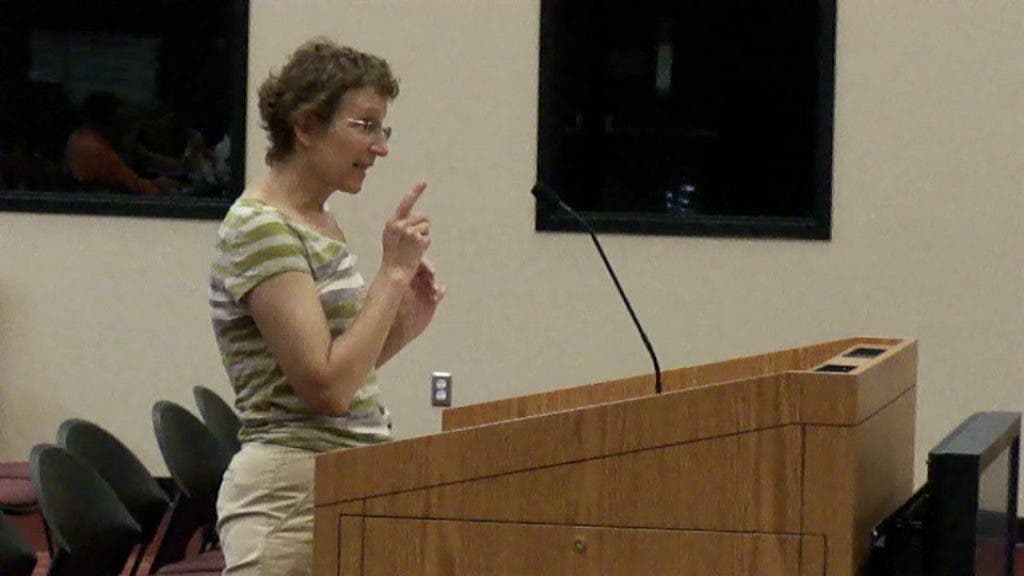
Three in attendance spoke out during Monday's meeting.
"You're cutting programs for retirement?" asked Hartland resident Robin Sluis about the 20 percent increase in retirement costs this year and 24 percent next year.
Bacon said the district can do little about retirement rates, which are set statewide. He said benefits haven't increased but lower investment returns combined with fewer employees within the system have increased costs in recent years.
Two teachers in the elementary fine arts programs advocated for maintaining them.
"Art programs teaches a specific set of thinking skills that are rarely addressed elsewhere in the curriculum," said Shari Russano, the art teacher at . "Perseverance, working through frustrations to see a project to its conclusion, envision a project through start to finish, innovation and exploration, making clear connections between school, work and the outside world — all skills that are needed to compete in the 21st century."
School officials said they agree with the value of the programs and encourage teachers and parents to continue to contact state lawmakers.
"I only hope our governor and legislature will think of these things … so they don't put our local boards of education in a position where they have to make a decisions that no matter which way they go they with their decision it'll be harmful to our children," Sifferman said.
Get more local news delivered straight to your inbox. Sign up for free Patch newsletters and alerts.