

While new to Northville, rowing is actually quite popular in the Ann Arbor area. Teams from local high schools and area universities row on the Huron River, Belleville Lake and Argo Pond. With water surrounding and running through Ann Arbor, rowing seems a logical sport to catch on.
So where does Northville Rowing Club practice? That's a great question!
In the spring and fall, NRC practices on Ford Lake in Ypsilanti. Our practice site is located within the Lakeshore Apartment complex, a space we share with Saline Crew from Saline High School. The lake encompasses 975 acres of water surface area with a depth of about 30 feet. NRC and Saline rowers share the lake with recreational boaters, fishermen and other area water enthusiasts.
Find out what's happening in Northvillefor free with the latest updates from Patch.
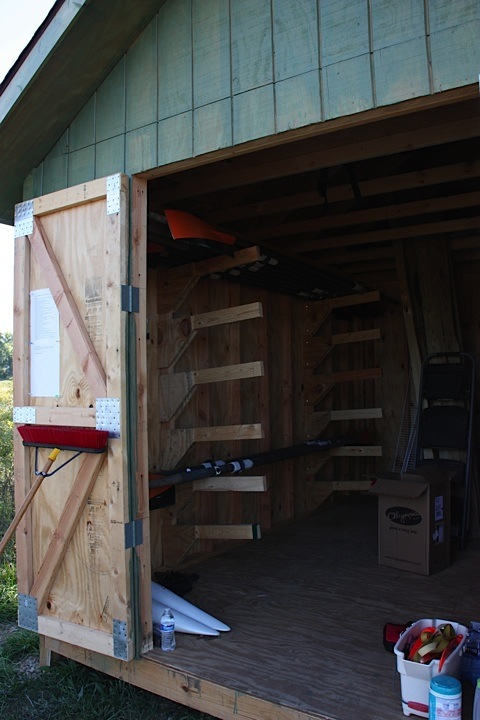
In the 3 years since its inception, NRC has made incredible improvements to the practice area. Using dues collection and fundraising, the team built a new dock to allow for more flexibility for launching and docking boats. In addition, the team has built a shed on the property to house its more costly equipment and supplies.
If you are ever in the area, keep an eye out for our rowers carpooling every weekday and most Saturdays from NHS to Ford Lake. The trip takes just over 30 minutes one-way and I wager if you asked our rowers – the time in the car going to and from practice provides for some of the best times they have with their teammates.
Find out what's happening in Northvillefor free with the latest updates from Patch.
Lesson #2: There are two types of rowing employed by NRC. First, there is SWEEP rowing, where each rower holds only one oar, which remains on one side of the boat. In sweep style of rowing there can be no fewer than two rowers in a boat, since there must always be an even number of oars in the water – one on each side of the boat.
The second type of rowing is called SCULLING. In sculling each rower holds two oars, one on either side of the boat. Because the rower is using two oars, there can be athletes rowing as a “single”.
It’s interesting to note that in either type of rowing, the rower is still traveling backwards in the boat. It’s necessary for single and double rowers to constantly look behind themselves to keep the boat on course and avoid collisions with other boats or obstructions on the water. For larger sweep boats, an athlete called the “coxswain” is facing forward, using the rudder to steer the boat and keep it on course.
Up next week: Where’d You Get That Boat?