Politics & Government
Plymouth Quiet Zones: Too Much Cost, Too Much Risk
Based on a 2 year study the Plymouth City Commission rejects installing train horn quiet zones.
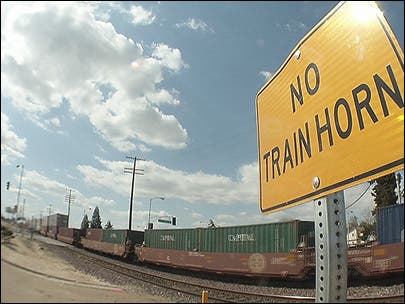
On December 12, 2013 the Plymouth City Commission chamber was filled to capacity by residents interested in the implementation of train horn quiet zones at each of our seven railroad crossings. Impressed by their passion and sympathetic to their concerns, the City Commission launched a plan of action which was re-enforced by our decision to make the evaluation of quiet zones one of our top goals for two consecutive years.
Driven by our concern, in particular for our neighbors living adjacent to any of the crossings, we supported that goal with a thorough fact-finding effort that included hundreds of hours of meetings with residents, experts, engineers, local, State and Federal government officials. In addition, we allocated $18,000 for an engineering study by Wade Trim to determine if it would be feasible to implement quiet zones for the entire city. Included in this analysis was review of a thorough and impressive report compiled by a citizen group that was formed to support quiet zones.
Progress on these efforts was reported regularly at Commission meetings and summaries were posted on the City’s web site. On June 17,2015, we reported back to the community at a special meeting held solely to address quiet zones. The following facts were shared:
Find out what's happening in Plymouth-Cantonfor free with the latest updates from Patch.
- The cost of implementing quiet zones will likely be in the $5 to $6 million dollar range;
- The City will be responsible to pay for the entire cost as there are no federal, state or county sources;
- The City would incur potential liability of $200 million per accident per crossing if it implemented quiet zones;
- The cost of insuring quiet zones will be no less than $200,000 per year; compared this to the City’s total liability insurance package at $187,000 a year;
- The cost of yearly maintenance of crossing would be assumed by the City for no less than $50,000;
- The decision on safety measures at each crossing, and those to be updated each year, is made by the Federal Railroad Authority (FRA), CSX (our rail operator) and the insurer. The City’s only role is to pay for these measures;
- Even if a quiet zone was established train horns will continue to blow as the FRA rules require horns to blow when trains the CSX yard in Plymouth, when they start, stop, go in reverse and at the discretion of an engineer;
- The insurer and CSX would require the City to install “wayside horns” which will sound at a similar decibel level;
- Property values for the entire City would not increase significantly as a result of quiet zones;
- Recently, communities in Maine, Texas, Wisconsin and California are seeking to rescind quiet zones due to the cost, the noise was not abated, and the increase in traffic fatalities;
- Rail incidents are a very real concern as the NTSB reports that a train accident occurs every 115 minutes in the US. Michigan is the 10th leading state for rail incidents in the country. And the City of Plymouth averages a train incident every other year.
The meeting ended with a formal resolution not to proceed with implementation of quiet zones.
Again, while the Commission remains sympathetic to residents who live near the rail crossings and understand how train noise can be disruptive, we could not ignore the high cost and dramatically increased liability the City would incur. The issue of train noise has been present in our City for the past 150 years because Plymouth hosts the main crossing yard for CSX trains in the State of Michigan. Thus, the question raised is whether the cost of implementing a quiet zone outweighs the benefit to the entire City of Plymouth and the facts clearly demonstrate that quiet zones do not.
Find out what's happening in Plymouth-Cantonfor free with the latest updates from Patch.
The process used by the Commission, though lengthier that typical due to the complexity and multiple layers of stake holders, is indicative of the way in which this Commission and preceding Commissions going back at least fifteen years have operated. This level of deliberation explains why today’s Plymouth is a model of a family friendly community nestled around two vibrant downtowns. It also explains how we emerged from the worst economic crisis since the Great Depression in strong fiscal shape and positioned expertly for well balanced growth.
Submitted by the Plymouth City Commission - Mayor Dwyer
_________
Stock photo