Community Corner
Stamp Show Draws Postage Enthusiasts, Collectors
The complex hobby – and business – of philately is highlighted at the yearly Plymouth Stamp Show at Central Middle School.
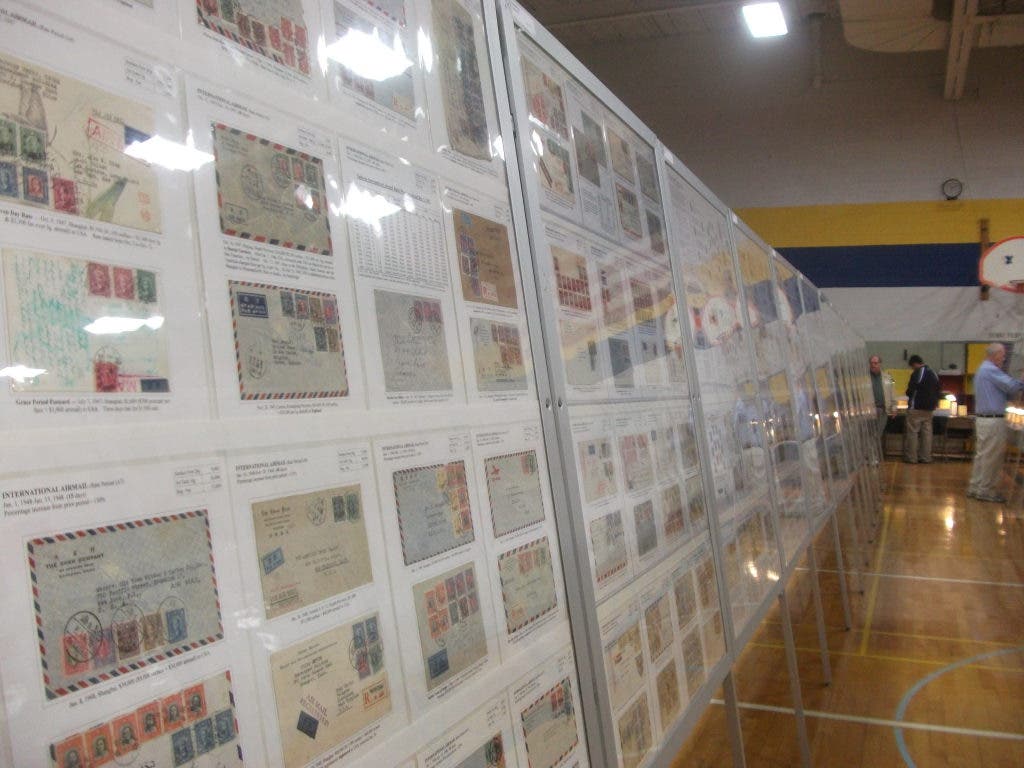


For people interested in learning more about local, national and international history, there’s one place that it’s illustrated for all to see – a postage stamp.
That concept, known as philately – or the study of postage stamps and postcards – was on full display at , where more than 2,000 pages of stamps, postage materials, postcards, and postmarked envelopes were on display as part of the 42nd Annual Plymouth Stamp Show.
Sponsored by the Plymouth-based West Suburban Stamp Club, the 40-exhibitor show featured displays from all over the Midwest, said avid collector Ed Dubin.
Find out what's happening in Plymouth-Cantonfor free with the latest updates from Patch.
“We have people that come here to find specific items. People collect all different sorts of stamps. Some will collect a topic like military history, and others will collect stamps from a certain era,” he said.
For the casual collector, it is often a hobby that begins in childhood, but for the philatelist that hobby becomes a topic of study. It is an opportunity to learn about history in small pieces and sometimes it becomes a business. For the serious collector, finding the right stamps, often from huge informational manuals, becomes an obsession.
Find out what's happening in Plymouth-Cantonfor free with the latest updates from Patch.
The thrill of the chase
The value of postage stamps is not often about what’s depicted on it, what it is commemorating or how pleasing it is to the eye.
Really valuable stamps are often very plain but they might come from an uncommon place of origin, or there might be something unusual about how the stamp is imprinted, said Robert Weisz, a dealer and collector from Lindenhurst, IL.
“The really valuable stamps that everyone is after are usually ugly,” he said. “The more attractive stamps just catch people’s attention more. “
Once the owner of a small stamp shop, Weisz said his basement and his garage are filled with stamps, and the act of hunting down rare stamps has been a business in which he has made more than $1 million over his lifetime. He said that nowadays, much of the activity for the stamp collector is conducted overseas.
“I’ve auctioned in Germany, and all over Europe,” he said. “And it used to be that it was illegal to collect stamps in China...But now, they are buying back their stamps.”
Oftentimes, the stamps sell for three or four times more money than they would here in the United States, said Weisz.
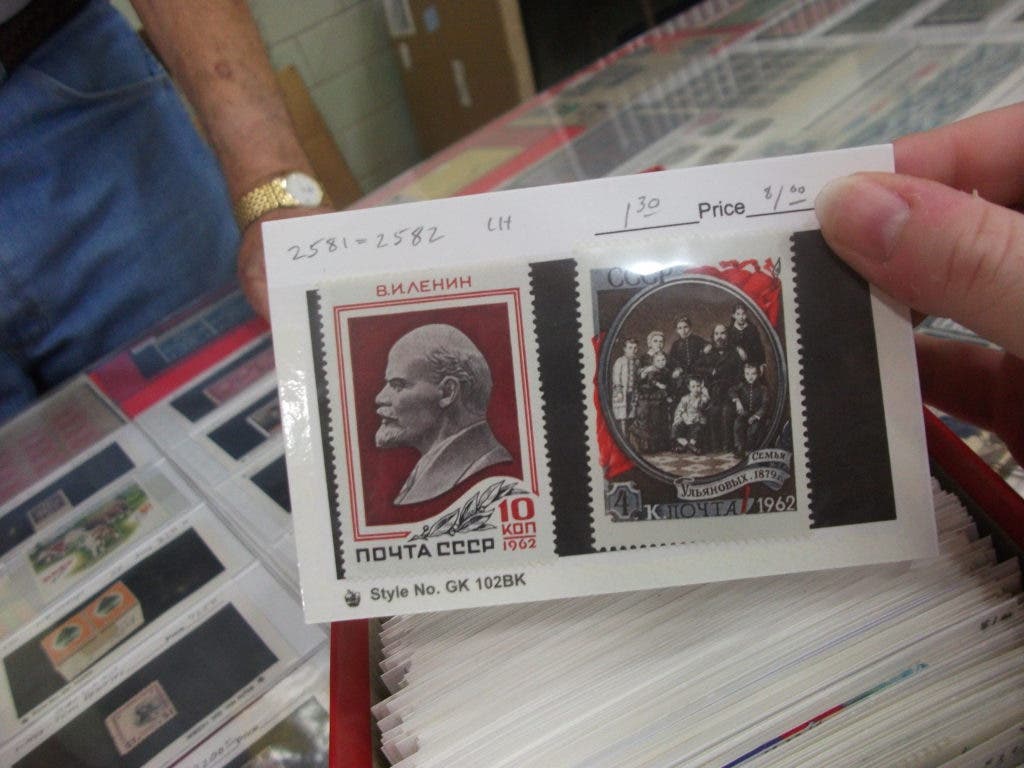
One thriving market for dealers is the foreign market that exists here at home. Igor Schwartzman, who is originally from Belarus, purchased $30 in Russian stamps from Weisz.
“I like the Russian stamps, and I look for all sorts of different ones,” he said.
For others, popular topics can spur collections.
Van Seigling displayed an array of Harry Potter stamps, from many countries, at the show.
“The stamps that were produced with Harry Potter on them may not be as rare, but it depends on where they are from,” he said. “It doesn’t hurt if they are from a rare country."
Seigling recently procured a Harry Potter stamp that has a small black mark on it, which was corrected once the French government realized the error. He counts that as one of his major finds.
But in general, stamps that are produced for collectors, emblazoned with many different notable individuals, will not be rare or have additional monetary value beyond the postage amount simply because too many were produced.
“My fear is when the country music people start unloading their Elvis stamps,” said Seigling. “The Post Office produced 100 million sheets of those.”
Age and opportunity
The proliferation of electronic mail, and the fact that fewer children are collecting stamps, means that most collectors are snugly in middle age or are enjoying their golden years.
Dubin said that the fact that people aren’t selling letters as much as they used to means that what exists will be rarer. But opportunities to start a collection will be reduced over time.
“We’re trying to get kids into the hobby; that's why we had the children’s area this year,” he said.
Children who attended the event received a coupon for stamps, which was reimbursed to dealers by the club, and tools used in assembling a collection.
There are some children who have been lured by collecting, however. Benjamin Vomastek, 12, said he’s starting a military stamp collection.
“I like learning about the history that’s on the stamp,” he said.
In addition to selling and displaying stamps and postcards, stamp collectors are competing for a place at the American Philatelic Society’s “World Series of Philately” in Columbus, Ohio.
The awards will be given out Saturday night. Check Plymouth Patch later for a list of winners.