Schools
Auburn Hills Community Foundation grants experience to empower students
Generous donation provides opportunity for students to learn about "all things college"
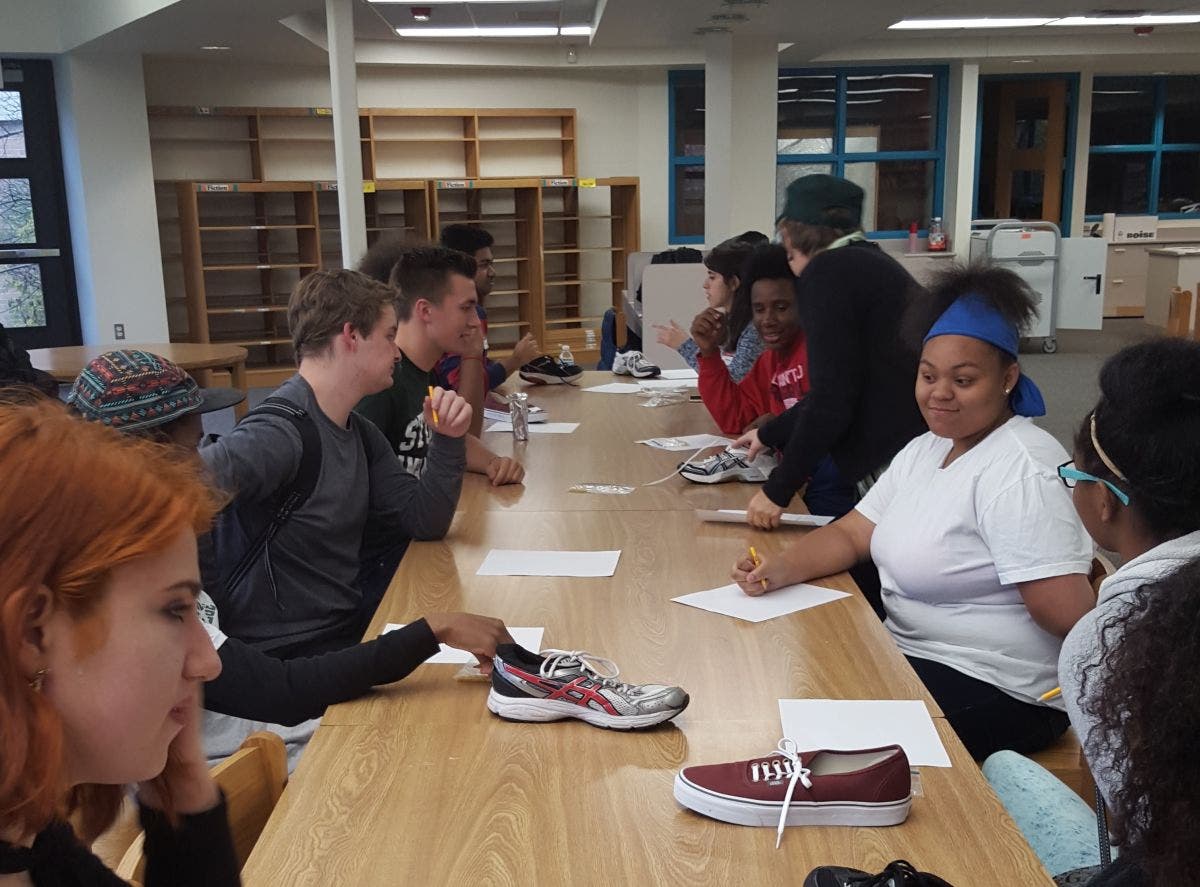
Avondale Academy students work through an exercise about college life.
Students in Avondale School District’s alternative high school, Avondale Academy, had the unique opportunity to explore college life through activities simulating real-life college experiences and visits to Michigan State University and Oakland Community College. The activities and college visits, spread out over five sessions, were funded through a grant by the Auburn Hills Community Foundation and facilitated by Auburn Hills United College Access Network (AH UCAN). The five sessions, titled “Camp College”, were intentional in design to incorporate research, communication and listening skills and provided opportunity for the students to work as a team and connect with each other while exploring all things college.
“Just thinking about going to college can be daunting for a lot of students,” said Avondale Academy counselor, Janette Mow, who, along with AH UCAN Coordinator, Diane Baldwin; and four student ambassadors from Oakland Community College, facilitated the sessions for the students. “Camp College made it a little less daunting by engaging the students in finding information about colleges, anticipating and problem solving obstacles, and guiding them through what to expect in terms of paperwork and the application process.”
Find out what's happening in Rochester-Rochester Hillsfor free with the latest updates from Patch.
The goal of Camp College was to increase awareness of and curiosity about college choices and next steps after high school. One session was a scavenger hunt using the Michigan College Guide, which gave the students a chance to explore college-bound topics like applying and getting accepted to college (i.e., rolling admission and general admission policies and deadlines, fee waivers, ACT/SAT score requirements, types of degrees, and choosing a major); housing; tuition costs; financial aid (i.e., loans, grants, work study and FAFSA); textbooks costs; and campus events and activities. In another session, students focused on choosing majors and then researching colleges that offered them. Students also took a FAFSA quiz and participated in discussions that covered common myths about FAFSA as well as more extensive FAFSA-based content like need-based and merit-based scholarships, types of loans, Pell Grants, how to read the SAR (student aid report), and how to determine how much money is needed for school.
Mow liked the hands-on involvement of the students throughout all of the sessions, “once the students started researching what they need to do in order to have the career they are hoping for it became very real for them,” she said. “We were there to guide them but they had to do the work. Even during the discussions they did the work, they were actively listening and asking a lot of great questions,” she added.
Find out what's happening in Rochester-Rochester Hillsfor free with the latest updates from Patch.
Visits to Oakland Community College and Michigan State University made the Camp College experience complete as the students were able to connect the activities and discussions during the sessions with the real world of college. A follow-up survey of the students administered by Mow concluded that the students had a better understanding of the work and commitment involved in applying for and attending college. “Camp College clarified college for the students in a way that just reading about in a book couldn’t do,” she said “and that clarification is empowering.”