Health & Fitness
Michigan’s first MindKare Kiosk unveiled at Oakland University
The kiosk uses an interactive touch screen display to provide users with quick, anonymous assessments of various mental health issues.


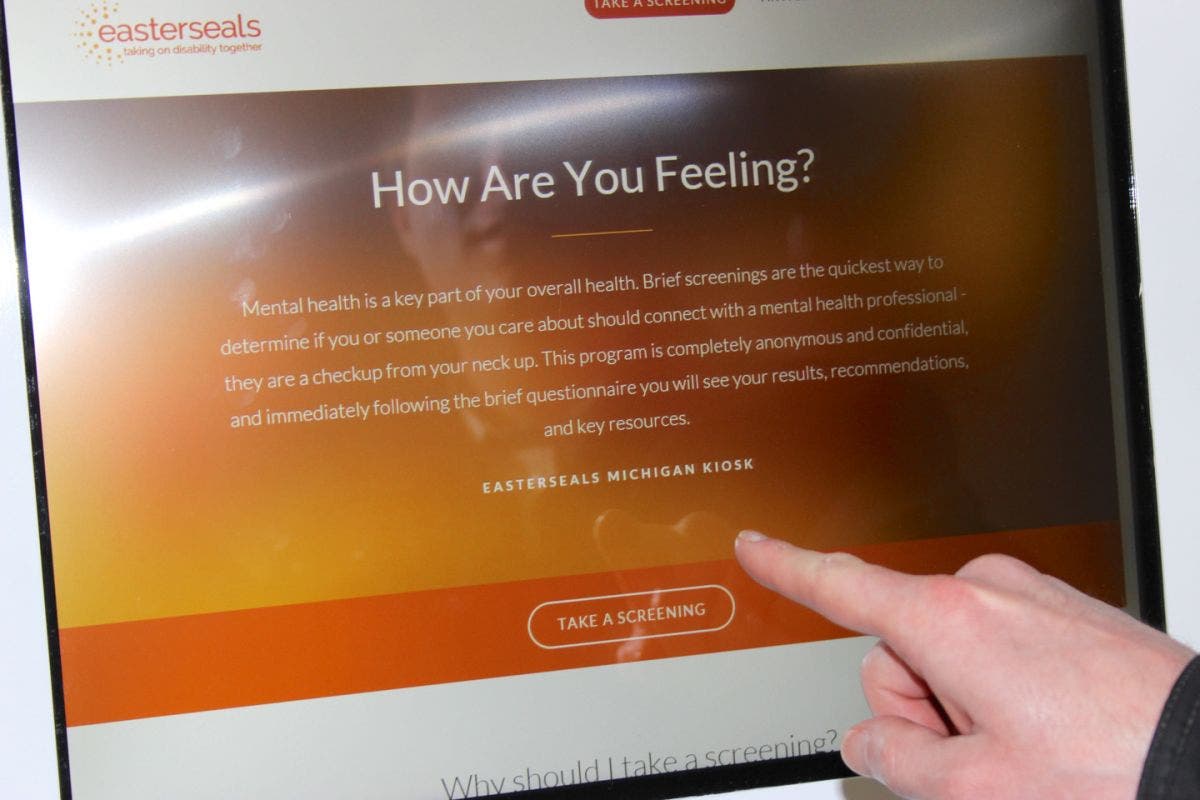

Through a collaboration with Easterseals Michigan and Screening for Mental Health Inc., the first MindKare Kiosk for Michigan was unveiled at Oakland University’s Kresge Library on Wednesday, Jan. 18. The freestanding kiosk uses an interactive touch screen display to provide users with quick, anonymous assessments of six mental health issues: generalized anxiety, depression, post-traumatic stress disorder, bipolar disorder, eating disorders and substance use disorders.
"Providing counseling services for Oakland University students and the community is a priority of the School of Education and Human Services. We have a tradition of partnership with Easterseals and are proud to work with them on this project,” said Oakland University School of Education and Human Services Dean Jon Margerum-Leys, Ph.D. “Through a free and accessible system that will provide students with an assessment of their mental health and access to quality, local treatment centers and other resources, Oakland University is pleased to take the lead with Easterseals Michigan and Screening for Mental Health, Inc. in bringing this technology to Michigan."
Brent Wirth, CEO of Easterseals Michigan, added, "We have been at the forefront of using technology to encourage people to assess their mental health just as they would their physical health. This collaboration helps us make an even greater impact – through education, prevention and intervention -- on a population such as college students who can greatly benefit from these resources.”
Easterseals Michigan secured a $27,000 grant award from the Flinn Foundation to bring the Screening for Mental Health Inc. MindKare Kiosk program to Michigan.
College Campus Statistics Demonstrate the Need
Nationwide, 17 percent of college students were diagnosed or treated for anxiety during the past year, and nearly 14 percent were diagnosed with or treated for depression, according to a spring 2016 survey of 95,761 students by the American College Health Association. This represents an 11.6 percent increase for anxiety and a 10.7 percent increase for depression from the same survey conducted in the spring of 2011.