Kids & Family
Dallas Police Shootings: What Parents Should Tell Their Kids
A horrific week brought the best out in some kids around Metro Detroit. But too much exposure to tragedy can cause problems later on.




Metro Detroit, MI — Kids notice national tragedies — last Thursday’s sniper attacks that killed five Dallas police officers and injured seven others, the clashes between black civilians and white police officers in Minnesota and Louisiana that preceded it and a list of deadly mass shootings that is longer in America than anywhere else in the world.
Be sure of it. They notice.
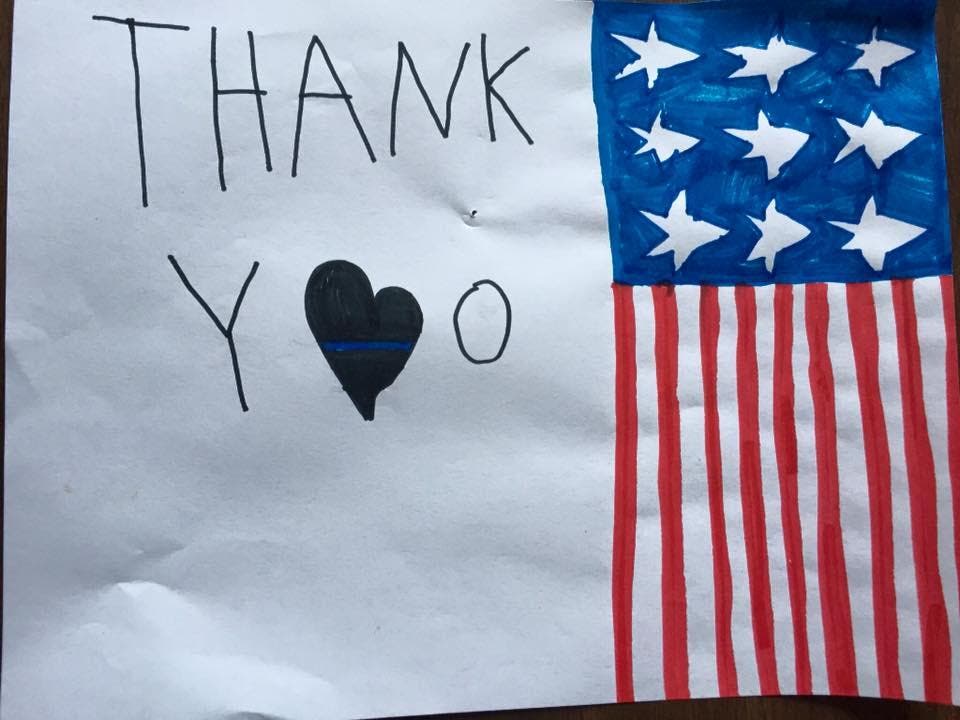
In Royal Oak Friday, a day after the horrific police assassinations in Dallas, kids showed up in droves with their parents with homemade cards of support, food and hugs — the kind of turnout that might be found when a friend or family dies and the neighbors have filled casserole dishes in their hands when they ring the doorbell.
Find out what's happening in Royal Oakfor free with the latest updates from Patch.
NEWSLETTER & REAL-TIME NEWS ALERTS: Get the Top Michigan Headlines from Patch Editor Beth Dalbey
It was a tough day for police. The show of support and trust citizens have in the Royal Oak Police Department meant the world to his officers, Police Chief Corrigan O’Donohue said in a news release.
Find out what's happening in Royal Oakfor free with the latest updates from Patch.
“It's just been really nice and we want to sincerely thank everyone and let our residents know how much we appreciate this,” he said.
Police in Rochester got some of the same treatment.
In Detroit’s 11th Precinct, Samya Walker, who turned 9 Sunday, spent her birthday money to buy lunch for police and showed up with her family with sack lunches Saturday afternoon.
Police Sgt. Darrell McClendon told the TV station that Samya’s gesture came at a time “when we really need it.”
In return, police made Samya an “officer of the day” and filled her backpack with gifts she might have bought for herself with the birthday money.
Kids Know, So What Else Should They Know?
These kids noticed, and don’t assume yours haven’t.
“Children have nearly impeccable radars for parental anxiety,” and that can have a trickle-down effect, Dr. Tina Cheng, a professor of pediatrics at Johns Hopkins University School of Medicine, said in a news release.
Research shows acute and chronic stress in childhood can could result in a range of health problems at a young age or later in life, including depression, substance abuse and heart disease, Cheng said.
It’s normal for kids to be apprehensive, cry and ask a lot of questions, said Cheng, who’s also the director of Johns Hopkins’ Division of General Pediatrics and Adolescent Medicine.
But other symptoms — unusual irritability, excessive crankiness, hypervigilance or jumpiness, loss of appetite, nightmares and disturbed sleep — should be red flags for deeper problems, according to Cheng, who said older attention may suddenly demand more attention, become restless or aggressive, or become unusually quiet and withdrawn..
Initiating a discussion can soothe a child’s fears after a national tragedy, according to Cheng, who wrote that avoiding the conversation can exacerbate the children’s anxiety and make them think the topic is “off limits.”
“It is important to be honest with children,” Cheng wrote. “They need to be able to trust adults. Loss of trust can be one of the most damaging experiences in a young child’s life. Consider sharing your feelings and letting your child know it’s OK to be upset.”
Cheng offers these tips:
- Be honest and open. Find out how much your kids know, their greatest fears and then offer context of the situation. Give kids time to absorb the information, and in the following days, be sure to ask how they’re doing or if they’re concerned about anything.
- Monitor kids’ media exposure. In general, young children shouldn’t be exposed to ubiquitous media coverage after stressful events, and older children should watch with a parent or caregiver. Doing so provides another opportunity for discussion and to ask kids if they’re worried about anything.
- Reassure kids that they are safe. Fear is a common, healthy and understandable response to mass shootings and other high profile tragedies. Help children put their actual risk in perspective, and reassure them of steps you and others have taken to ensure their homes, schools and public places are safe places.
- Take care of yourself. Children learn by observation and imitation, Cheng wrote, so it’s important that you and caregivers are exhibiting the behaviors and attitudes you want them to emulate and develop.
- Prepare for the worst and hope for the best. Any high-profile event, whether it’s a natural or a man-made disaster, is a good opportunity for your family to review emergency plans. Remind kids of what they should and shouldn’t do, who they should call and where everyone should meet if the family is displaced in an emergency.
Also on Patch

Friendship Between Slave Descendant, Plantation Owner Overcomes Racial Discord
- Michigan man’s quest for answers — why was his great-grandfather white when the rest of his family was black? — takes a surprise turn.

Slain Dallas Officer Moved from Metro Detroit to Chase Lifelong Dream
- Michael Krol, former Wayne County officer, worked hard to get a job in Dallas. When he did, “he was all in, he was all in,” his uncle said.
Dallas Police Shootings Put Metro Detroit on High Alert
- In Oakland County, sheriff says officers struggle with incongruity of being on guard for their lives, “yet approachable and friendly.”
Get more local news delivered straight to your inbox. Sign up for free Patch newsletters and alerts.