Community Corner
Gorillas in Democratic Republic of Congo Have Strong Connection to Metro Detroit
Detroit Zoo chief executive chairs Democratic Republic of Congo-based Gorilla Rehabilitation and Conservation Education Center.


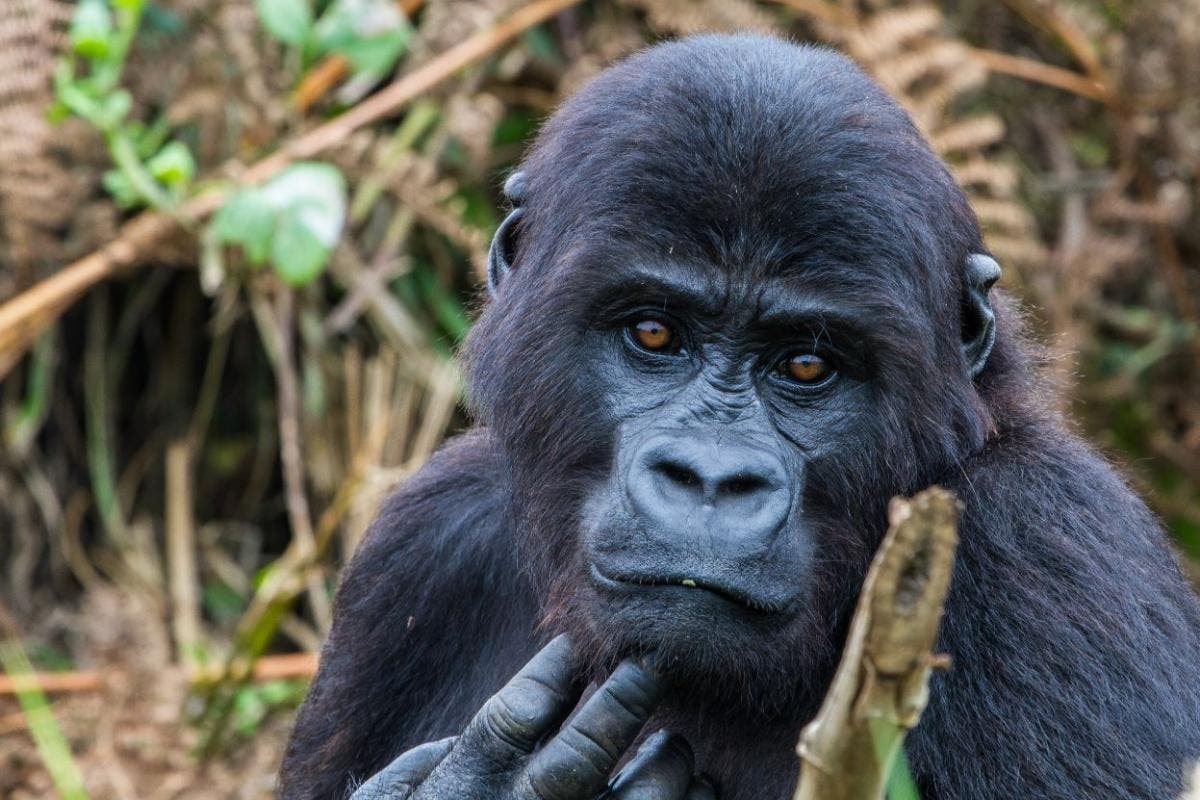


ROYAL OAK, MI — The executive director of the Democratic Republic of Congo-based Gorilla Rehabilitation and Conservation Education Center, or GRACE, will speak next month at an event organized by the Detroit Zoological Society, one of its partners in the worldwide effort to save the highly endangered Grauer's gorilla, formerly known as the eastern lowland gorilla.
Dr. Sonya M. Kahlenberg will speak at 6 p.m. on Sunday, Aug. 14, in the Ford Education Center at the Detroit Zoo. The presentation — titled “Saving Gorillas from Extinction” — is open to the public at a cost of $25, with all proceeds benefiting GRACE.
GRACE is the only facility in the world that provides rescue and rehabilitative care for orphaned Grauer's gorillas – considered one of the world’s most endangered primates. The organization was founded in 2009 by the Dian Fossey Gorilla Fund International and is now led by a board of directors chaired by DZS Executive Director and CEO Ron Kagan.
Find out what's happening in Royal Oakfor free with the latest updates from Patch.
“We are proud of our relationship with GRACE,” Kagan said in a statement. “It is an amazing conservation, welfare and humane education initiative, and a wonderful collaboration of important organizations working together with a very special Congolese community to ensure that this population of extremely endangered gorillas survives.”
Tickets for the GRACE lecture can be purchased online or at the door. Seating is available on a first-come, first-served basis.
Find out what's happening in Royal Oakfor free with the latest updates from Patch.
GRACE is located on 370 acres in a remote, forested area of central Africa. It is currently home to 14 orphaned Grauer’s gorillas between the ages of 3 and 15 years old. Grauer’s gorillas, alsoo known as eastern lowland gorillas (Gorilla beringei graueri), are closely related to humans.
They are also highly endangered due to widespread habitat destruction, poaching and threats associated with the rapidly growing human population within their habitat caused by civil war and unrest in the region. Throughout the unrest, the gorillas have been vulnerable to poaching, even in Kahuzi-Biega National Park, home to the largest population of protected eastern lowland gorillas. Rebels and poachers invaded the park and people set up illegal mines.
In the last 20 years, nearly 80 percent of the Grauer’s gorilla population has been wiped out, and only about 3,800 of these animals remain in the wild today. Because of violence in the DRC, getting an accurate count of the number of individuals remaining is difficult, according to the World Wildlife Fund.
As part of the effort to conserve the species, the orphaned gorillas being cared for at GRACE are also learning skills for eventual reintroduction into the wild. More information about the Gorilla Rehabilitation and Conservation Education Center found here.
Grauer's gorilla is the largest of the four gorilla subspecies. It is distinguished from other gorillas by its stocky body, large hands and short muzzle. Despite their size, Grauer's gorillas subsist mainly on fruit and other herbaceous materials, just like other gorilla subspecies, according to the World Wildlife Fund.
Grauer's gorills make their homes in lowland tropical rainforests in the eastern DRC. In the last 50 years, their range has decreased from 8,100 square miles — about the size of the state of Massachusetts, according to the WWF — to about 4,600 square miles today. This subspecies may now occupy only 13 percent of its historical range, WWF says.
Images: Courtesy of Detroit Zoological Society
Get more local news delivered straight to your inbox. Sign up for free Patch newsletters and alerts.