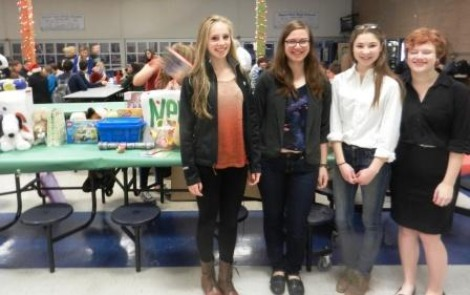


Next week Interact of Royal Oak will arrive in Antigua, Guatemala, to perform two weeks of service projects in small villages nearby. This will be the first time our club has left the country to do direct service for those with fewer opportunities.
As with our national-level disaster relief trips, our small group of students will be reporting out their experiences regularly for the next two weeks. Whether we are hiking a volcano or sealing PVC pipe, we hope you find our reflections interesting reading!
It’s hard to write about expectations for a trip like this one. I tell me students (fruitlessly, I’m sure) not to carry expectations, to allow the country to teach us what it chooses. Traveling abroad and meeting new cultures does that. During our time there we will be helping renovate a local school and install plumbing in homes that have never had it.
Find out what's happening in Royal Oakfor free with the latest updates from Patch.
There are cheaper ways to help countries in these sorts of projects, of course. Any number of blogs out there issue diatribes against service trips. Isn’t it better to train and employ locally? Isn’t money easier to move (and more practical) than people? Is the service we do really significant enough to warrant a trip like this?
I believe these are the wrong (or perhaps not the only) questions that must be asked. As important are ones like these: what can students learn from experiencing a developing economy directly? What can students gain from daily living and interactions with local families? What perspectives are acquired from living abroad as a minority, with limited language skills? In these ways, many of the real gains from international service are our own.
Find out what's happening in Royal Oakfor free with the latest updates from Patch.
More, we learn directly how the cash we bring to that economy assists (or fails to assist) those in need. Is all foreign spending equal? How can one identify where a dollar does the most good? Is tourism as an industry working to positively impact the local peoples? Do our dollars offered in these small villages work differently from those who stop for an afternoon off a cruise ship?
What is it like living without the luxuries of hot showers, reliable electricity, or easy access to potable water? What is it like to prepare foods sustainably? How unique is American culture to expect such services?
What cultural or political factors impact a society’s ability to make sustainable economic progress? Is our notion of “progress” one that fits the country we visit? What about our ideas of community, wealth, justice, and responsibility? And as much as the differences may surprise, the similarities may enlighten.
As an educator, my focus must be on the learning I can bring students. An international service trip to a developing nation is not about making a difference in the world by building a new trail, painting a playground, or caring for livestock. It’s about making that difference by training future leaders what responsible development and personal efficacy really look like.
And we’ll help a few people and make a broader circle of friendship and community along the way.
I’m excited about Interact’s first international service trip, a smaller version of the great work our parent organization Rotary does regularly. I’d like to thank Rotary for its generous support for this experience at its spring auction.
I will write again about our trip near its end, but the next several entries from this blog will be written by our students as they teach me what they have learned.
-----
You can also follow our trip on Twitter @schisnell.