Health & Fitness
Surgery, Follow-Up Support Help Man Shed 270 Pounds
After years of struggling with different diet plans, Dennis Piccin decided to have bariatric surgery. But that was only half the battle.


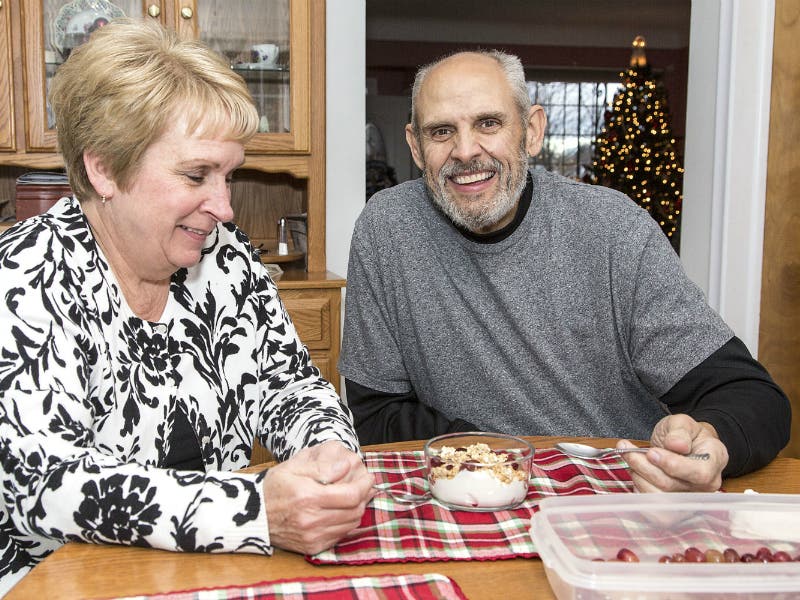


ROYAL OAK, MI – Before he lost the weight, Dennis Piccin swallowed his pride and let his wife, Beth, clean the gutters of their Warren home. He knew the ladder would collapse under his peak weight of 530 pounds.
The 56-year-old Piccin didn’t like how that made him feel. He didn’t like it at all.
Find out what's happening in Royal Oakfor free with the latest updates from Patch.
“I wasn’t the person I needed to be for my wife,” Piccin, the father of three, told Patch. “I was not the father I needed to be.”
He would put in his shift in the shipping and receiving department at General Motors Technical Center in Warren, where he has worked for 38 years, then come home and collapse in exhaustion.
Find out what's happening in Royal Oakfor free with the latest updates from Patch.
“I’d go to work, put in my time and come home tired,” he said. “I didn’t want to do anything.”
His self-esteem suffered, especially at restaurants. He worried about fitting in a booth or breaking chairs at tables, and he didn’t like the way other diners looked at him.
Piccin had tried Weight Watchers, Jenny Craig and other diet programs nearly a dozen times during his three-decade-long struggle with his weight.
He lost 100 pounds once, but gained 75 pounds back. He had heard about a bariatric surgery procedure at Beaumont Hospital – Royal Oak, and knew it had worked for other morbidly obese people. But he was worried about going under the knife. What if he died on the table?
After Piccin made it through emergency surgery and didn’t die, he began to think, “If i can do that, I’m going to get that surgery,” he said.
After so many failed diets, his physician, Dr. Christopher Wilhelm encouraged him to go back to the Beaumont Weight Control Center and talk to Dr. Kerstyn Zalesin.
“ ‘You need to go back, Dennis,’ ” Piccin recalled Wilhelm telling him. “ ‘You can’t do it alone.’ ”
He did. He wonders now why he waited so long.
“He’s a Clothes Horse Now”
Fifteen months later, the 6-foot, 3-inch Piccin has lost more than 270 pounds. At his last weigh-in, he weighed 255 pounds.
Not only has his self-esteem improved, “I can help around the house more,” Piccin said.
“I can help her more,” he said of his wife. “It’s nice to do more things so she doesn’t have to carry her load and mine.
“I have more energy. I don’t feel caught in a funnel getting sucked down to the ground. I can do a lot of things I’ve been wanting to do with my life. I can do bike rides. I enjoy going to the gym.”
Not only that, Beth Piccin said, “He’s a clothes horse now.”
“He was never someone to go out and buy a lot of clothes,” she said, “but now that he can fit into normal sized clothes, he enjoys shopping at Macy’s.”
Must-haves are thin thermal apparel.
“Now I freeze,” Piccin said. “I’ve got no insulation now.”
Beth Piccin has also noticed a change in her husband’s emotional well-being.
“He’s not self-conscious of himself,” she said. “He feels a lot better, and he’s more comfortable going out.”
Support as Important as Surgery
Piccin is almost evangelical in his praise of the Beaumont Weight Control Center to others similarly struggling with weight, not just because of the bariatric surgery, but for the support meetings that come after the surgery.
The meetings, held every Wednesday night, are a lifeline that Piccin says stop him and others who have the surgery from relapsing. He compares them to Alcoholics Anonymous meetings, and he arranges his schedule so he won’t miss them.
“People who have been there for a while — those who have taken off and kept off the weight — mentor the rest of us,” Piccin said. “They are a strong testament — ‘It’s hard, yes. But possible.’ ”
The members of the group are helping Piccin tackle another common fear — fear of regaining the weight.
“I always will fear gaining weight back,” Piccin said. “That’s a good fear to have. I could gain this weight back. I need to be respectful of the fact that I need to be motivated at all times, not only for me, but to help other people. I need their support and they need mine.”
Besides attending meetings consistently, Piccin tracks his food intake, weighs in once a week, and keeps regular appointments with his doctor, psychologist, dietitian and physical therapist.
Understanding the Feeling of Fullness
“Bariatric surgery helped me know what it is to feel full,” Piccin said. “Before that, my stomach was so stretched out. There was no bottom.”
And because his stomach was like a bottomless pit, his body never signaled that he had eaten enough food.
It was, he said, like trying to understand Heaven without actually having been here.
“This right here is like that,” he said. “My stomach was so stretched out that until after this surgery, I never knew what full was.”
Now, after he’s eaten 3½ ounces of food, his body tells him he’s had enough.
The first time he felt the sensation of feeling full and pushing the plate away, he understood.
“This is it,” he said. “This is what everyone has been trying to tell me; now I feel it for myself.”
Beth Piccin’s support has been important, too.
“The great thing is, my wife offers a great support system,” he said. “She’s not a fish eater, but she cooks it for me. She doesn’t eat a lot of the stuff I eat, but she cooks it for me. Thank God I’ve got her.”
Taking the First Step
Zalesin, who Piccin calls “the gem behind all this,” says the changes in Piccin are extraordinary.
“In the past, Dennis struggled with carbs, breads, sweets and emotional and boredom eating,” Zalesin said. “He put a lot of effort into various diets that worked in the beginning, but became impossible to maintain. He was sick, anxious, exhausted, discouraged, breathless — and trapped in a cycle he couldn’t escape.
“With these things in mind, it’s great to see Dennis’s progress and newfound confidence,” Zalesin added. “He’s eating and exercising regularly, consuming lean protein and fresh fruit and avoiding trigger foods, such as rice and bread.”
Like Piccin, many Beaumont Weight Control Center patients say they wish they hadn’t waited so long to take that first big step, said Dr. Wendy Miller, the physician director of Beaumont Health Weight Control Centers in Grosse Pointe, Rochester Hills and Royal Oak.
“The common denominator among people who want to lose weight is that it can be overwhelming to take that first big step; to attend a free seminar and learn about Beaumont’s many options,” Miller said.
Other Beaumont Programs
Bariatric surgery is only one approach to weight loss. The hospital also offers a medically-supervised weight control program, a Beaumont Healthy Kids program for overweight children, and a nutritional health program aimed at optimizing health through nutrition, physical activity and emotional well-being.
Also available: cooking classes for kids and adult cooking demonstration classes.
“Our multidisciplinary team of experts, including physicians, dietitians, psychologists, exercise physiologists, and nurses, each of whom provides ongoing education and support that empowers participants to develop long-term, healthy lifestyle habits,” Miller said.
Long-term success, according to Miller’s research, often hinges on a patient’s ongoing commitment to the weight loss and maintenance process, particularly through regular, support group attendance.
“We have support group members who have been coming to meetings for 20 and 30 years,” Miller said. “Members share tips and strategies for getting through the rough patches and sticking with the program long term. They work through their fears together.”
» Before-and-after photos courtesy of Beaumont Hospital – Royal Oak
Get more local news delivered straight to your inbox. Sign up for free Patch newsletters and alerts.