Politics & Government
6th Circuit's Marathon Gay Marriage Hearing Signals Historic Shift
Many observers think the issue is headed for a showdown before the U.S. Supreme Court – and there's a surprising development in the GOP.


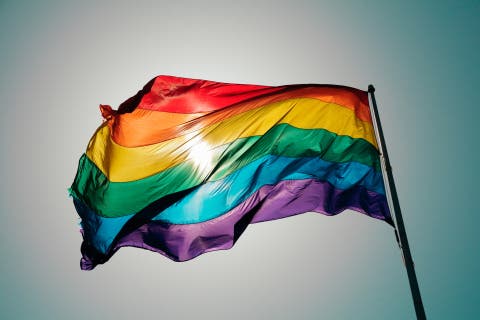
History could turn on what happens at the Potter Stewart U.S. Courthouse in Cincinnati Wednesday when a three-judge panel of the 6th U.S. Court of Appeals hears arguments on same-sex marriage cases from Michigan, Kentucky, Ohio and Tennessee.
Across the country, bans on gay marriage have been falling like dominoes. Nineteen court rulings – 16 at the U.S. District Court level and three at the Circuit Court level – have struck down state bans as unconstitutional since DOMA (the Defense of Marriage Act) was ruled unconstitutional last summer.
The decision by the court for a panel of three of its judges to hear six cases – two from Ohio and Kentucky – on a single day is significant in itself. The 6th Circuit has never done that, making Wednesday one of the most important days yet in the marriage equality battle.
Find out what's happening in Salinefor free with the latest updates from Patch.
“This is the most marriage equality cases ever heard in one court at one time, but the underlying situation is kind of incredible as well,” Shannon Minter, legal director of the National Center for Lesbian Rights, a plaintiff in the case challenging Tennessee’s same-sex-marriage ban told Al Jazeera America
“It just so happened they had six cases that affected every state in the circuit in the same time frame. It does make sense to assign them to the same judging panel, since they all present either identical or closely related issues.”
Find out what's happening in Salinefor free with the latest updates from Patch.
The marathon session is yet another signal that marriage equality is inching toward a showdown before the U.S. Supreme Court, which many observers believe will take up one or more cases, whether from the 6th Circuit, 7th Circuit or 9th Circuit, and finally resolve the issue nationally.
A panel of three 7th Circuit judges in Chicago will hear arguments in federal court rulings striking down same-sex marriage bans in Indiana and Wisconsin on Aug. 26. On Sept. 8, a panel from the 9th Circuit in San Francisco will hear arguments on cases from Nevada, Idaho and Hawaii.
Beyond the Court
Growing acceptance of same-sex marriage has huge implications for the Republican Party.
Ballots had barely been counted in the 2012 election before the Growth & Opportunity Project delivered a blistering autopsy report that said defeats at the poll resulted from a perception on the part of some voters is “scary,” “narrow-minded” and “out of touch.”
The report bluntly stated the party needs to be more inclusive – stakes so high that the Republican National Committee embarked on a $10 million national marketing and branding campaign plot out a new roadmap for the future.
In Michigan, there are signs that some Republicans are heeding the message.
More than two dozen prominent Michigan Republicans joined in an amicus brief in June rejecting the state’s appeal of U.S. District Judge Robert Friedman’s landmark ruling striking down the state’s voter-backed gay marriage ban and arguing for equality for all citizens
“As various states have legalized civil marriage for same-sex couples, undersigned Amici, like many Americans, have examined the emerging evidence and have concluded that there is no legitimate, fact-based reason for denying same-sex couples the same recognition in law that is available to opposite-sex couples,” they said.
Among those signing the brief was Rick Johnson, former speaker of the Michigan House of Representatives. He voted for the constitutional amendment to ban same-sex marriage in 2004, a vote he would take back if he had the chance, the Detroit Free Press reports.
“You make decisions, especially when you’re the leader, based on what’s going on at the time, and that was the movement at the time,” he said. “But now, if you’re going to be Republican and make the comments that we want a broad tent, then you should include everyone. A lot of people are tired of government in their house, in the backyard or in their bedroom.”
The brief sends an important message to the 6th Circuit that prominent Republicans have warmed to same-sex marriage, and also provides an example for other members of the GOP, former state Rep. Leon Drolt of Macomb County told the Free Press. He was one of three members of his caucus who voted against the 2004 constitutional amendment defining marriage as a union between one man and one woman.
“Republicans in general who support equality for gay citizens can feel that they’re not alone out there, and they can come out of the closet, so to speak, in support of equality,” he said.
Polls show that support for gay marriage is increasing nationally. A May Gallup poll showed support at an all-time high – 55 percent – in stark comparison to the 68 percent opposition when Gallup first posed the question in 1996.
Support for same-sex unions has grown steadily since then, up to 42 percent in 2004 when Massachusetts became the first state to legalize gay marriage; to more than 50 percent in 2011, where it has since remained. Support leveled off some in 2012 before the jump to 55 percent this year.
The shift in attitudes about gay marriage is “stunning,” a Whit Ayres, a GOP pollster and political consultant told the McClatchy Washington Bureau.
“On no issue in American life have opinions changed as fast as they have on gay rights,” he said. “It is truly a stunning development.”
The Cases Before the 6th Circuit
Michigan: On March 21, U.S. District Judge Bernard Friedman ruled against Michigan’s voter-backed ban on same-sex marriage in DeBoer V. Snyder. The case was filed by a lesbian couple who wanted to jointly adopt children, but were prohibited from doing so by the 2004 voter-backed ban on same-sex marriage.
During the 24 hours that same-sex marriage was legal, more than 300 couples wed, only to have their marriages put on hold when the 6th Circuit granted a stay in the decision. The marriages are legal, but Michigan won’t recognize them until the issue is sorted out by the 6th Circuit. U.S. Attorney General Eric Holder said that for federal purposes, the marriages are legal.
Kentucky: On July 1, U.S. District Judge John G. Heyburn III ruled in Love v. Beshear against a provision forbidding the commonwealth from performing same-sex marriages. That ruling followed a Feb. 12 ruling in Bourke v. Besher that said the Commonwealth could not refuse to recognize valid same-sex marriages performed in other states.
Heyburn stayed his own rulings pending an appeal to the 6th Circuit.
Ohio: Two Ohio cases have been consolidated in the appeal before the 6th Circuit. On Dec. 23, 2013, U.S. District Judge Timothy Black ruled in Obergefell v. Himes that Ohio’s refusal to recognize a same-sex marriage performed in another jurisdiction was unconstitutional. The case was filed on behalf of Jim Obergefell and John Arthur, who wanted their Maryland marriage to be recognized on Arthur’s death certificate before he died. The court ordered the state to recognize the marriage when Arthur died in October 2013.
In a subsequent ruling in Henry v. Himes, Black ruled that the state must recognize the marriages of all same-sex couples performed in other jurisdictions.
Tennessee: On March 14, U.S. District Judge Aleta Trauger ordered Tennessee officials to recognize three same-sex marriages performed in other jurisdictions. The ruling was later stayed by the 6th Circuit.
____
PHOTO: Getty Images
Get more local news delivered straight to your inbox. Sign up for free Patch newsletters and alerts.