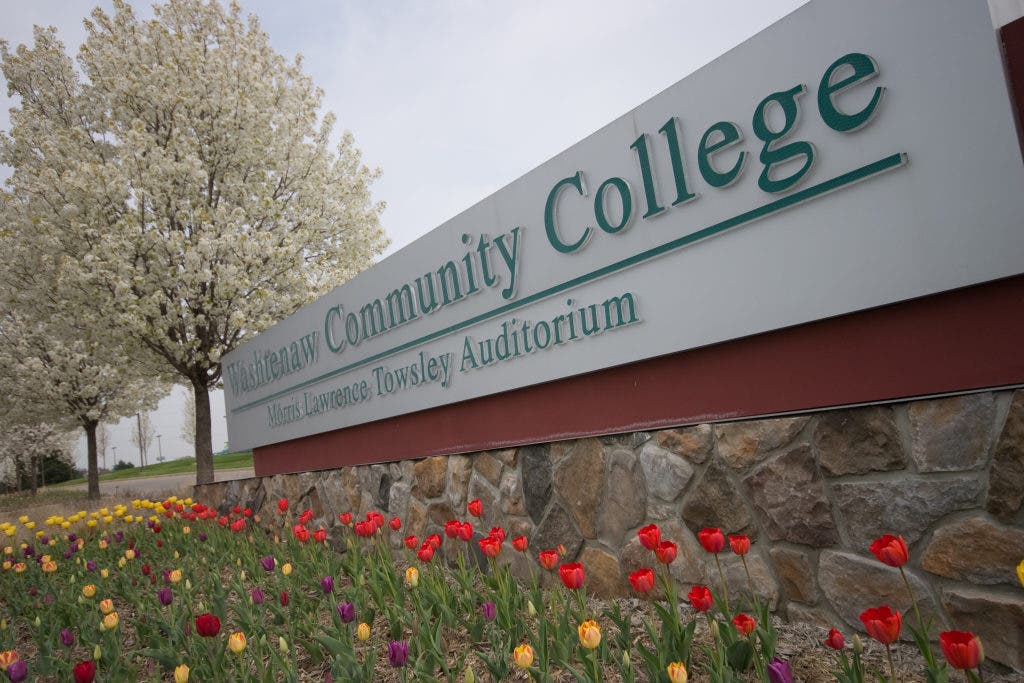

Employment opportunities were an important factor in the creation of eight new certificate and degree programs at Washtenaw Community College for the 2013 Fall Semester.
The new programs approved at the WCC Board of Trustees March 26 meeting represent a broad range of growing industries, including health care, applied technology, digital media, social science, and the arts.
“It is exciting to add so many new programs for fall,” said WCC President Rose B. Bellanca. “Now students can choose from 125 certificate and degree programs at WCC.”
Find out what's happening in Salinefor free with the latest updates from Patch.
The new programs are:
Certificates
Find out what's happening in Salinefor free with the latest updates from Patch.
• Fine and Performing Arts
This certificate program enables serious fine and performing arts students to develop their short- and long-term goals for a career or business as a working artist while continuing to refine their skills. According to the Michigan Department of Labor, Energy and Economic Growth (DELEG) a 2.8-6.3 percent increase in jobs related to fine and performing arts careers between 2008 and 2018.
• Medical Billing and Coding
This new certificate program provides instruction for classifying, coding, reporting, analyzing, and managing medical data in physician’s offices and large healthcare facilities. Medical Records/Health Information Technician positions are expected to grow by 15 percent between 2008 and 2018, with 184 openings in Michigan, according to DELEG.
• Medical Office Administration
This program prepares students for entry-level administrative work in medical offices and healthcare facilities. Coursework includes the basics of health insurance and medical billing, scheduling and charting software, and the overall duties of a medical receptionist. According to the U.S. Bureau of Labor Statistics, job growth in this area will be 15 percent between 2010 and 2020.
• Digital Video Advanced Production—Advanced Certificate
The specialty aspects of digital video production are featured in this advanced certificate program. Areas of focus include cinematography, sound design, direction, advanced green screen effects, and television studio practice. The U.S. Bureau of Labor Statistics forecasts a national job outlook increase of 8 to 9 percent for multimedia artists, directors, and producers. In Michigan, the DELEG expects a 10.6 percent increase in film and video editors between 2008 and 2018.
• Addiction Studies—Post-Associate Certificate
This new post-associate certificate is designed for working professionals interested in Certified Alcohol and Drug Counseling (CADC) certification through the State of Michigan. Coursework focuses on counseling clients with substance abuse disorders and fulfills the educational requirements necessary for CADC certification. The DELEG predicts a 15 percent increase in employment for substance abuse and behavioral disorder counselors in Michigan between 2008 and 2018.
Associate Degrees
• Global Studies—Associate in Arts
This two-year, liberal arts transfer program aids students in developing an open, inclusive, international perspective through the study of human cultures, history, and language. Students may choose to transfer to universities which have international studies programs.
• Baking and Pastry Arts—Associate in Applied Science
This degree offers a professional, hands-on approach to the art of baking and pastry. Graduates will apply their skills in pastry shops, restaurants, country clubs, hotels, catering facilities, institutional food service, and their own businesses. The U.S. Bureau of Labor Statistics reports that the job market for bakers and pastry chefs is positive through 2018, with employers placing an increasing value on degrees.
• Certified Surgical Technology—Associate in Applied Science
Surgical technologists contribute to global patient care by serving as team members who help monitor the surgical environment. In Michigan, the demand for surgical technologists is expected to grow by 20.7 percent, according to the DELEG.