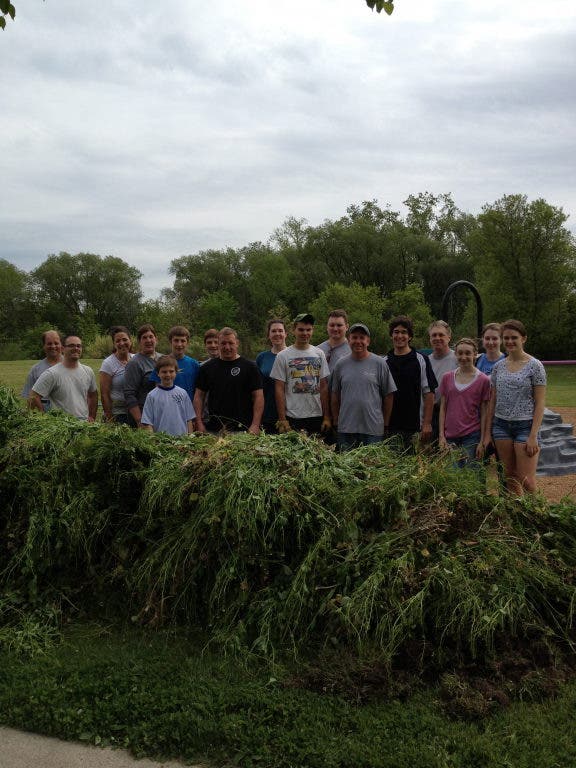
Sunday, May 19th from 11am – 2pm the Parks Commission is hosting a Garlic Mustard Pull at Colony Park. Colony Park is in the Northview subdivision on Colony Drive between Woodland Drive and Waterworks Road. Bring gloves. All other equipment... will be provided. Hotdogs will be served to all the volunteers!
Background
Garlic mustard was first recorded in the United States around 1868, from Long Island, New York, and was likely introduced by settlers for food and medicinal purposes.
Garlic mustard has been reported to be invasive in natural areas throughout the northeastern U.S. It occurs in moist to dry forest habitats, forest edges, floodplains, and along roadsides. White-tailed deer assist in its spread by eating native plant species that they prefer and are adapted to eat, leaving the garlic mustard behind.
Ecological Threat
Garlic mustard has displaced vast areas occupied by native spring wildflowers like wild ginger, bloodroot, trilliums and toothworts . Chemicals in garlic mustard are toxic to the larvae of the native butterflies. Other chemicals have been found to affect native trees, resulting in suppression of native tree seedling growth.
Here is an informative video about Garlic Mustard
http://vimeo.com/2855779