Neighbor News
Baker College of Flint photonics students receive $3,000 in scholarships
Mi-Light, an association serving Michigan's photonics industry, provided the scholarships to help provide the workforce needed by industry.
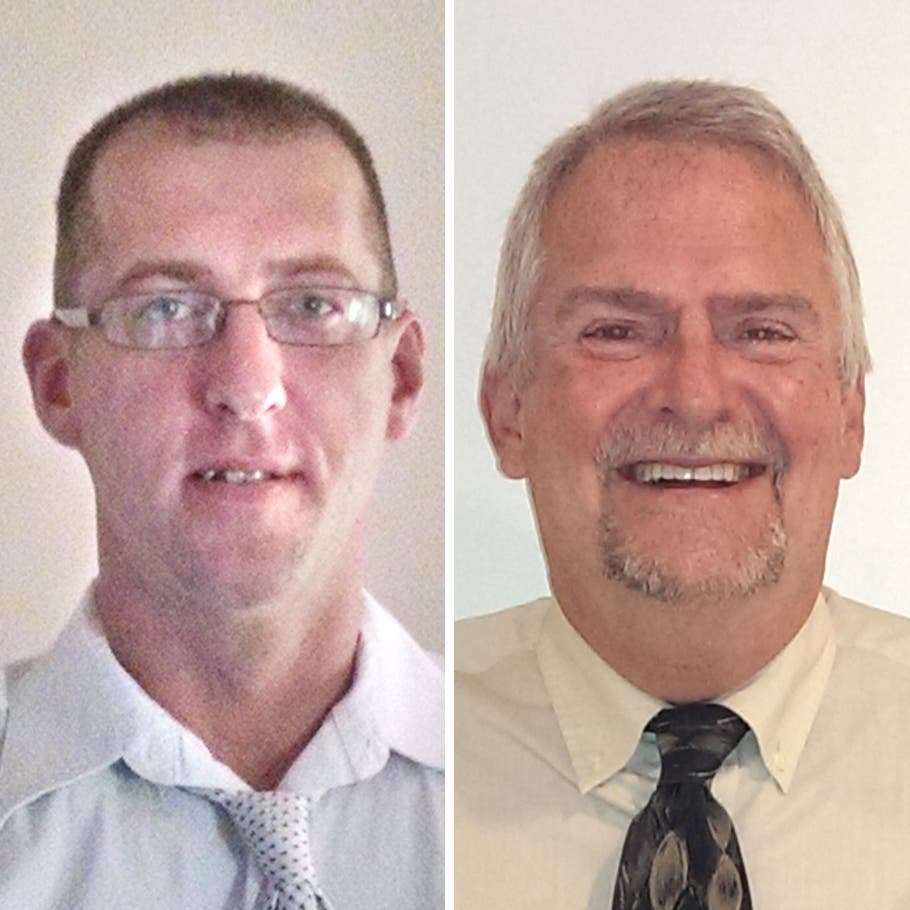
Roger Fischer and Dennis LaPorte, Baker College of Flint students, have each been awarded a $1,500 scholarship funded by Mi-Light, the Michigan photonics cluster, to pursue an associate degree in photonics and laser technology.
“We are proud of the interest and dedication that Roger and Dennis have demonstrated in photonics and lasers and are honored by the support of Mi-Light,” said Anca Sala, Ph.D., Baker College of Flint dean of engineering and computer technology. “New technology brings new career and business opportunities. Photonics will also help diversify Michigan’s economy just by the sheer number of industries it influences.”
Mi-Light, established in late 2012, is a not-for-profit organization serving Michigan’s photonics industry. One of its goals is to grow the state’s talent pool in order to expand the photonics industry and stimulate innovation.
Find out what's happening in White Lake-Highlandfor free with the latest updates from Patch.
Michelle Stock, Ph.D., Mi-Light chairperson said, “Having members such as Baker College helps the Michigan photonics industry to foster education and development of the skilled workforce required by photonics technology companies here in Michigan and beyond. We appreciate the effort that has gone into developing the photonics and laser technology program at Baker College, and are pleased to provide scholarships to support its students.”
The recipients were selected based on academic success and a one-page essay in which applicants identified three favorite photonics and laser applications.
Find out what's happening in White Lake-Highlandfor free with the latest updates from Patch.
Roger Fischer, of Almont, was drawn to study lasers because of their growing use in a wide variety of industries. He earned an associate degree in electronic technology at Baker College in 2013 and used the Mi-Light scholarship to complete the photonics and laser technology degree this summer.
“In industrial manufacturing, lasers can cut, drill and mark a variety of materials – wood, plastics, fibers and metals – with greater accuracy than traditional methods, “ he said. “I’m fascinated by their use in holography, and the U.S. military is rapidly discovering new ways to harness the power of lasers for weaponry applications. It’s exciting to be in a field that is relatively new and expanding.”
New uses of photonics and lasers in the medical industry attracted Dennis LaPorte, of Fenton, to the Baker College program. He works at Animal Health Clinic, Fenton, maintaining the building systems and equipment, including radiography machines and a surgical laser.
He personally experienced a non-invasive surgery, made possible by laser technology, after which he drove himself home. The alternative surgery option would require a long, painful recovery period.
“I am continually impressed with the extraordinary applications of lasers,” he said, noting a new use helping in the global fight against malaria. A quick laser pulse directed at the earlobe can detect malaria in the blood. Other areas in which LaPorte is interested are remote sensing by lasers that provides environmental information available on cell phones and the impact of lasers on the manufacturing industry.
Sala is a founding member of the Mi-Light consortium. She learned of the shortage of photonics technicians through a survey of more than 50 companies in southeast Michigan that work with photonics and lasers. In response to the research, Baker College launched the photonics and laser technology program 2013 fall quarter.
Sala said that the national need for photonics technicians is great, too. In 2012, the estimated number of graduates from existing U.S. educational programs would meet about one-third the need through 2017.* In 2013, graduates averaged between three and four job offers, each with starting salaries of $40,000-$50,000.
Photonics is the science of using a photon, a unit of light, to generate energy or to detect or transmit information. Photonics technicians fix machines, manufacture and assemble products, and perform testing. Students in the Baker program learn to build, test, modify, install, operate, calibrate, maintain and repair laser and electro-optic devices and systems.
For more information about Baker College of Flint photonics and lasers program, contact Jodi Cuneaz in the admissions office at 810.766.4000 or jodi.cuneaz@baker.edu.
The largest private college in Michigan, Baker College is a not-for-profit higher education institution accredited by the Higher Learning Commission. It serves more than 28,000 students on multiple campuses and online. Baker grants certificates and associate, bachelor’s, master’s and doctoral degrees in more than 150 programs across diverse academic fields, including business, health sciences, engineering, information technology, education and human services. An impressive 97 percent of available graduates are employed. Every Baker graduate receives Lifetime Employment Assistance—free and forever. Baker is a pioneer in distance education and offers students the option of completing a degree 100 percent online, without ever visiting a campus. For information, visit www.baker.edu or follow Baker College on Twitter, @bakercollege, or on Facebook, www.facebook.com/bakercollege.
Caption: Roger Fischer and Dennis LaPorte have earned scholarships from Mi-Light, a not-for-profit organization serving Michigan’s photonics industry.