Crime & Safety
Ex-Mayo Clinic Resident Faces Life Term After Poisoning Wife
Connor Fitzgerald Bowman, 30, fatally poisoned his wife — Betty Bowman — before trying to cover it up, police said.


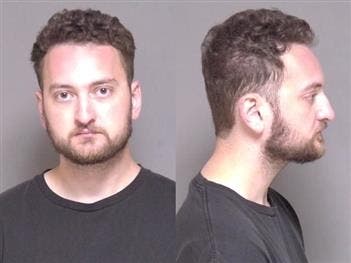
ROCHESTER, MN — A former Mayo Clinic resident now faces life in prison for the death of his wife. Connor Fitzgerald Bowman, 30, fatally poisoned his wife — Betty Bowman — before trying to cover it up, police said.
In October, the Olmstead County Attorney's Office charged Connor with second-degree murder by complaint.
However, on Jan. 4, an Olmsted County Grand Jury issued an indictment charging him with first-degree premeditated murder with intent. The first-degree indictment carries a sentence of life in prison.
Find out what's happening in Across Minnesotafor free with the latest updates from Patch.
Connor is scheduled to be arraigned on the indictment on Jan. 16.
Betty was a hospital pharmacist, her obituary reads. After she died, Connor tried to cancel the autopsy and have her cremated as soon as possible, police said, adding that he also planned to cash in a $500,000 life insurance policy.
Find out what's happening in Across Minnesotafor free with the latest updates from Patch.
Betty's family is now taking donations to help with legal and other costs. "As new evidence emerges, we realize Betty might have been taken from us not by natural causes," a GoFundMe page established in her name reads.
"Because of this, I am taking donations for Nancy and her family to help assist with legal costs, memorial costs, meals, bills, and anything else that can help make things just a little easier while they grieve. Betty adored her mom and I know she would want her and her family to be taken care of during this difficult time."
On Aug. 21, the Southeast Minnesota Medical Examiner's Office alerted the Rochester Police Department to the suspicious death of a woman identified as Betty Bowman, 32.
The examiner halted a cremation order for her body after learning of possible suspicious circumstances. Betty died at a hospital a day earlier, on Aug. 20.
Betty was admitted to the Mayo Clinic on Aug. 16 with severe gastrointestinal distress and dehydration, and her condition deteriorated rapidly, according to the criminal complaint.
During the investigation, the examiner received a call from a woman who said Betty and Connor were having marital issues and were talking about a divorce following infidelity, investigators said.
Betty's initial symptoms were similar to food poisoning and were treated as such, but her body did not respond to standard medical procedures and continued to deteriorate rapidly. She experienced cardiac issues, fluid in her lungs, and eventually organ failure, authorities said.
Eventually, Betty was taken in for surgery to remove a portion of her colon after it was discovered it contained necrotic tissue, according to the criminal complaint.
Connor suggested that Betty suffered from Hemophagocytic lymphohistiocytosis, "HLH," a rare illness, police said. Tests done for HLH were inconclusive, according to investigators.
However, Connor told multiple people that his wife died from HLH and he included HLH as the cause of death in her obituary, the criminal complaint states.
Bowman told the examiner that Betty should be cremated immediately and argued that her death was natural, according to investigators. He tried to cancel the autopsy, stating that his wife "did not want to be a cadaver," reads the criminal complaint.
Bowman emailed the examiner's office and asked the investigator if the toxicology analysis being completed would be more thorough than the analysis typically done at the hospital, police said.
A man reached out to the police and said Betty and he spoke shortly before her death.
The man said he and Betty were going to spend some time together on Aug. 15. He saw Betty that day, but that night she reported that she was drinking at home with her husband, Connor, according to the criminal complaint.
The next morning, Betty messaged the man that she was sick and could not sleep at all, and thought a drink she had caused her illness because it was mixed in a large smoothie, investigators said.
After Betty's death, police searched Connor's home and seized a University of Kansas laptop. Bowman worked as a remote poison specialist for the university while completing his residency at the Mayo Clinic.
Aware of the murder investigation, university officials turned over additional information to police, including searches conducted by Connor on their network.
Connor had been researching colchicine, a drug used to treat gout, but he had not received any calls regarding colchicine and no other employee received calls regarding colchicine either, according to the criminal complaint.
Police said Connor also searched the following phrases on Aug. 5:
- "internet browsing history: can it be used in court?"
- "Police track package delivery"
- "delete amazon data police."
Samples of blood and urine were taken from Betty's body and sent to various testing agencies, including the Minnesota Department of Health. The department provided initial toxicology results which showed that colchicine was present in the woman's blood and urine, according to the criminal complaint.
Betty's medical records do not indicate that she was ever diagnosed with Gout, nor HLH, authorities said. She was not prescribed colchicine, nor was she given any in the hospital, the criminal complaint states.
The examiner determined the cause of Betty's death was the toxic effects of colchicine and the manner of death was a homicide.
Police arrested Connor on Oct. 20 and also recovered a receipt for a $450,000 bank deposit inside his home.
Editor's note: A previous version of this article misstated that Connor Fitzgerald Bowman was a poison specialist at the Mayo Clinic. He was only a resident there.
Get more local news delivered straight to your inbox. Sign up for free Patch newsletters and alerts.