Arts & Entertainment
Photographer's Gallery in Apple Valley Explores Challenges of Modern Immigrants
Award-winning photographer and videographer Jila Nikpay, who is an immigrant herself, will present and discuss her "Faces of New America" photography collection at the Galaxie Library on Saturday.

It’s like looking through a kaleidoscope at all times.
That’s how photographer and videographer Jila Nikpay, who immigrated to the United States from Iran, describes being caught in between a culture’s ancient tradition and the modernity found in places like the United States.
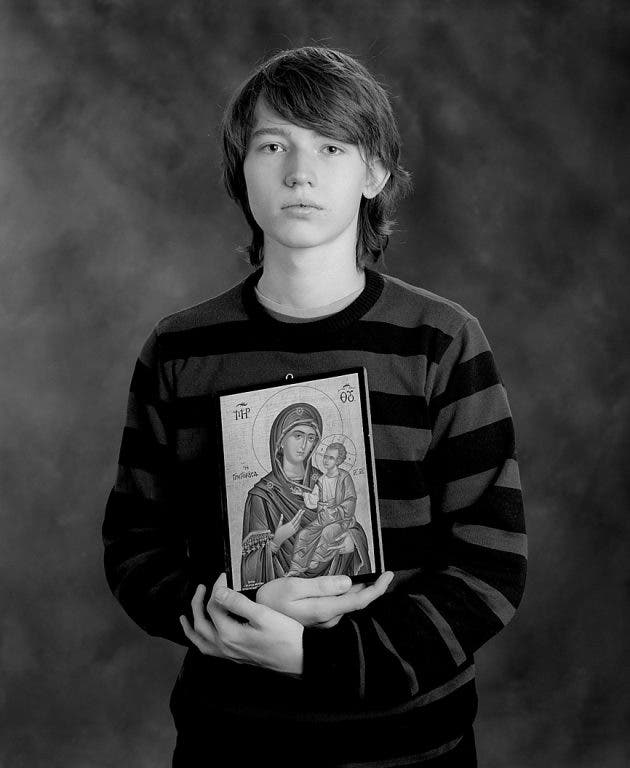
The result of Nikpay’s exploration of that concept is a collection of large-scale photographs of first and second-generation immigrant youth titled “Faces of New America,” on display through September at the in Apple Valley and the Burnhaven Library in Burnsville, and has been at libraries throughout the Twin Cities.
Find out what's happening in Apple Valley-Rosemountfor free with the latest updates from Patch.
Nikpay will present and discuss the collection at the Galaxie Library from 1 to 2:30 p.m. Saturday.
Adult and youth immigrants to the U.S. are encountering a collision between melting into American culture and holding on to their native culture’s traditions, Nikpay said; for youth, the worlds of home and school can be vastly different.
Find out what's happening in Apple Valley-Rosemountfor free with the latest updates from Patch.
After Nikpay came to the University of Minnesota to study, and ended up staying because of an Iranian revolution that didn’t turn out as promised, she wanted to find out how the younger generation coped with the contrasting cultures of home and school. So she went on a journey to do what she does best: speak through photographs.
“The Twin Cities has changed quite a bit since I came to this country,” Nikpay said. “It is amazing how many more people from non-European backgrounds now live here. I wanted to explore that change.”
The collection’s photographic process was a difficult one, Nikpay said.
It started with calling local schools and asking friends to see if they knew of any potential contacts. Nikpay only wanted to work with first- and second-generation immigrant youth, so trying to track down kids willing to participate proved challenging.
“I think I called it a dizzying process due to the fact that I was working with people under 18 years old,” Nikpay said. “At the same time, their age is what made the project rewarding.”
All Nikpay’s photo subjects were presented with a question: Imagine your portrait is seen by a large number of people. How do you want to present your identity?
The response to her question is seen in the photos, Nikpay said. It’s seen in the subject’s gaze, expression and choice of clothes. The photos, she said, are about the youth expressing their desire to be accepted on their own terms.
Through the photographs, Nikpay hopes the viewer realizes that America is changing, and that assimilation doesn’t necessarily mean melting into a pot anymore. Today’s younger immigrants are freer to be themselves and embrace their native cultures, she said.
“I think the project resonates with some people quite a bit,” Nikpay said. “Generally, they see the strength and beauty of these young people. Conversely, there are many people who don’t care about immigrants, their offspring or their cultures. They are the ones who don’t like immigrants asserting their presence.
“If I focus on the first part, I think the project has been successful.”