Health & Fitness
Is Your Lawn Chemically Dependent?
Perhaps it's time for an organic intervention. Six steps to building a sustainable lawn.
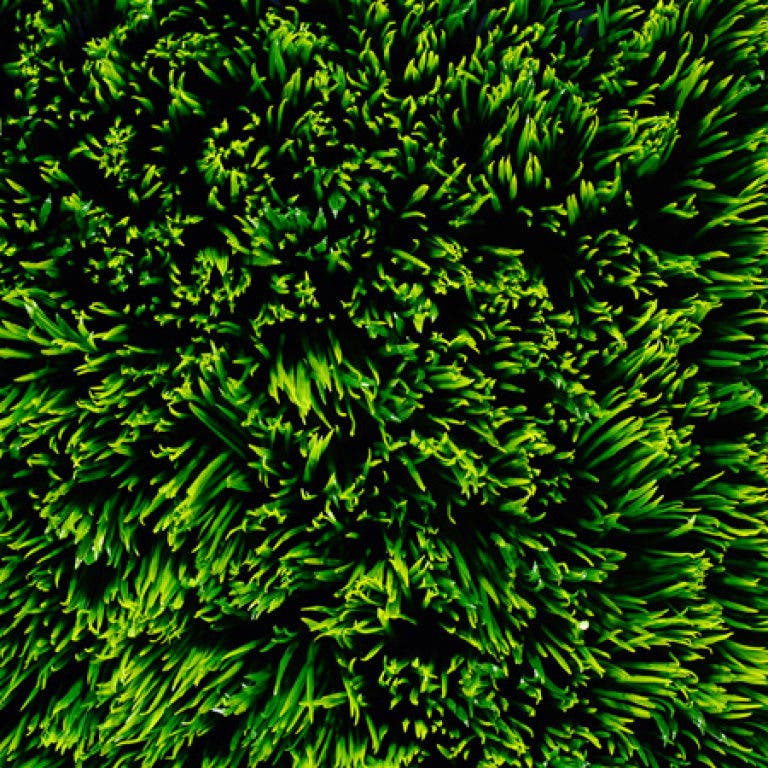


Sustainable lawns now cheaper and easier.
_________________________________________________________
Paul Tukey, founder of Safelawns.org, an organization dedicated to promoting environmentally friendly lawn-care, and the author of "The Organic Lawn Care Manual," describes the typical American lawn as a "junkie"—utterly dependent on three or four annual applications of fertilizers, constant artificial irrigation, grub control, weed control, height control.
So here, then, are six easy-to-implement ways to grow a gorgeous sustainable lawn that rivals any chemical-laden landscape and is easy on the eyes and the budget. A gentle reminder, though, that change doesn't happen overnight. It might take more than a season to wean your turf of these vices. But, stick with it. Tukey says a sustainable lawn is a lot less expensive in the long run and far easier to care for.
Step 1: Feed the Soil. Shift your thinking from "feeding my lawn" to "feeding my soil." We should grow grass to the way a forest grows trees. Create a nutrient-cycling system where your grass is fed by additions of organic matter rather than through added artificial chemicals. We should rely on the beneficial insect and microbial life in your soil to break organic matter down into usable plant nutrients—as happens naturally in any undisturbed ecosystem, such as a forest. This is easily accomplished by spreading Schulz Organic Fertilizer on your lawn two times a year.
The nutrient-rich feeding stays at the surface and in the root zone for 90 to 120 days. The grass is continually fed for months between applications, far longer than a chemical fertilizer.
And, as many are now aware, 75 percent of the nutrients in chemical fertilizers run off into our watersheds before plants can use them—but nearly 100 percent of the nutrients in natural-organic granular fertilizers stay in our soil and continue to feed our lawns for months.
Step 2: Pay attention to your mowing and your mower. Mowing too short will cause stress and give the grass a sunburn. Never cut more than one third of the height of the grass blade when mowing. Raise the cutting height to 3 inches or even higher. Leaving turf grass 3 to 4 inches tall allows the grass more blade length to absorb the sun to grow into a healthy plant while it shades its roots, keeping the soil cooler and moist and shades out weed seedlings and generates a good, deep-root system. After all, the more leaf surface area grass has for photosynthesis, the more energy it has to promote good root growth. You should only mow short in the early spring and again in the late fall. Lenghten your mowing intervals by a few extra days especially during the days of summer. Sharpen your blades often. Dull blades tear,rather than slice the grass, causing injury and leaving a jagged brown edge. Consider an electric or battery powered mower. Gas mowers make much more pollution "per mile" than automobiles. Recycle your clippings back into the soil via the mower's mulching feature. Because these tiny clippings are quick to decompose and chock full of nitrogen (and every nutrient required by the turf), with a mulching mower, you are fertilizing every time you mow.
Step 3: Pick the right grass.
If you want to cut down on mowing chores even more, you can overseed and replace your existing fast-growing Kentucky blue and perennial rye grass lawns with one of the new low-and-slow growing seed mixes. Some seed mixes require mowing only three or four times a year. This particular brand is a collection of fescue varieties and newer cultivars of Kentucky bluegrass and perennial rye with slower growth rates. The patented seed blends are drought and pest resistant and deep-rooted, and require less fertilizer.
Step 4: Read your weeds. If your lawn is mostly dandelions, then, that's what your soil wants to grow. You can kill the weeds repeatedly or you can work to improve the growing conditions to favor growing conditions so the turf will thicken. Dense turf is the best way to keep your lawn weed free.The dandelions will come back unless you fix your soil.
Many weed problems are the result of poor soil conditions. Get a soil test through your local cooperative extension service. It will be $20 well spent.
Then follow the feeding rules. A dandelion problem often infers a lack of available calcium or too much magnesium in relation to calcium. Your lawn soil is supposed to have seven times more available calcium than magnesium. If your soil test confirms this to be the case, use high-calcium limestone (not dolomitic limestone, which will worsen the problem) or gypsum to fix it. Remedy the poor soil conditions and the increased health of the grass will make major weed outbreaks a thing of the past.
And, you can skip the chemical "weed-and-feed" products. Canada has outlawed combination weed-and-feed products with the thinking that the combination product made it too easy for homeowners to over apply the chemicals included with the fertilizer. The USA is soon to follow the Canadians.
A German company called Neudorff has developed a natural product from chelated iron that does a fantastic job of ridding the lawn of dandelions, plantains, thistles, ground ivy, chickweed and lots of other nasties without harming the grass. It is sprayed over the lawn and kills only the broadleaved weeds with a rapid infusion of iron (which, by the way, is a nutrient grass uses to make more green). Neudorff licenses their product to several companies. Brands include Iron-X, Fiesta, Ortho EcoSense and Whitney Farms Lawn Weed Killer, among others. It is an effective alternative to 2,4-D based products.
Step 5: Insects happen. Turf experts say there have to be at least 10 grubs per square foot of turf to cause significant damage. Conventional lawn care actually promotes insect damage, and you'll find that, after your lawn care practices change to chemical free, insect worries often disappear.
Step 6: Irrigation and watering. Maintenance matters. Most grasses require abouit 1.0" to 1.5" of water per week which moistens the soil to a depth of 4.0" to 6.0" below the surface. Be careful not to overwater because flooding the lawn allows excess water to run into the storm drains. The correct method is to water for a short time then move the sprinkler to a new location allowing each section adequate time to absorb the water and soak to the desired depth. Remember to water less often, but more thoroughly for best results. This means that on watering day you may water the same area several times at intervals to allow time for deep absorbtion. Lawns that are frequently irrigated and fertilized will develop shallow root systems that are unable to sustain the plant's health during stress periods and are more easily damaged by feeding grubs. Shallow roots also are more affected by surface drying. Deeper rooted lawns suffer far fewer consequences. If grubs do become problematic, turn to beneficial nematodes or Milky Spore for a natural cure. For a list of alternative pest controls look at the Bio-Integeral Resource Center catalog (http://www.birc.org/Directory.pdf).
Resource conservation requires lawn-lovers to reconsider how and when we water our turf. Less-frequent waterings promote deeper root systems. Instead of being hand-fed their water from a sprinkler, these roots need to go out and get their own. This practice makes for better nutrient acquisition via that extensive root system. So, if you must water your lawn (which no one really does), do it only in the morning when less is lost to evaporation. And, do it deeply and less frequently. If no rain has fallen during the summer months, irrigating once per week is perfect. Run the sprinkler just long enough to fill up an empty tuna can placed in the sprinkler's path.
Other sustainable lawn-maintenance chores include dethatching and aeration, especially in the beginning. Chemical-fed lawns have a lot of thatch build-up, and one of the first steps in converting your lawn to natural maintenance is a good dethatching (the fall is best for this as the weather is cooler and soil stays moist longer—summer stresses turf and extra stress can cause death). Removing the old, dead grass stems still attached to the growing plant allows for better penetration of water and any added organic fertilizers. A fully organic lawn almost never has to be dethatched. The beneficial microbes and insects break the thatch down for us.
Aeration is a only the key for an easy conversion process. Reducing compaction by removing finger sized cores of soil, opens up channels for water, nutrients and air to move about and into the soil profile. Again, after your lawn is fully converted to an organic maintenance program, this practice seldom is necessary except in cases of compaction because of physical practices (regular soccer games, the presence of heavy equipment, etc.).
If you should need to overseed, choose your seed wisely. There can be a wide range of seed prices and generally you get what you pay for. Choose the right seed that is best adapoted to the conditions of the location. Seeding is best done in the fall. Prepare the area so the seed will have contact with the soil. Seeding is most easily done in the late fall and germination will be automatic without additional watering in the spring. The good news is that vigourous turf will fill in bare spots faster than overseeding.
The best time to start your conversion to sustainable lawn care is September. Aerate, dethatch, spread compost or granular organic fertilizer and over seed. Be patient about the process and tolerant of the learning curve. The status as the first fully sustainable lawn on the block comes with the best kind of bragging rights. It may take some time to wean your lawn of its bad habits, but the effort is worth it. Stay the course. A sustainable lawn is a whole lot less expensive in the long run and far easier to care for.