Politics & Government
Hopkins and Blake School Inch Closer to Agreement
Both sides have a framework they hope could heal their divisions.


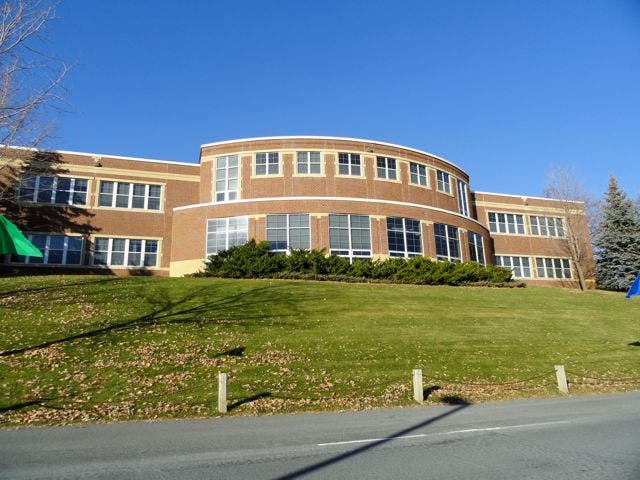
Hopkins and the could be moving toward a plan that will allow the school to upgrade its campus while still preserving precious single-family homes.
The plan could also heal distrust between the two sides.
The parties locked horns over conflicting ideas about a school plan to upgrade facilities and improve traffic and safety.
Find out what's happening in Hopkinsfor free with the latest updates from Patch.
The school wants to build ponds to better manage water. That would put as many as six homes at risk of demolition.
Hopkins’ City Council objects to that demolition. That's partly because the neighborhood is a small one that would be noticeably hurt by the loss—a problem exacerbated because of the limited number of homes in the city. Just 30 percent of the city’s housing units are single-family homes. The potential loss of tax revenue doesn’t help matters. Finally, the area where the homes sit is zoned for residential use—not the institutional use under which the Blake School operates. Councils have historically opposed allowing institutional use to expand into the surrounding neighborhoods.
Find out what's happening in Hopkinsfor free with the latest updates from Patch.
Beyond that, some Hopkins officials are unhappy with the school for not informing the city about acquiring two vacant properties from Habitat for Humanity, which had purchased the properties from the city. Blake Road is also in the process of asking the county to grant tax-exempt status for the properties. Some felt the school was trying to go behind the city’s back.
The two sides may be approaching a meeting point, though.
Roger Martin, formerly Blake School’s chief financial officer and now a consultant for the project, told council Tuesday of plans that would save five of the six threatened homes. The school would also be willing to pay at least 85 percent of its city taxes—albeit as a “payment in lieu of taxes” agreed upon under a development agreement signed by the two sides. Blake’s status as a non-profit makes its property tax exempt so long as the property is used for certain purposes.
“I think we’ve come to a very good place,” Martin said.
But the ghosts of the previous disputes still haunt the discussion. Councilwoman Cheryl Youakim was openly suspicious that the school would use the county tax exemption request to gain leverage in the development agreement negotiations—for example, to avoid city taxes.
The school says it just wants a pass on county taxes, not city taxes. John Herman, Blake School’s attorney, said the county’s timeline all but requires the school to proceed with its request before it signs an agreement with the city.
Herman emphasized that he and Martin had already told the council that the school is willing to reach a mutually acceptable agreement. But Councilman Bruce Rowan scoffed that telling the city something isn’t the same as actually having an agreement in hand.
Council members were a bit more amenable to working with Blake once they discussed the issue among themselves. Although Youakim continued to worry about Blake’s moving ahead with its exemption request, the others said flatly that the school wouldn’t get the development agreement it needs to move forward if it goes behind the city’s back.
The parties still have a ways to go before they hammer out an agreement. Some on the council still want to get 100 percent of the city taxes on each property—which Herman said equates to about $100 more per home over the 85 percent that the school proposed.
Council also asked the school to draw up clearer visuals about what the finished product could look like and present them to residents at neighborhood meetings. Those meetings are likely at least a few months away, and the project will have to move through the city’s planning and zoning process after that. Designing and engineering the pond and obtaining watershed district approval could take a year.
Of course, all this is contingent on Blake’s winning city approval. While most of the council appeared to think the process was moving in that direction, Rowan was careful to note that an agreement isn’t inevitable.
“I’m not ready to accept that,” he said.
Get more local news delivered straight to your inbox. Sign up for free Patch newsletters and alerts.