Crime & Safety
Hopkins Chaplains Offer Comfort During Tragedy
They step outside their faiths to bring some calm and help officers do their jobs better.


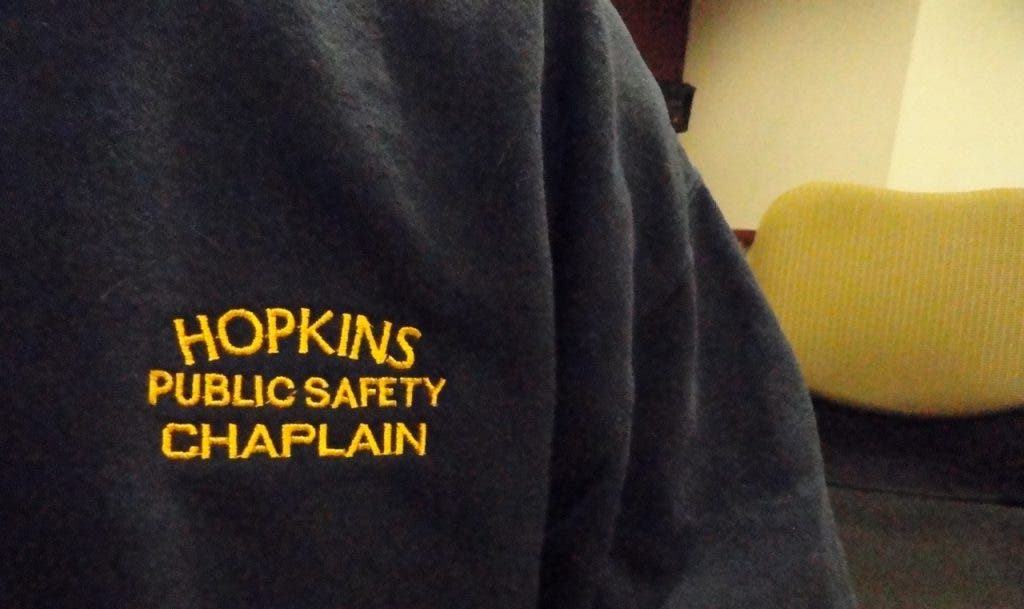

A little girl died—Hopkins police had been told the 8-year-old had been killed in a crash in Texas—and Howie Krienke had to tell the family.
The two hours he spent with them that day would never disappear from his memory.
“That was one of the toughest things I had to do,” he recalled.
Find out what's happening in Hopkinsfor free with the latest updates from Patch.
Krienke, who attends , is one of six Hopkins public safety chaplains. Chaplains aren't police or firefighters, and when they respond to the scene of an emergency, they aren't representing their particular faiths. Rather, they volunteer their time to comfort families in the most tragic moments of their lives. They help officers process sights they never wanted to see. They bring a bit of calm to situations where tranquility seems a distant memory. They are only called out on about six to eight calls a year, but those calls are among the worst.
The phone often rings at odd hours of the day. The chaplains rush to a scene, and the officers give them quick rundowns on what’s happened. There’s never enough time. The officers have their own work to do.
Find out what's happening in Hopkinsfor free with the latest updates from Patch.
“You kind of throw them to the wolves and say, ‘Here’s what we got,’ and they’ve never let me down,” Police Sgt. Michael Glassberg said.
The group varies widely in experience. Pastor Steve Thom, from , was a chaplain with Minnetonka even before Hopkins started its chaplain program about seven years ago. Tresca Allsman is a United Theological Seminary student training to step in with the department as soon as she graduates. For Allsman, the work takes her faith out of her studies and into the real world.
“Being out on the calls and with the community is the whole part of it,” she said.
Regardless of how many years they have ministering to their faith communities, they face completely different sets of challenges and duties as chaplains. The work, at its most basic, is about helping officers do their jobs better, but there’s much more to it than that.
The chaplains are active listeners and compassionate shoulders to cry on. They can interpret the unfamiliar police procedures for distraught loved ones—for example, why family members can’t enter the scene of a crime to be with a deceased relative. Deacon Juan Duran, with , even helps communicate with Spanish speakers.
“In our trade, we’re expected to be a non-anxious presence,” Thom said.
Said Glassberg: “They are privileged to see a whole different side of life—and death, for that matter.”
But it’s not a one-sided exchange. The chaplains also learn from the officers. Pastor Christian Ruch, with , once went on a call in which a man had overdosed. Watching the officer talk to the man’s mother, Ruch felt he learned a bit more about compassion.
Chaplains aren’t evangelists for their faiths, though, and they never assume someone in the midst of a tragedy wants spiritual guidance. They offer their comfort merely as someone who cares—and only later ask if the person would like a prayer or to be connected to a religious leader in their own faith community. The chaplains offer their compassion whether it’s one of their parishioners, a Christian from another denomination or someone from a different faith altogether.
Perhaps the chaplains’ true value can be best seen when they aren’t there. Glassberg still recalls the first time he had to tell someone that a loved one had died. It was 16 years ago, and he was just 24—a scant three days into his career as an officer. A call came in at 3 a.m. that a young man, between 18 and 20 years old, had died in a crash. Glassberg and his trainer went to the home and then his trainer turned to him and said, “Go in and tell them.”
So off he walked up to the house. Alone.
“It would have been so helpful to have a clergy member there with me at that point,” Glassberg said.
***
Hopkins public safety chaplains
- Tresca Allsman, seminary student at United Theological Seminary
- Deacon Juan Duran,
- Padre Howie Krienke, attends
- Pastor Christian Ruch,
- Pastor Scott Searl, Shepherd of the Hills Lutheran Church in Edina
- Pastor Steve Thom,
***
When does the Police Department call out a chaplain?
The sergeant or officer in charge has ultimate authority to decide whether to bring in a chaplain. These are the main situations in which they’ll request a chaplain:
- A death in which family is present at the scene
- Serious incidents such as death or child abuse that involve children
- Large structure fires
- Fatal crashes
- When officers are injured
- Officer-involved shootings
Get more local news delivered straight to your inbox. Sign up for free Patch newsletters and alerts.