Community Corner
Latz Reviews the 2012 Legislative Session
The District 46 senator discusses what the Legislature accomplished—and what it didn't.


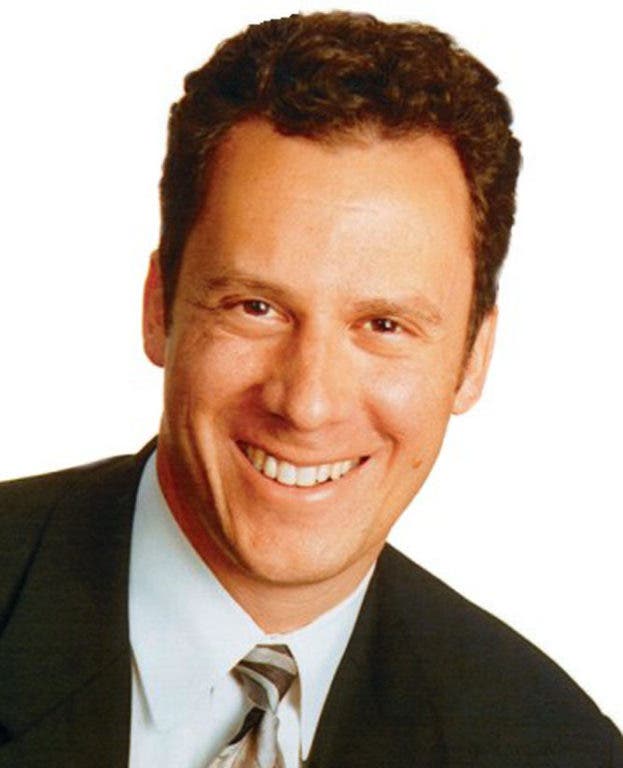
Editor’s Note: Sen. Ron Latz (DFL-District 46) published the following end-of-session report recapping the 2012 legislative session.
Find out what's happening in Hopkinsfor free with the latest updates from Patch.
Minnesota’s 2012 Legislative Session was a combination of missed opportunities and a contrast in priorities. One of the biggest missed opportunities was a bonding bill that included only $496.4 million of the $2.1 billion in total statewide requests that were made. The legislative majority was focused on protecting corporate tax breaks at the expense of homeowners, students, seniors and small businesses.
The biggest omission in the bonding bill was the $25 million request for the Southwest Light Rail Transit Line (SW LRT) that would run from Minneapolis through St. Louis Park, Hopkins, Minnetonka and Eden Prairie. Over the last few years, I have carried the Hennepin County and Metropolitan Council’s bonding request in the Senate. While the State only needs to contribute 10 percent of the cost of the line to leverage federal dollars (covering 50 percent of the line), they have only managed to put forward $5 million over the last three years. It has been extremely disappointing to the residents of southwest metro, their locally elected officials and business community who have all been strong advocates of the project. Without state funding next year, the project will be in serious jeopardy.
Find out what's happening in Hopkinsfor free with the latest updates from Patch.
The legislative majority also missed opportunities to invest in our higher education system, pay back the K-12 school shift, provide homeowners property tax relief and create healthcare exchanges to benefit both individuals and employers.
There was also a noticeable contrast in priorities between the Republican majority and the DFL minority. Rather than delivering on their promise to have a “laser focus” on jobs, the Republican majority wasted their time passing extreme legislative measures destined for vetoes and pushing divisive constitutional amendments to the November ballot. While the Senate Democratic minority may have wished for a more proactive policies to pass this year, they compromised by passing (with a majority of DFL votes and just a fraction of the GOP caucus support) a modest bonding bill that will mean real, immediate jobs for Minnesotans and a bill that lays the groundwork for a Vikings stadium.
According to the Legislative Reference Library, when compared to other regular sessions since 1880, the majority passed the fewest bills into law while consuming the second-longest legislative time in state history. Not a very good bang for the tax payer’s buck. Not only will the 2012 Republican-led Legislative Session go down as one of the least productive in history, it has left us with a $4.5 billion deficit for the legislature to address next January. It goes without saying that whoever returns as the majority next session, they must do better – Minnesotan’s deserve better!
***
Legislation for St. Louis Park, Hopkins and Golden Valley
While the 2012 Legislative Ses- sion left many of us disheartened, there were a few highlights. I was very happy to have passed, along with Rep. Steve Simon, two provisions into law to help a local business (the Four Firkins) as well as other liquor stores. These provisions, signed into law by the Governor, will enable busi- ness owners to market their liquor store by selling items with their business’s logo on them. A store owner will also be able to charge a fee for beer and wine educational classes that they offer at their location.
Although we missed an enormous opportunity with SW LRT, the bonding bill did include a provision I supported, along with Rep. Ryan Winkler, for Perpich Center for the Arts in Golden Valley. Bond- ing money will help with infrastruc- ture repairs on their road, loading dock and storm drainage system.
I also authored another piece of legislation that will save small businesses time and money. When filing with the Secretary of State’s Office, businesses can now forego filing an assumed name if the name of the filer and the name of the business are identical or just have the business type indicator tacked on the end, for example: LLC, Inc., or Corp.
I was also pleased to work with both Rep. Steve Simon and Jason Hutchison, City of Hopkins pros- ecutor, to craft a law that enables the use of female genital mutila- tion to increase punishment in a domestic assault case.
***
Judiciary and Public Safety
A session highlight was the Governor’s signing of the vulnerable adult bill into law. This bill allows prosecutors to charge a person with a felony who knowingly causes substantial harm to a senior. This bill has been in the works for over a decade and one that I played a significant part in shaping this session. While Sen. Warren Limmer was the chief author of the bill that was finally signed, the main provisions in the bill reflected the vulnerable adult bill that I introduced this year.
I co-authored, with Judiciary and Public Safety Chairman Sen. Limmer, a Department of Corrections bill that helped to stream- line reporting and reform some policy. I helped protect the fire safety account from budget raids and was co-author of the Revisor’s bill, a piece of legislation that makes corrections to bills that have been passed during the biennium.
As the DFL Minority Lead on the Judiciary and Public Safety Committee, I help to challenge some of the more controversial bills as they came through the committee. There were quite a few. We were the only committee to have a hearing on the so-called “Right to Work” bill and we had an extensive hearing on the “Shoot First – Castle Doctrine” bill--both of which I vigorously opposed. While we did not hear the controversial “Voter ID” bill in committee, I spoke out against it on the Senate floor. While only Republicans voted for the bill, it had bi-partisan opposition. During no time in the history of our State have we had a constitutional amendment pass both chambers without bi-partisan support. Now a proposal passed by only one political party to drastically change the way we vote is headed to the voters.
***
What Did NOT Get Done
While we spent a record amount of days at the Republican-led State legislature over the last two years, we did not make a dent in the priorities that the majority of Minnesotans have been focused on – the economy, jobs, educating our kids and figuring out a way to make ends meet.
The largest missed opportunity was in tax reform. While there were a small number of fairly non-controver- sial tax provisions passed at the end of the session that were local in nature, there was little else done to alleviate the tax burden that is facing our middle class. The DFLers in the Senate au- thored bills to reinstate some form of the Homestead Market Value Credit that was eliminated last year. Not only did the elimination of this program af- fect homeowners, it resulted in a $370 million property tax increase on Min- nesota businesses this year. The bills to restore the program were not even given a hearing by the GOP chair of the tax committee.
We also missed an opportunity to pass the Mainstreet Fairness Act (affiliate nexus for internet sales). This bill was supported by Minnesota companies such as Target and Best Buy as well as smaller main street businesses being undercut in prices (by the amount of the sales tax) by online-only retailers. Currently, Minnesota-connected (like Amazon.com) internet businesses that do not have a “bricks and mor- tar” presence here (stores, offices, warehouses....) are not required to charge sales tax to Minnesota pur- chasers. This legislation would have leveled the playing field between our Minnesota business owners and internet retailers.
There were integral infrastructure projects left out of the bonding bill. Requests for regional civic centers in Rochester, Mankato and St. Cloud were completely left out as was renovation funding for the Min- nesota State Hospital and the Coon Rapids Dam. While our higher edu- cation institutions received some asset preservation money, it was not nearly enough – the University of Minnesota proposals only received half of the requested funding and the Minnesota State Colleges and University (MNSCU) system fell short as well. As a member of the Higher Education Committee, it has been particularly hard to watch the state’s disinvestment in our University & MNSCU system as they are inte- gral pieces of a healthy Minnesota economy and need our support to grow into the future.
We missed the opportunity to pay back the money that we borrowed from the K-12 system last year. But, we made small investments in our K-12 system by giving a parent-child home program for at-risk kids a funding boost and by making our school trust lands more profitable.
The legislature was able to pay back some of the Health and Human Ser- vices cuts made last year to our seniors and most vulnerable citizens. And, while there were some small reforms made in service delivery, we missed an opportunity to create a Minnesota health care exchange based on the recommendations of the Governor’s bipartisan Health Care Exchange Task Force.
Get more local news delivered straight to your inbox. Sign up for free Patch newsletters and alerts.