Business & Tech
Local Business Q-Up Wants to Make Sharing Information Easier
Q-Up shares information over a secure Bluetooth connection.


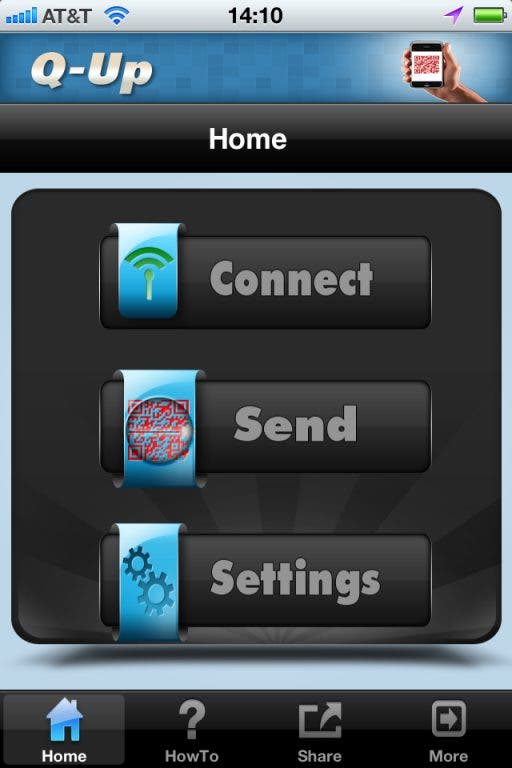

Jane Denny was sleeping when her husband, , woke her up one night in September with an idea. What if phones could beam contact information and other data to one another using a Bluetooth signal? People could easily and securely transfer information to one another even when there was no Wi-Fi or cell signal.
“Oh, OK honey,” she said, explaining later, “He was so excited about it. I didn’t know if he went back to sleep or not because he was so worked up about it.”
Doug Denny has translated that excitement into a new business venture called Q-Up. People simply download the Q-Up app to their iPhone or Android smart phone and open the program. With just a couple button presses, users can transfer the information they want to another phone—including only the information they want. It can even note the location so users can remember where a meeting took place.
Find out what's happening in Hopkinsfor free with the latest updates from Patch.
(Click on the video to the right to see how it works.)
The app comes in two versions: A full-featured edition, Q-Up Plus, that costs $1.99 and a free version with fewer features.
Find out what's happening in Hopkinsfor free with the latest updates from Patch.
Transferring information between phones is not a new idea. Denny is quick to credit the Bump app for bringing the idea to numerous users.
But he said Q-Up has a couple big advantages over Bump. Because Q-Up uses a Bluetooth connection, it sends information directly from one phone to another. Bump, on the other hand, sends information into the cloud, where personal information is vulnerable to hackers.
There is actually a double level of encryption because the phone first converts the information into an encrypted QR code before beaming it over the already encrypted Bluetooth signal.
The Bluetooth connection also allows Q-Up to operate without a Wi-Fi or cell signal—perfect for gatherings of large crowds where signals aren’t the best.
“I thought there was a better way to run this railroad,” he said.
Launching the app has been a fast-paced global journey. Denny searched an international database of contractors for a software firm to develop the app. By Sept. 15, he selected an Indian company called Soft Prodigy. The app entered the beta stage of development April 11 and has more than 100 users in North America, South America, Europe and Asia.
Denny isn’t leaving anything to chance, though. He’s partnered with St. Paul-based Softech Solutions to bundle Q-Up with their Sage ACT! software, which manages companies’ customers and contacts. That allows Q-Up to be marketed to small, medium and large businesses.
The company, made up of Doug and Jane Denny and Doug Denny’s brother and sister-in-law, is also searching for a way companies can use Q-Up for loyalty programs—possibly by having a kiosk where customers can check in when they buy their items.
“You just encourage the behavior, make it easy, then it happens,” he said.
Stay up to date on all your local news. Sign up for the free Hopkins Patch newsletter, like us on Facebook and follow us on Twitter and Editor James Warden's Pinterest boards. Do you own a local business? to learn about five easy ways your business can use Patch.
Get more local news delivered straight to your inbox. Sign up for free Patch newsletters and alerts.