Politics & Government
With Teacher Contracts, It's Not All About the Benjamins
The agreements cover much more than just salaries.


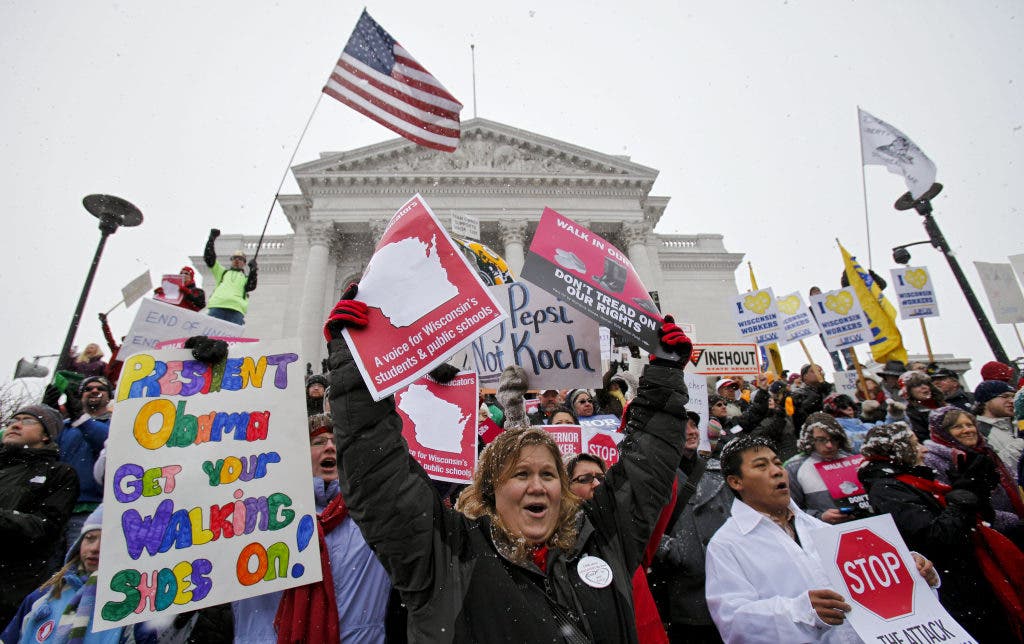
Wages may seem to be an odd exception when suggesting a ban on strikes for all other aspects of labor negotiations. Pay, after all, is the major criteria we look at when examining a job or comparing it to other positions.
Yet that’s exactly what Wisconsin Gov. Scott Walker’s budget proposal exempts. Walker’s plan would prohibit public employees, including teachers, from striking over anything but wages.
In reality, wage details are actually just one part of lengthy public employment contracts. The base pay scale for Hopkins teachers, for example, is just one page among 95 that make up the agreement between the district and the Hopkins Education Association. Of course, many of the remaining details relate to other aspects of pay, but just as many provisions don’t.
Find out what's happening in Hopkinsfor free with the latest updates from Patch.
There’s good reason why non-salary provisions have become such a flashpoint.
That’s not to say these measures come without cost. Provisions advanced to improve working conditions or student learning carry a price tag every bit as much as salary and benefits—even if that price tag isn’t explicitly stated in the contract. The district must hire substitutes to cover employees on leave, it must retain more-costly senior teachers and someone must take care of students during teacher preparation time.
Find out what's happening in Hopkinsfor free with the latest updates from Patch.
Here’s a look at a few non-salary provisions in the Hopkins contract.
When teachers must work
It’s far from unusual for workers to have set hours. The Hopkins contract spells out those hours in great detail—and the cost for the district to exceed them.
- “Duty day”: The contract sets the workday at eight consecutive hours, “including a 30-minute, duty-free lunch period.” Teachers can be assigned up to 16 hours during a preparation period or outside the school day—for activities such as open houses, teacher meetings or PTO—but the district must pay $36 per hour for anything more than that.
- “Duty year”: Just like the contract specifies the hours that teachers must work, it also specifies the number of days that teachers must work. The Hopkins contract sets the maximum school year at 185 days, although only 176 of those days can actually be “student-instructional days.” The rest are workshops, early releases or conference days. The contract also states that it aims to provide “healthy breaks for staff and students”—defined as two weeks at winter break and one week at spring break.
- Preparation time: Elementary teachers get 225 minutes of preparation time per week—or 45 minutes per day.
- Schedules: The school board has the authority to set classroom schedules—as it did when it decided to . But teachers can request that a committee of union and district officials weigh in if they feel a schedule is unfair.
- School closings: The contract stipulates that the district cannot deduct pay if school is closed for one day of the school year (for example, during a snow day). If school is closed longer than that, the district and the union must meet to discuss how to reschedule the lost days.
Leave
Leave has a cost beyond the hardship of a missing employee for the district because much of the time they must find a substitute teacher for a classroom.
- Sick leave: Teachers get 12 days of sick leave for each duty year and can save up an unlimited amount of sick leave. For those wondering, teachers can use sick leave for illness, disability and taking care of a sick child—but not to protest a political decision, as teachers in Wisconsin did.
- Personal leave: Teachers get two days of personal leave per year, with the ability to save up to four days of personal leave.
- Professional visitation: Teachers are allowed one day for “professional visitation” with the principal’s approval and can also get permission to attend professional conferences during the school year without a loss of pay.
- Unpaid leave: Teachers can also receive unpaid leave to provide childcare, work for the union or recover from an injury, illness or disability. In most cases, the district must rehire the teacher.
Benefits
Both local governments and private employers face substantial insurance cost increases that far exceed the growth in salaries. Compare the 2-percent salary increase that Hopkins forecasts in this year’s preliminary budget with the 8-percent growth it expects for fringe benefits.
- Health care: Under the current contract, Hopkins contributes up to $560 per month toward health insurance for full-time teachers. That may cover the entire premium, depending on the insurance plan that the employee chooses. The district also pays the entire $67 dental insurance premium.
- Life insurance/accidental death and dismemberment: The district automatically provides teachers life insurance and accidental death and dismemberment coverage for twice their salary.
- Retirement: Both the teachers and the district contribute 5.5 percent of their salary for retirement to fund a Teachers Retirement Association pension.
- Severance: Retiring teachers also get a severance payout based on their accumulated sick leave.
Hiring, firing and disputes
This is a contentious category even without the cost, but it has financial implications, as well.
- New teachers: In addition to spelling out licensure requirements, the contract also prohibits the district from hiring any new teachers while an available and qualified teacher is on an unrequested leave of absence. The district must notify laid-off teachers if positions open up.
- Seniority: The contract requires the district to order teachers based on “continuous, uninterrupted employment with the School District.” Those with more seniority have “bumping rights” to displace teachers with less experience when there aren’t enough positions. The district must publish a seniority list each year and post it in the schools.
- Grievances: Grievances are complaints about how the district is implementing the contract. Six pages of the contract detail the agreed-upon process for teachers or the union to protest a policy.
- Discipline: Discipline, on the other hand, is detailed in a straightforward two paragraphs. Those rooms full of disciplined teachers still receiving full pay that you may have seen in recent documentaries? Not in Hopkins. The district can suspend teachers without pay immediately after notifying them of a suspect action. The teacher can appeal the decision before the superintendent. While that process takes less than a month, the appeal heads to arbitration if the decision goes against the teacher—stretching out the process.
Additional pay
The pay scale covers basic duties with increases based on experience and education. But teachers make more for taking on extra duties outside the normal school day or during their preparation period.
- Extra assignments: Additional classroom time is worth $36 per hour. Lunchroom supervision, safety patrol supervision, bus duty and detention are all worth $10 per half hour. Curriculum and department leaders also make more.
- Extracurricular activities: Coaches make between $1,877 and $6,645 more depending on the sport, the coach’s experience and whether it’s a junior high or high school sport. Yearbook and newspaper advisors, theater and music directors, math league coaches, Honor Society advisors—these and pretty much every imaginable duty have a price tag spelled out over eight pages of the contract.
- National Board Certification: Teachers who earn National Board Certification—a voluntary advanced teaching credential—receive a $1,000 stipend at the end of each school year they remain certified.
- Professional development: In normal times, state law requires the district to spend a set amount on professional development. Tight budgets led the state to loosen those requirements, and Hopkins teachers supported the district in cutting those expenses once the state allowed. However, both sides agree that new technology and curricula, and a couple years with reduced training money, mean that it’s time to put more money into staff development. Teachers are paid for in-service training—$18 per hour if the training is optional and $36 per hour if the training is not.
Get more local news delivered straight to your inbox. Sign up for free Patch newsletters and alerts.