Schools
Attorney Claims District Failed to Help Troubled Student
Attorney Atlee Reilly has requested a special education hearing with Minnesota Office of Administrative Hearings in November on the issue.


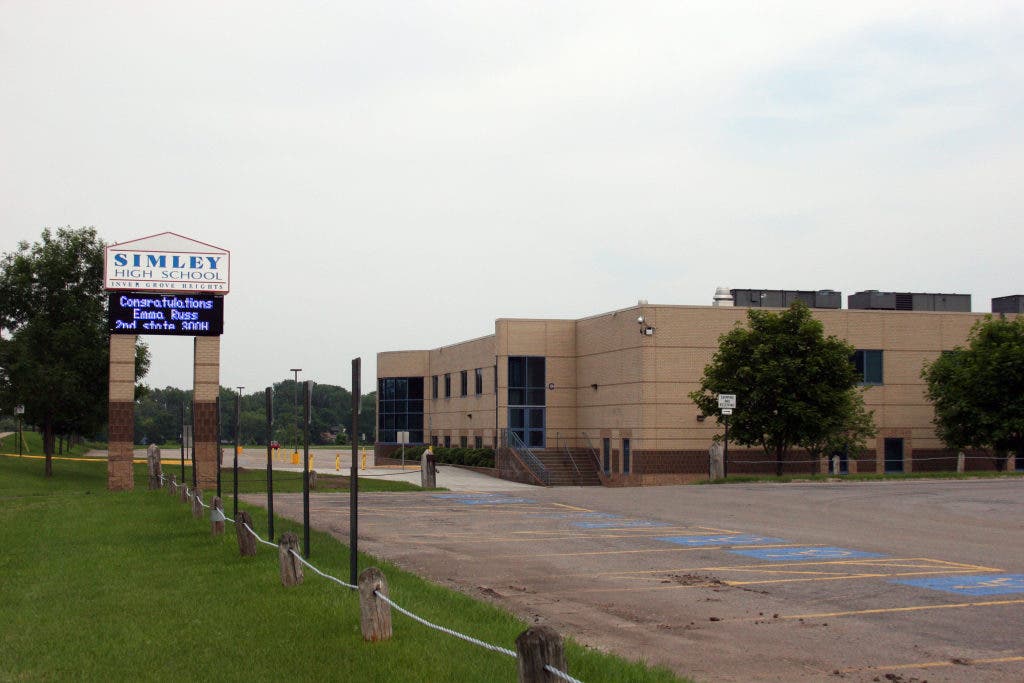
The attorney representing a student labeled “dangerous” by the Inver Grove Heights school district’s attorney has fired back at school district officials, saying they failed in their duty to help the student after his mother requested an evaluation for special services earlier this year.
That allegation is one of the core issues attorney Atlee Reilly raised in a request for a special education hearing that Reilly filed with the Minnesota Office of Administrative Hearings on Oct. 14, shortly after the School District 199 filed a restraining order against the student.
The restraining order, signed by Dakota County District Judge Michael Mayer and , prohibits the student from attending Simley, and directs officials to enroll the student—who allegedly brought a knife to school and hears voices telling him to harm himself and others—in a treatment program pending completion of a special education evaluation. A court document filed by the district’s attorney describe the student as “potentially violent.”
School officials sought the restraining order after the boy’s mother allegedly declined to have her son, who has a history of mental health issues, enrolled in a day-treatment program, according to court documents filed by the district.
Citing student data privacy laws, the district declined to comment. The district’s attorney, Charles Long, did not return phone calls this week seeking comment.
Because the student is a minor, Patch is not publishing his name, age, address or information that would identify him or his his mother, including the name of the day treatment program to which district officials referred him. Patch is publishing the article because it involves a potential public safety issue. It also raises important questions about the rights and duties of parents, school administrators, safety and health officials and the courts when it comes to educating students and providing a safe environment in which to learn.
Holes in the System
Reilly took issue with how court documents filed by the district’s attorney portrayed the mother and the son.
“Painting [the] mom as someone who doesn’t want services is false; she’s sought services,” said Reilly, who added that the son has an outpatient therapist, a medication-management plan and has been assigned a mental-health caseworker.
Not only is the student receiving treatment for his condition, his mother verbally requested in January that the district evaluate the student for special-education services, according to Reilly. Documents provided by Reilly also demonstrate that a nurse working with the student spoke to a school official regarding an evaluation at the end of January, and that at least one school counselor was aware in September that the mother wanted an evaluation and help for her son.
A psychologist working with the student also recommended the evaluation, saying in a report provided by Reilly: The boy “presents as having strong academic skills and being a smart individual. With strong support and attention to his mental health needs, [he] is likely to be better able to reach his fullest potential.”
Under the federal Individuals with Disabilities Education Act (IDEA), a district is required to perform the special education evaluation within 60 days of receiving the request. But no evaluation was performed in the 2010-2011 school year.
If the evaluation had been performed after the initial request and appropriate support programs found for the student, Reilly said, the district may have been able to avoid many of the problems it encountered this fall, when the student allegedly brought a knife to school and said he was “sick of the kids.”
Because the mother requested special services for the son, he is also entitled to certain protections under IDEA, according to Reilly. Those protections were bypassed, Reilly said, when the restraining order was issued and the student removed from his classes. Chief among those protections is the student’s right to a process called a “manifestation determination,” which seeks to determine whether a student’s conduct was the result of his disability. If officials rule that it is the result of a disability, then the student must be returned to his current educational placement, unless the parent agrees to a change.
Importance of Student Rights
Under IDEA, school districts have the right to remove a student to an interim educational setting for up to 45 days if the student brings a weapon to school, but the district must take care when exercising that right, according to Sue Abderholden, the executive director of the National Alliance on Mental Illness Minnesota.
Removing a student from school can have a significant social and academic impact on that student, Abderholden said, especially if the student has a mental illness.
“It can be really tough with kids with a mental illness. They want to make friends and they want to fit in, but putting them in isolated settings certainly doesn’t help that,” Abderholden said.
In her 10 years working with NAMI, Abderholden said she has never heard of a situation where a district sought and received a restraining order against a student with mental-health issues. In most cases, Abderholden said, it is better for a district to work together with health officials, the parents and the student to determine a plan.
“You have everybody trying to figure out how to help this kid, instead of just saying ‘No, we’re not going to let him in,’ ” Abderholden said.
School district officials attempted to do just that, meeting with the boy’s mother in late September to discuss having the boy enter a day-treatment program, according to court documents. Those documents also assert that when the mother was informed that her son hears voices, she responded that “All students hear voices.”
Reilly said the mother declined that option because she believed her son would not be well-served by a day-treatment program and needed to be challenged academically.
Another expert in education law, Professor Todd DeMitchell at the University of New Hampshire, said Inver Grove Heights school officials made the right call removing the student from class after his alleged admission that he brought a knife to school. But DeMitchell questioned their decision to enroll him in a day-treatment program as a condition of the restraining order.
“I think that action is fraught with potential problems,” DeMitchell said. “If it is psychological intervention for the treatment, is this what the school should be doing, or is this a medical situation that should be handled in a different venue? When the school starts placing and paying for these kinds of medical services, I’m not convinced as a former superintendent that these are the actions we should be taking.”
A closed hearing on the matter at the Minnesota Office of Administrative Hearings has been set for Nov. 14.
“This child was entitled to protections,” Reilly said. “Nobody sat down and talked about whether this alleged behavior was related to the child’s disability and, if so, what we could do to ensure this doesn’t occur again.”
Find out what's happening in Inver Grove Heightsfor free with the latest updates from Patch.
Get more local news delivered straight to your inbox. Sign up for free Patch newsletters and alerts.