Health & Fitness
BLOG: You're Crazy To Visit México! Part 6: The P'URHEPECHA
The P'urhépecha people are indigenous people to Mexico. Their history can be traced back to Mezoamerica. At one time they were as large and powerful as the more well know Aztek's.
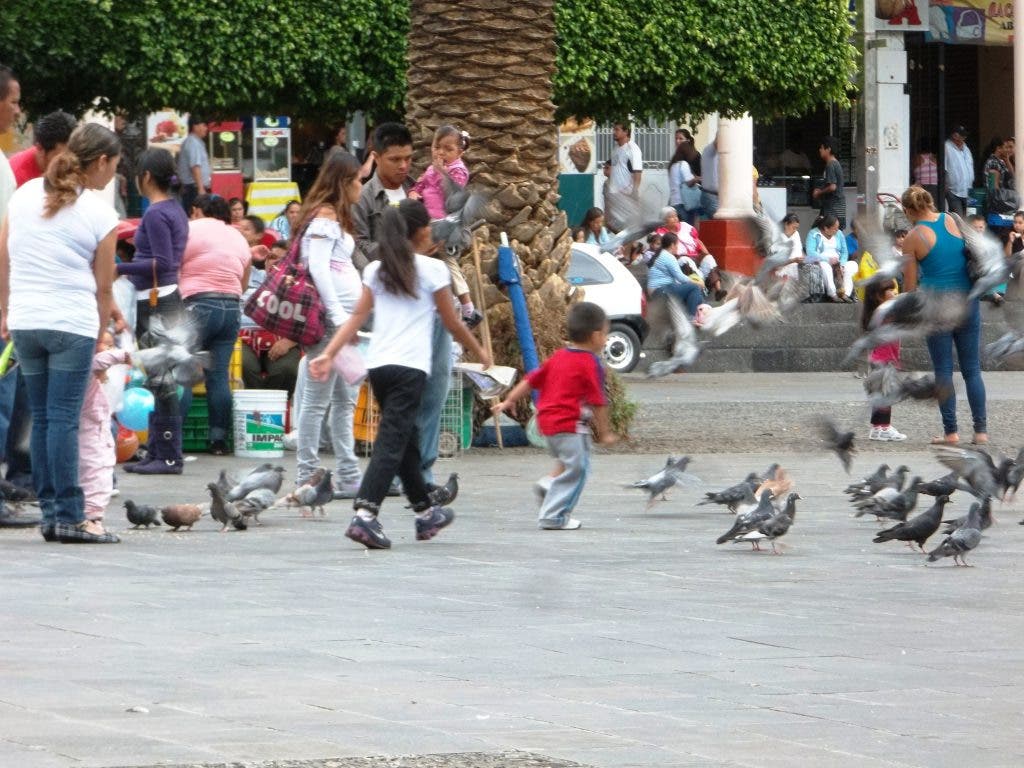


Editor's note: Wikipedia is the primary source of the following text. The photo gallery is original content from blogger Keith Joyce.
OVERVIEW
The P'urhépecha, normally spelled Purépecha in Spanish and in English and traditionally referred to as Tarascans, are an indigenous people centered in the northwestern region of the Mexican state of Michoacán, principally in the area of the cities of Uruapan and Pátzcuaro. In pre-Hispanic times, the Purépecha Indians—also referred to as the Tarascan Indians or the indigenous people—occupied most of the state of Michoacán, but they also occupied some of the lower valleys of both Guanajuato and Jalisco. Celaya, Acámbaro, and Yurirapúndaro were all in Purépecha territory.
Find out what's happening in Inver Grove Heightsfor free with the latest updates from Patch.
Tarascan is a word designating an indigenous ethnic group of México and the language that they speak. The term is gradually becoming obsolete, instead being replaced by the ethnic group's own name for themselves: P'urhépecha (or P'orhépecha) for both the people and the language. However the historical P'urhépecha built a state which is normally referred to as the Tarascan state because that is the way it appears in the early colonial sources.
The name "Tarascan" (and its Spanish-language equivalent, "tarasco") comes from the word "tarascue" in their own language, which means indistinctly "father-in-law" or "son-in-law". The Spanish took it as their name, for reasons that have been attributed to different, mostly legendary, stories. Curiously, the Nahuatl name for the Tarascans was "Michhuàquê" ("those who have fish"), whence the name of the state of Michoacán.
Find out what's happening in Inver Grove Heightsfor free with the latest updates from Patch.
LANGUAGE
The P'urhépecha language (also known as Tarascan) is spoken by more than 100,000 people in Michoacán. Recent attempts have been made to introduce the instruction of the language in the local school systems. The Tarascans (and more recently some Spanish-speaking Mexicans) refer to themselves as "P'urhépecha". The name "Tarascan" (and its Spanish-language equivalent, "tarasco") comes from the word "tarascue" in their own language, which means indistinctly "father-in-law" or "brother-in-law". The Nahuatl name for the Tarascans was "Michihuàquê" ("those who have fish"), hence the name of the state of Michoacán (Michihuacán).
HISTORY
The Tarascan state was one of the pre-Columbian civilizations of Mesoamerica. Their capital city was Tzintzuntzan. Tarascan architecture is noted for step pyramids in the shape of the letter "T". Pre-Columbian P'urhépecha artisans made feather mosaics making extensive use of hummingbird feathers which were a highly regarded luxury good throughout the region. The P'urhépecha were never conquered by the Aztec Empire, despite several attempts by the Mexica to do so, including a fierce war in 1479. This was probably due to the fact of P'urhépecha's knowledge of metal working, an advantage over the Mexica, and still widely regarded today, in particular their coppersmiths. Even though they were enemies, the Mexica still traded with them, mainly for copper axes. After hearing of the Spanish conquest of the Aztec Empire and having the native population much diminished by an epidemic of smallpox, Tangaxuan II, pledged his allegiance as a vassal of the King of Spain without a fight in 1525.
It is believed that the Spanish explorer Cristóbal de Olid, upon arriving in the Kingdom of the Purépecha in present-day Michoacán, probably explored some parts of Guanajuato in the early 1520s. A legend relates of a 16–17 year old Princess Erendira of the P'urhépecha led her people into a fierce war against the Spanish. Using the stolen Spanish horses her people learned to ride into battle. Then in 1529–1530, the forces of Nuño de Guzmán entered Michoacán and some parts of Guanajuato with an army of 500 Spanish soldiers and more than 10,000 Indian warriors. In 1530 the Governor and President of the Primera Audiencia, Nuño de Guzmán, plundered the region and ordered the execution of Tangaxuan II, provoking a chaotic situation and widespread violence. In 1533 the Crown sent to Michoacan the experienced oidor (audiencia judge) and later bishop, Don Vasco de Quiroga, who managed to establish a lasting colonial order. The Spanish took it as their name, for reasons that have been attributed to different, mostly legendary, stories. The P'urhépecha area is subject to deforestation.
THE FIESTA de P'URHEPECHA
Today was the day that Uruapan celebrates all of the P'urhépecha peoples and their various bands. Many bands show off there dress and music, referred to as Banda. The outfits are glorious and colorful. The parade was very interesting with each band dancing it's way around the central plaza with each having their own band. The celebration is somewhat short by what an American would expect, but chock full of interesting activities.
RESOURCES