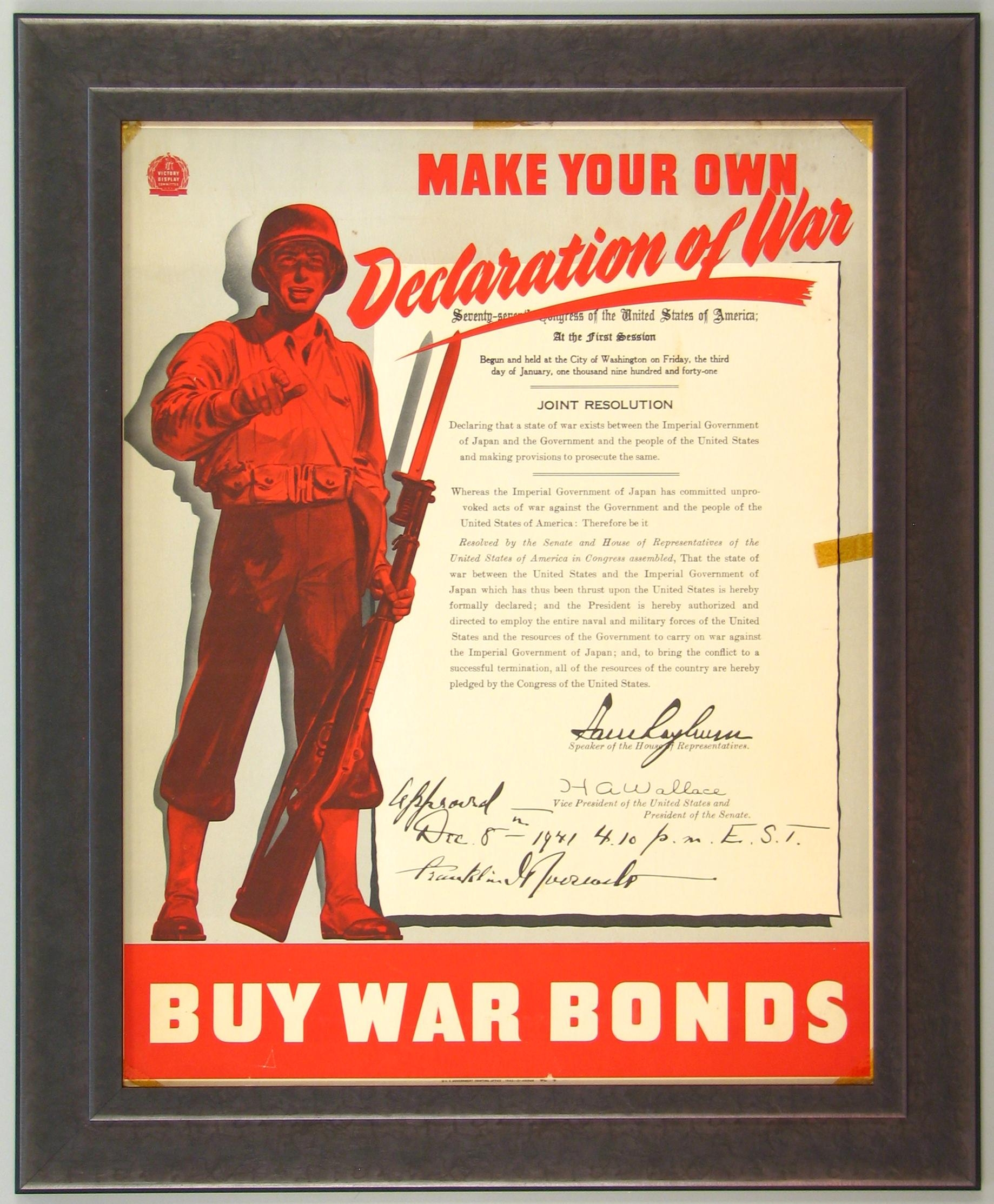
We've talked about decorating with historic items quite a bit lately. Here's one more example. In 1941 the US was not yet the superpower that emerged at the end of World War II. The ability to finance the effort necessary to fight a war against Japan, and soon in Europe too, required involvement and personal investment by all Americans. Earlier in the year, with the storm clouds of a war with Germany on the horizon, a savings bond program was implemented to raise money on a voluntary basis rather than raising taxes to fund a military buildup. After Pearl Harbor was bombed Franklin D. Roosevelt officially changed the name of the savings bond program to war bonds.
In addition to raising money for the war effort, the voluntary nature of the program gave people a sense of personal commitment and involvement. War Bonds could be bought for as little as $18.75 with a return of $25 after 10 years. If you couldn't afford a bond, you could buy savings stamps for just 10 cents. When you had collected enough stamps you could trade them for a bond. In this way even children could support the national effort.
Because they were usually hung in public places, often exposed to the elements, original War Bond posters are rare. The one you see here is even more so because it was among the first to be issued and actually contains congress's declaration of war showing FDR's written approval dated December 8, 1941, the day after the Pearl Harbor attack.
This poster is owned by a Lakeville resident whose family has had it for many years. But it had never been framed or protected. It had gotten badly water damaged. The poster surface was peeling off of its original rigid cardboard backing and it was quite warped. We were able to reattach the dislodged part of the poster and flatten the poster out by reinforcing the back with an archival board. Rather than a full restoration, the tape marks, yellowing, and paper wear were left to show the age and character of the piece. But to slow the effects of additional light damage it is now protected with 99% UV filtering conservation glass. The frame is from Larson-Juhl's Foundry collection and reflects the character of the industrial buildup of the time. This original poster is a great collectible, and with a proper preservation framing it becomes an interesting piece of art to adorn an informal area.
More examples of historic framing projects can be seen at: www.fastframelakeville.com/EXAMPLES_IDEAS.htm. And visitors are always welcome at the FASTFRAME of Lakeville gallery in the Argonne Village Shopping Center.